How do you determine your nursing bra size?
Finding the right size nursing bra is essential for your comfort and for a smooth breastfeeding experience. However, with your breasts constantly changing, figuring out the right size can seem complicated.
At 23 Mai Paris, we support mothers every step of the way during their breastfeeding journey. This guide explains how to correctly measure your nursing bra size, when to do so, and how to choose the style that best suits your needs.
Why does bra size change while breastfeeding?
Your breasts undergo major changes during pregnancy and breastfeeding. Understanding these changes will help you choose the right size at the right time.
The stages of breast reconstruction
| Period | What's going on | Impact on size |
|---|---|---|
| Pregnancy (1st trimester) | Increased volume, sensitivity | +1 to 2 cup sizes |
| Pregnancy (3rd trimester) | Preparing for breastfeeding | +1 back circumference size available |
| Milk coming in (Days 2–5) | Congestion, maximum volume | +1 to 2 cup sizes (temporary) |
| Established breastfeeding (1–3 months) | Gradual stabilization | More stable size |
| Extended breastfeeding (3+ months) | Volume that may decrease | Adjustable |
| Weaning | Gradual decrease | Back to previous size |
Why a poorly fitting bra is a problem
| Problem | Consequence |
|---|---|
| Too tight | Blocked milk ducts, risk of mastitis |
| Too big | No support, uncomfortable |
| Improperly placed braces | Pain, swelling of the glands |
| Hat too small | Leaking, stains, discomfort |
| The back of the shirt is too tight | Difficulty breathing, red marks |
Key takeaway: A well-fitting nursing bra supports your milk supply and ensures your comfort.
When should you measure your nursing bra size?
Timing is crucial for obtaining a reliable measurement.
The best times to test yourself
| Moment | Recommendation | Why |
|---|---|---|
| 8th month of pregnancy | ✅ Perfect for first-time buyers | Breasts close to their breastfeeding size |
| After your milk comes in (Days 5–7) | ✅ Adjust as needed | Volume stabilized after swelling |
| About 6–8 weeks postpartum | ✅ For additional purchases | Well-established breastfeeding |
| During engorgement | ❌ Avoid | Volume temporarily inflated |
| Right after feeding | ❌ Avoid | Volume temporarily reduced |
The best time of day
| Moment | Measurement reliability |
|---|---|
| Between feedings | ✅ Optimal |
| In the morning before the first feeding | ⚠️ Volume is often at maximum |
| Right after feeding | ❌ Minimum volume |
Tip: Measure your milk supply about 1.5 to 2 hours after a feeding, when your breasts are neither engorged nor completely empty.
How to Take Your Measurements Correctly
Grab a flexible measuring tape and follow these steps.
Step 1: Measure your back circumference (under the bust)

How to do it:
- Place the measuring tape just under your bust
- Measure around your chest, keeping it level
- The strap should be snug but not too tight
- Breathe out normally and note the measurement
Tip: The ribbon should slide easily without falling off.
Step 2: Measure your bust

How to do it:
- Place the measuring tape around the fullest part of your chest (at the level of your nipples)
- Turn around, keeping your back completely straight
- Don't pull it too tight; the ribbon should just graze the skin
- Write down the measure
Tip: Wear a thin, non-padded bra, or measure yourself without a bra for greater accuracy.
Step 3: Determine your size
The back measurement determines the size (number):
| Back circumference (cm) | French size |
|---|---|
| 63–67 | 80 |
| 68–72 | 85 |
| 73–77 | 90 |
| 78–82 | 95 |
| 83–87 | 100 |
| 88–92 | 105 |
| 93–97 | 110 |
The difference between the bust measurement and the back measurement determines the cup size:
| Difference (cm) | Beanie |
|---|---|
| 13 | A |
| 15 | B |
| 17 | C |
| 19 | D |
| 21 | E |
| 23 | F |
| 25 | G |
| 27 | H |
Sample calculation
Your measurements:
- Back circumference: 75 cm → Size 90
- Chest circumference: 94 cm
- Difference: 94 - 75 = 19 cm → D cup
Your size: 90D
The unique features of a nursing bra
Nursing bras have specific features that affect the choice of size.
What sets a nursing bra apart
| Feature | Function | Impact on size |
|---|---|---|
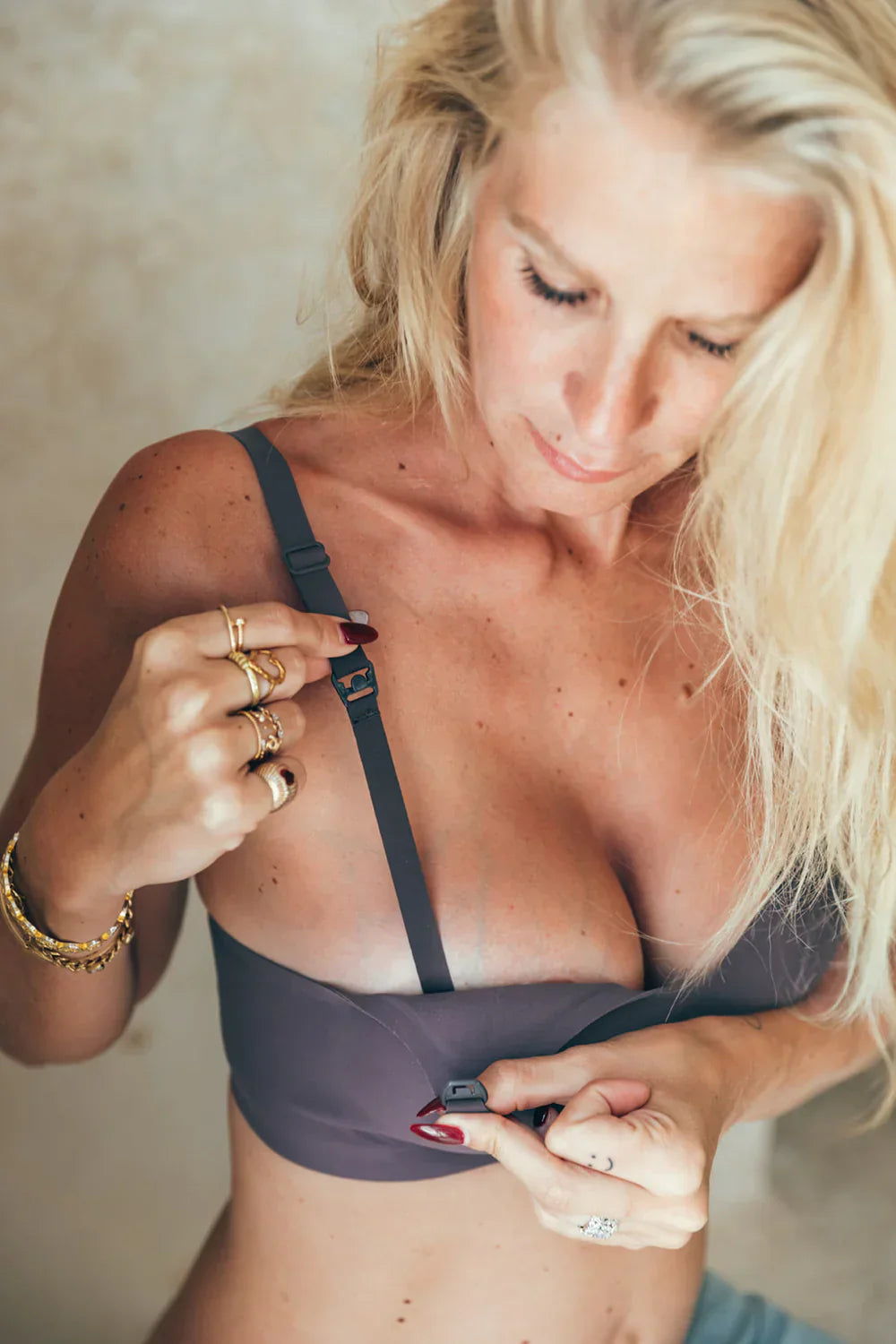
| Opening clips | Easy access to the breast | None |
| Stretch beanies | Adapt to changes | Provide greater flexibility |
| No reinforcement | Avoid compression | Different support |
| Wide elastic bands | Comfort, support | More stable back support |
| Adjustable straps | Adapt to changes | Additional flexibility |
Types of nursing bras
| Type | Ideal for | Support level |
|---|---|---|
| Nursing bra | Night, rest, small breasts | Lightweight |
| Wire-free bra | For everyday use, all cup sizes | Medium |
| Bra with soft underwires | Large breasts, exposed | Strong |
| Nursing camisole | Night, home | Lightweight |
| Nursing sports bra | Physical activity | Strong |
How to choose the right size for your situation
During pregnancy (8th month)
| Advice | Explanation |
|---|---|
| Measure your current size | Your breasts are close to their breastfeeding size |
| Bring 1–2 bras | That's not all—your height may still change |
| Prioritize scalable models | Will adapt to fluctuations in milk production |
After the outburst
| Advice | Explanation |
|---|---|
| Adjust the size if necessary | Breast engorgement may have affected your measurements |
| Invest in 2–3 high-quality items | You now know your stable size |
| Maintain a scalable model | For days when traffic is temporarily heavy |
For women with larger bust sizes (E and up)
For tops designed for larger busts, check out our nursing tops with flattering cuts.
| Advice | Explanation |
|---|---|
| Opt for wide straps | Better support, less pressure |
| Choose styles with soft underwire | Superior support without compression |
| Check the cup size | Must cover the entire chest |
For smaller bust sizes (A–B)
| Advice | Explanation |
|---|---|
| Sports bras may be sufficient | Light support is often sufficient |
| Recommended non-wired bras | More comfortable |
| Be careful not to choose one that's too big | Risk of poor support |
Signs of a poorly fitting bra
Too small
| Sign | What to do |
|---|---|
| Her breast is spilling out of her bra | Move to the top cap |
| The back curves upward | Back circumference too small |
| The straps are slipping | The head circumference or back length is too small |
| Persistent red marks | Overall, it's too small |
| Pain or discomfort | Change immediately |
Too big
| Sign | What to do |
|---|---|
| The hat is gaping | Go to the bottom cap |
| The back comes to the front | Back circumference too large |
| The straps keep slipping | Back circumference or hat size too large |
| No support | Overall, it's too big |
The perfect fit
| Criterion | What must it be like? |
|---|---|
| Back view | In landscape mode, you can swipe with two fingers |
| Hats | Cover the entire breast without spilling over |
| Between the cups | pressed against the sternum |
| Shoulder straps | Snug without digging in |
| Overall impression | Comfortable fit—no need for a bra |

How many nursing bras should I bring?
To calculate your total needs, check out our article How many nursing clothes do you really need?
The recommended amount
| Period | Quantity | Why |
|---|---|---|
| Late pregnancy | 1-2 | The size may still change |
| First few months | 3–4 | Frequent washing (milk leaks) |
| Established breastfeeding | 3–4 | Smooth rotation |
The ideal distribution
| Type | Quantity | Usage |
|---|---|---|
| Comfortable everyday bra | 2 | Daily Life at Home |
| More formal bra | 1 | Events, special occasions |
| Night bra | 1-2 | Night, rest |
Our tips for a successful purchase
Key criteria
| Criterion | Why it's important |
|---|---|
| Clips that are easy to use with one hand | You'll have the baby in your other arm |
| Soft, breathable fabrics | Sensitive skin, heat |
| Stretch beanies | Adapt to changes |
| Without underwire (at first) | Prevents compression of the channels |
| Easy to wash | Frequent washing is necessary |
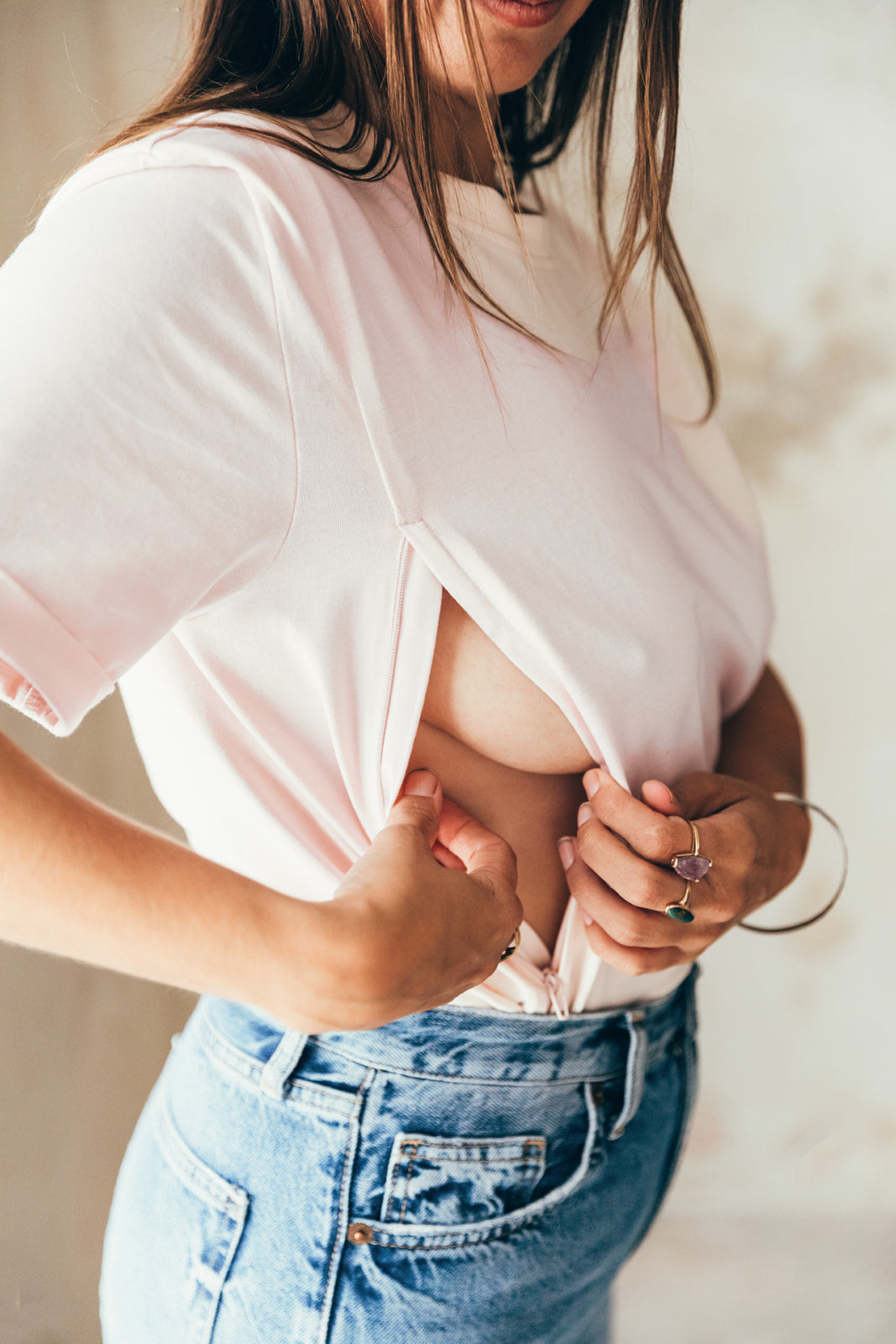
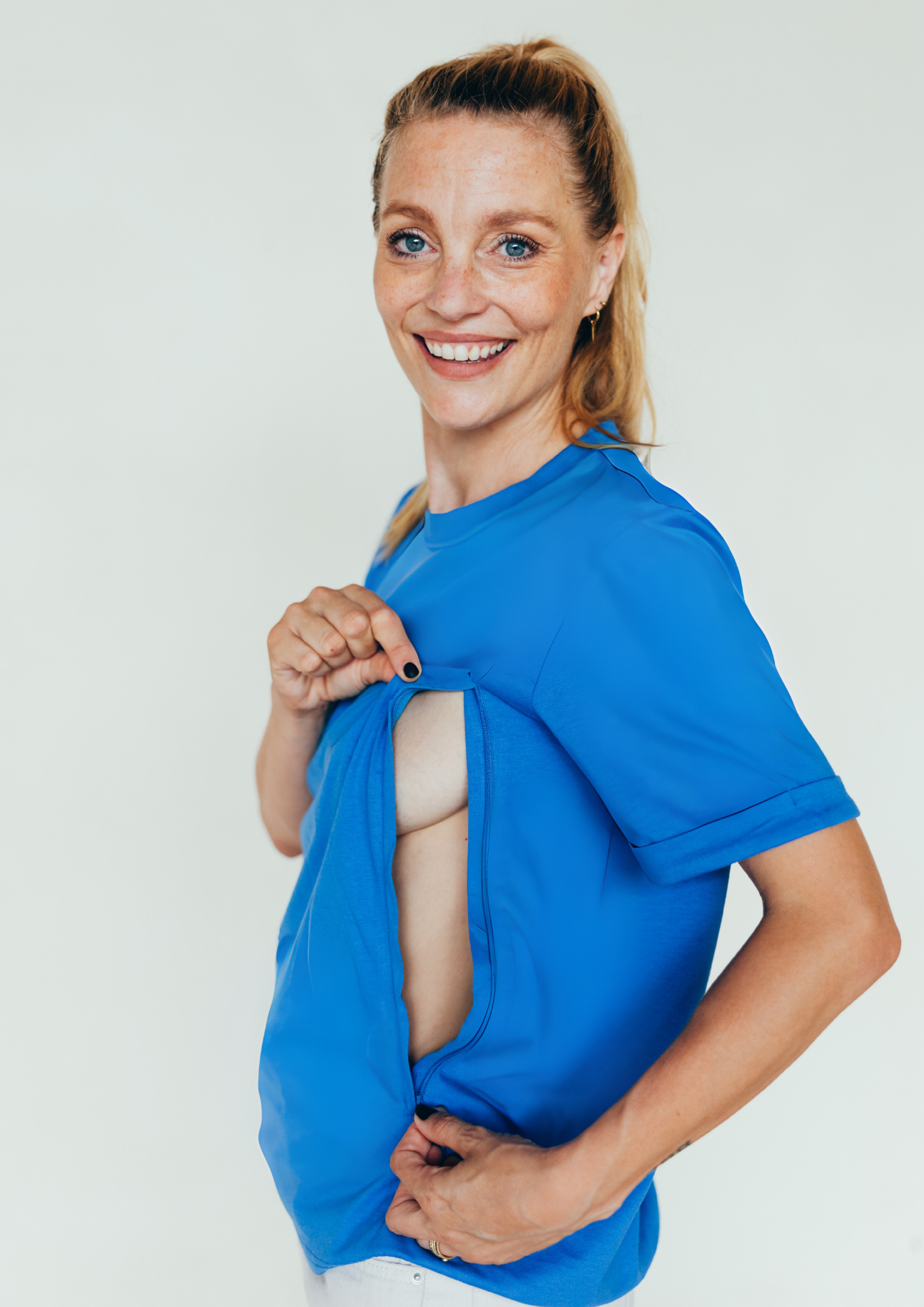
Discover our Breastfeeding t-shirts soft and practical pieces to complete your wardrobe.

Recommended subjects
| Subject | Benefits |
|---|---|
| Cotton | Soft, breathable, hypoallergenic |
| Bamboo | Thermoregulatory, antibacterial |
| Microfiber | Stretchy, quick-drying |
| Modal | Ultra-gentle, fluid |
Mistakes to avoid
| Error | Consequence |
|---|---|
| Buying too many bras in advance | Risk of incorrect sizing |
| Choosing based solely on price | Quality and comfort sacrificed |
| Wearing an uncomfortable bra | Risk to lactation |
| Skipping fittings | A surprise when using it |
| Go back to your pre-pregnancy size | Definitely too small |
Frequently Asked Questions
Can I wear my nursing bra at night?
Yes, if you'd like. We recommend wearing a soft, wireless bra at night. It keeps the nursing pads in place and provides light, comfortable support.
Check out our Breastfeeding pyjamas comfortable for sleeping
When should you switch to braces?
Once your breastfeeding routine is established after 6–8 weeks, you may want to consider bras with soft underwires if:
- Your milk supply is well established
- You don't experience frequent engorgement
- You need extra support (for a fuller bust)
Does my size change throughout the day?
Yes, that's normal! Your breasts feel fuller before feedings and softer afterward. That's why stretchy bras are recommended.
Do I need to buy nursing bras if I’m only breastfeeding for a short time?
Yes, even if you're breastfeeding for a short time. Your breasts will need proper support, and the openings make feeding much easier.
Conclusion
Measuring your nursing bra size correctly is essential for your comfort and to ensure a smooth breastfeeding experience. Take the time to measure yourself at the right time, choose high-quality, stretchy styles, and don’t hesitate to adjust your size as the weeks go by.
At 23 Mai Paris, we create nursing wear designed to support moms with comfort and style. To complement yourBreastfeeding dress practical tops, T-shirts, and dresses, discover our collection tailored to every stage of your motherhood journey.
Browse our collection of nursing clothes and build your growing wardrobe.
To prepare for breastfeeding, check out our article: Preparing for breastfeeding before the baby is born.
If you are breastfeeding, here are some of our nursing clothes that may interest you:
Breastfeeding t-shirts
Breastfeeding pyjamas
Breastfeeding sweatshirts
Zip-up nursing sweaters
Breastfeeding sweater dresses
If you are only a pregnant mom, here are our maternity clothes: