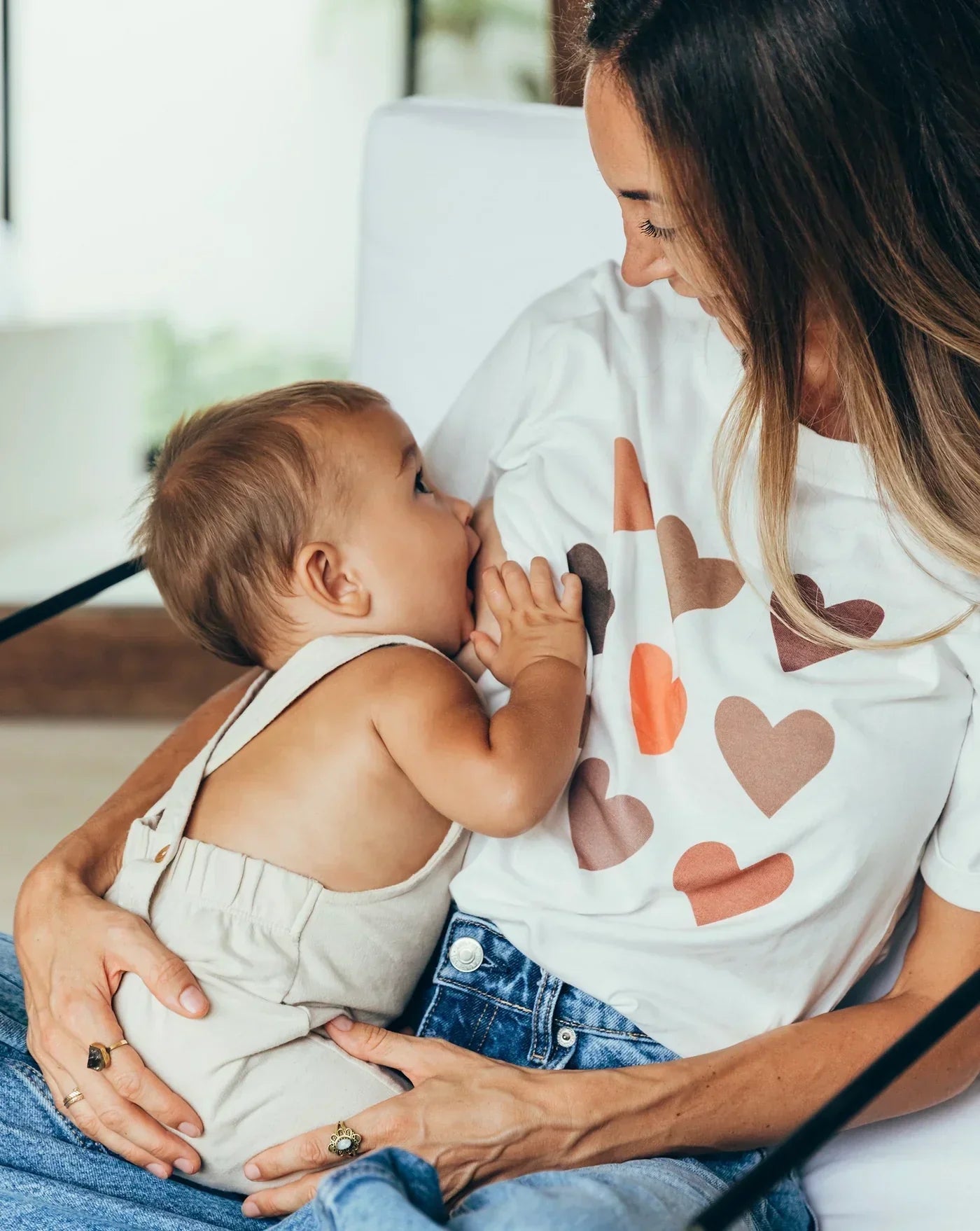
High-Quality Breastfeeding: 5 Criteria for Recognizing Quality
With so many nursing clothes on the market, how can you tell a high-quality top from one that won’t last more than three washes? Between marketing hype and the reality of daily life with a baby, it’s essential to know how to spot the signs of a well-designed garment.
At 23 Mai Paris, we create nursing clothes built to last. Here are the 5 key criteria for identifying a high-quality nursing top that will truly serve you well throughout your entire breastfeeding journey.
Criterion #1: The opening mechanism
This is THE feature that makes all the difference between a true nursing top and a basic garment with a makeshift opening.

Signs of a high-quality opening system:
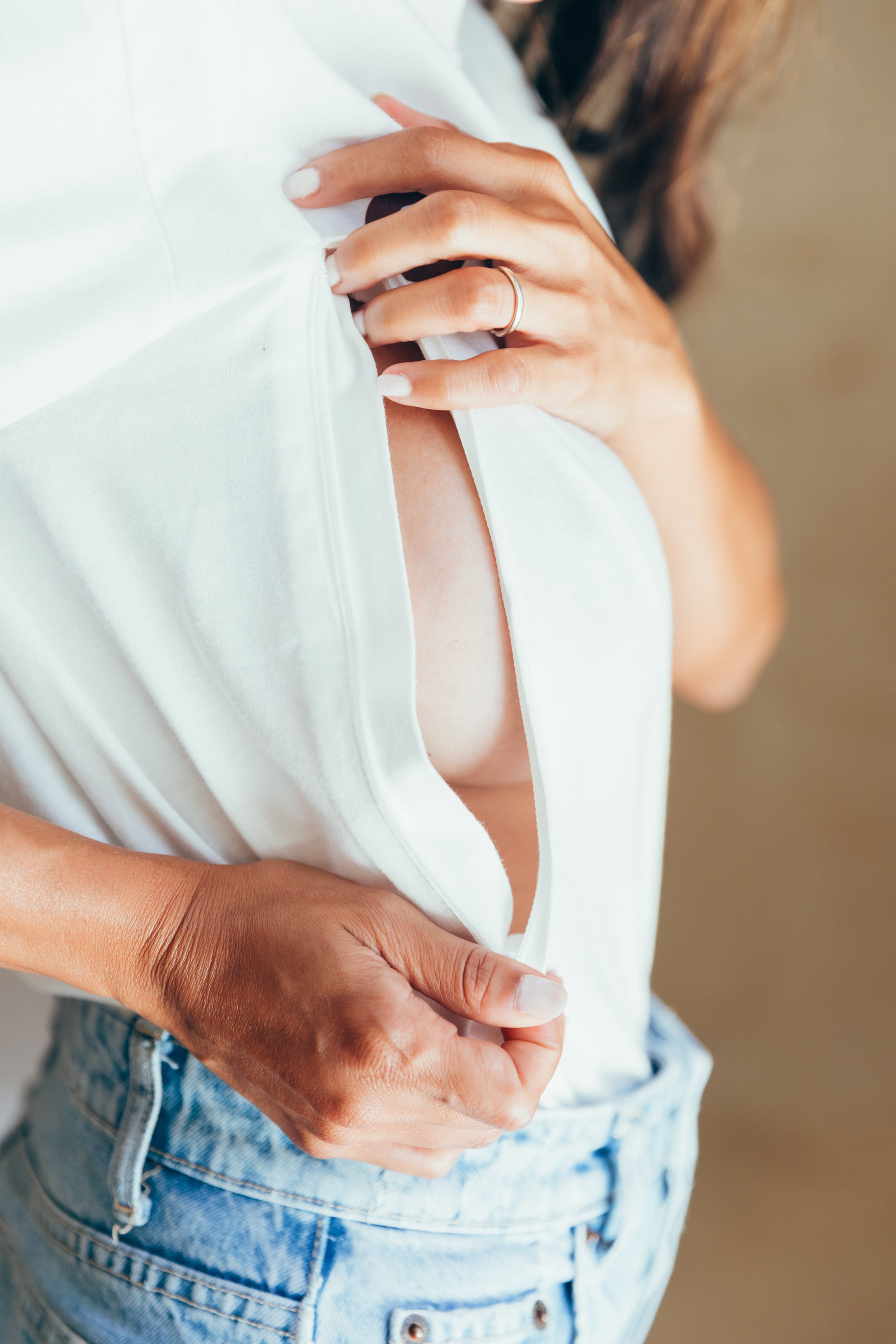
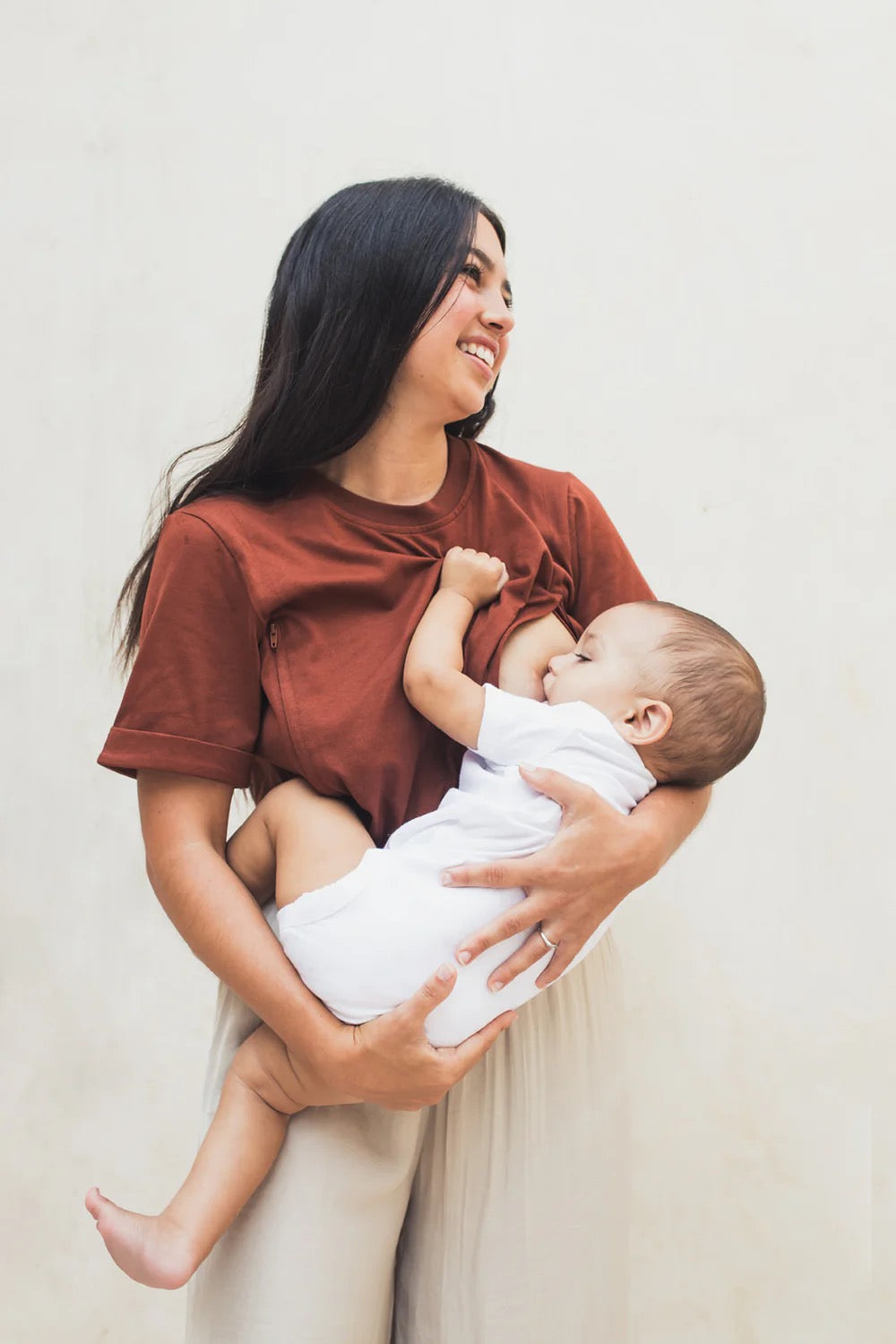
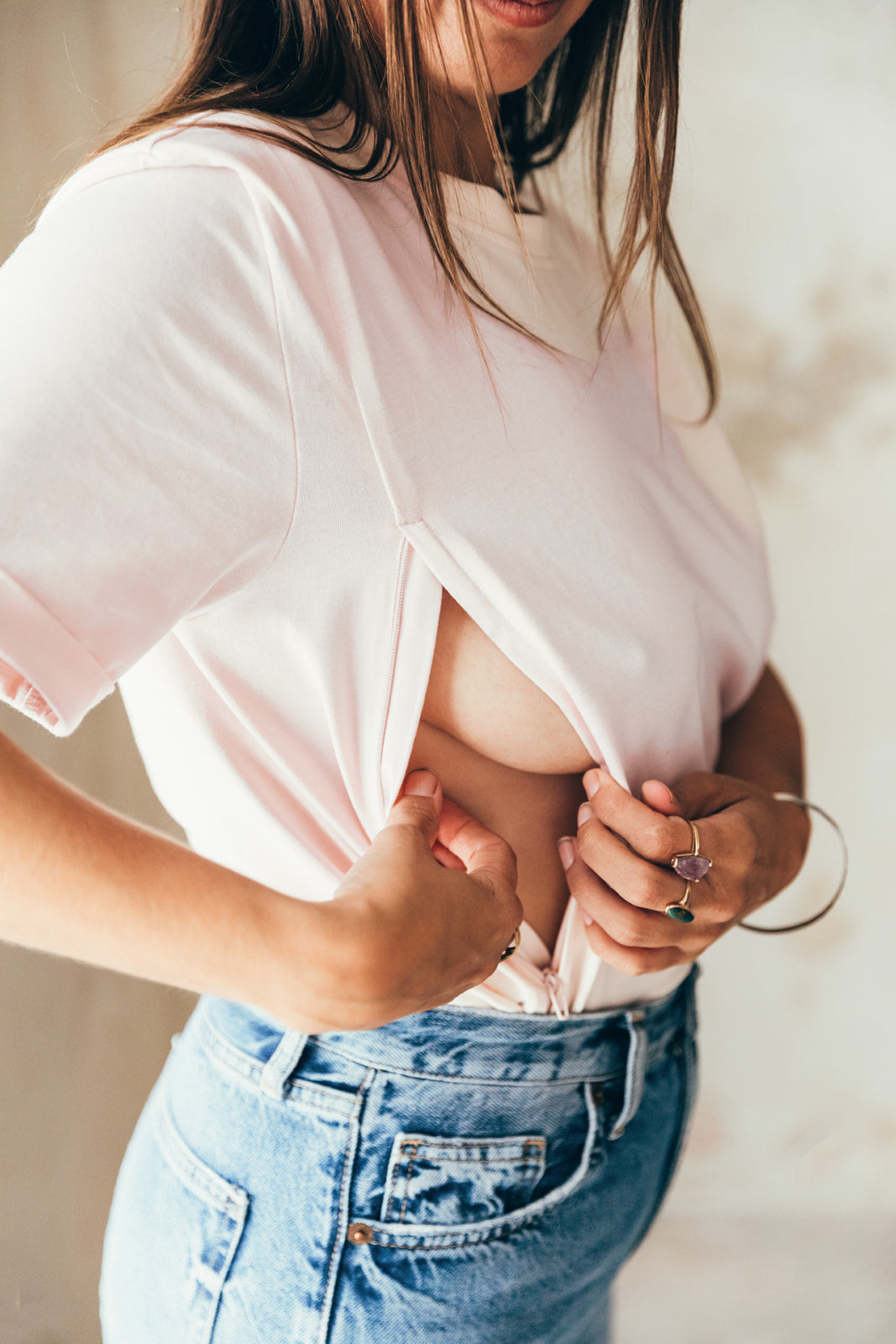
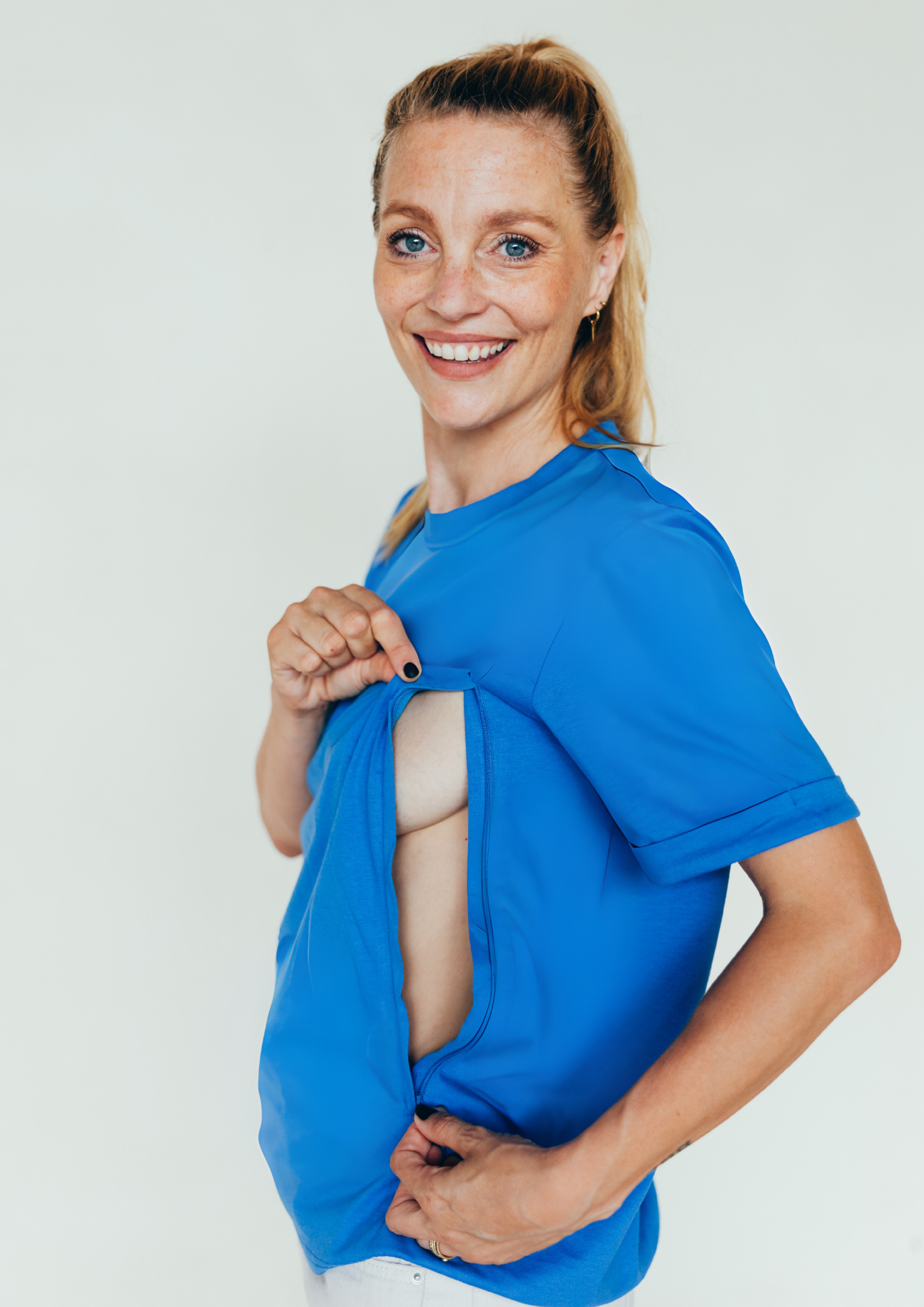
A high-quality opening mechanism should be discreet, practical, and durable. When well-designed, the opening is nearly invisible when closed and can be easily operated with one hand, without making excessive noise—a real advantage at night. The mechanism must also remain sturdy after repeated use and provide an opening wide enough to breastfeed comfortably. Conversely, a poor-quality system will often be visible, impractical, noisy, or prone to breaking over time.
The different systems and their quality:
Breastfeeding access systems vary in quality depending on their design.
Invisible side zippers and double-layered overlaps are generally the most reliable, provided you check that the zipper glides smoothly and that the fabric stays in place.
Hidden clips or snaps, as well as a wrap-around neckline, offer a good compromise, but you need to make sure they’re sturdy and provide good support.
The simple slit-type opening remains the least discreet and therefore the least high-quality option in most cases.
Test it in the store or at the front desk: Open and close the system 10 times in a row. If it sticks, squeaks, or feels flimsy right from the start, imagine what it will be like after 6 months of daily use.
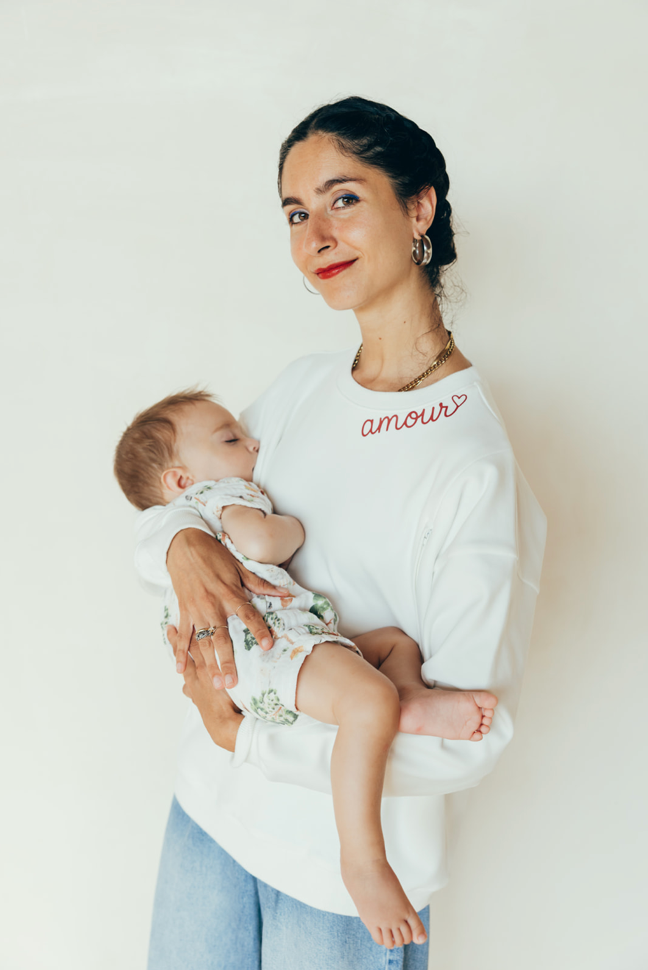
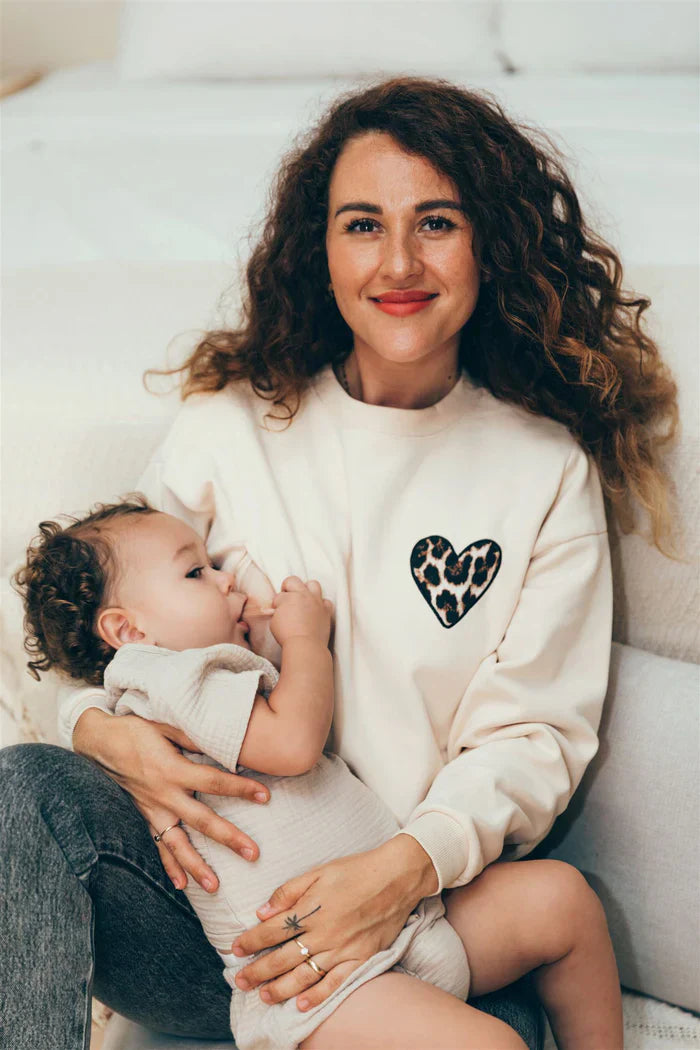
Discover our nursing tops with discreet and practical openings.
Criterion #2: Material composition
The materials determine the comfort, durability, and ease of care of your top. This is a factor you should never overlook.
The ideal combination:
| Subject | Optimal percentage | Role |
|---|---|---|
| Cotton (preferably organic) | 60–80% | Soft, breathable, hypoallergenic |
| Modal or viscose | 10–25% | Smoothness, silkiness, durability |
| Spandex | 3–8% | Scalability, getting back into shape |
What should raise a red flag:
| Composition | Potential problem |
|---|---|
| 100% polyester | Not breathable, traps odors |
| Less than 3% spandex | Will not adjust to changes in bust size |
| More than 10% spandex | Risk of rapid deformation |
| High acrylic content | Quickly becomes fuzzy, unpleasant sensation |
The premium materials that make all the difference:
- GOTS-certified organic cotton: superior softness, environmentally friendly
- Modal (made from beech wood): silky, drapes beautifully, very durable
- Bamboo: naturally antibacterial, temperature-regulating
- Tencel/Lyocell: eco-friendly, soft, breathable
The feel test: Rub the fabric between your fingers. A high-quality fabric is supple without being flimsy, and soft without being slippery. If the fabric crinkles or feels stiff, move on.
Discover also our Breastfeeding t-shirts made of organic cotton and modal.

Criterion #3: Finishing and craftsmanship
The craftsmanship details immediately reveal the quality of a garment. Take the time to examine them.
Finishing details to check:
The finishing touches are essential to ensuring the comfort and durability of a nursing garment.
Seams should be even, strong, and flat in sensitive areas, with no visible threads or irritation.
Hems must be neat and securely fastened, without any puckering.
The neckline should remain stable and not lose its shape after washing, and the armholes should be comfortable and not chafe.
Finally, labels should be printed or positioned in such a way as to avoid causing any inconvenience.
The details that set high-quality brands apart:
- Flatlock seams where the garment comes into contact with the skin
- Double stitching at stress points
- Reinforcements at stress points (openings, shoulders)
- Printed labels rather than sewn-on labels
- Neatly finished edges (no loose threads)
The stretch test: Gently pull on the main seams. They should not stretch out or show any gaps. A garment that "gapes" at the seams when you try it on won't hold up.

Criterion #4: Fit and adaptability
A high-quality nursing top is designed to adapt to your body's changes, not the other way around.
The characteristics of a well-designed cut:
A well-designed cut is essential for everyday comfort.
Around the chest, the garment should allow enough room to accommodate changes in size without being too tight or too loose.
The stomach must be fully covered, and the garment must be long enough to prevent it from riding up.
The shoulders should fall naturally without slipping or feeling constricted, and the sleeves should allow for complete freedom of movement without hindering your movements.
Adaptability over time:
Your bust size can vary by one or two cup sizes throughout the day while breastfeeding. A high-quality top should:
- Adjusting for milk let-down (maximum volume)
- Keep the breast flat after feeding (reduced volume)
- Don't let these daily fluctuations throw you off balance
For more information on this topic, see our article Nursing Clothes vs. Regular Clothes: A Comparison Guide.

The most versatile cuts:
The most versatile cuts make it easy to adapt to changes in body shape.
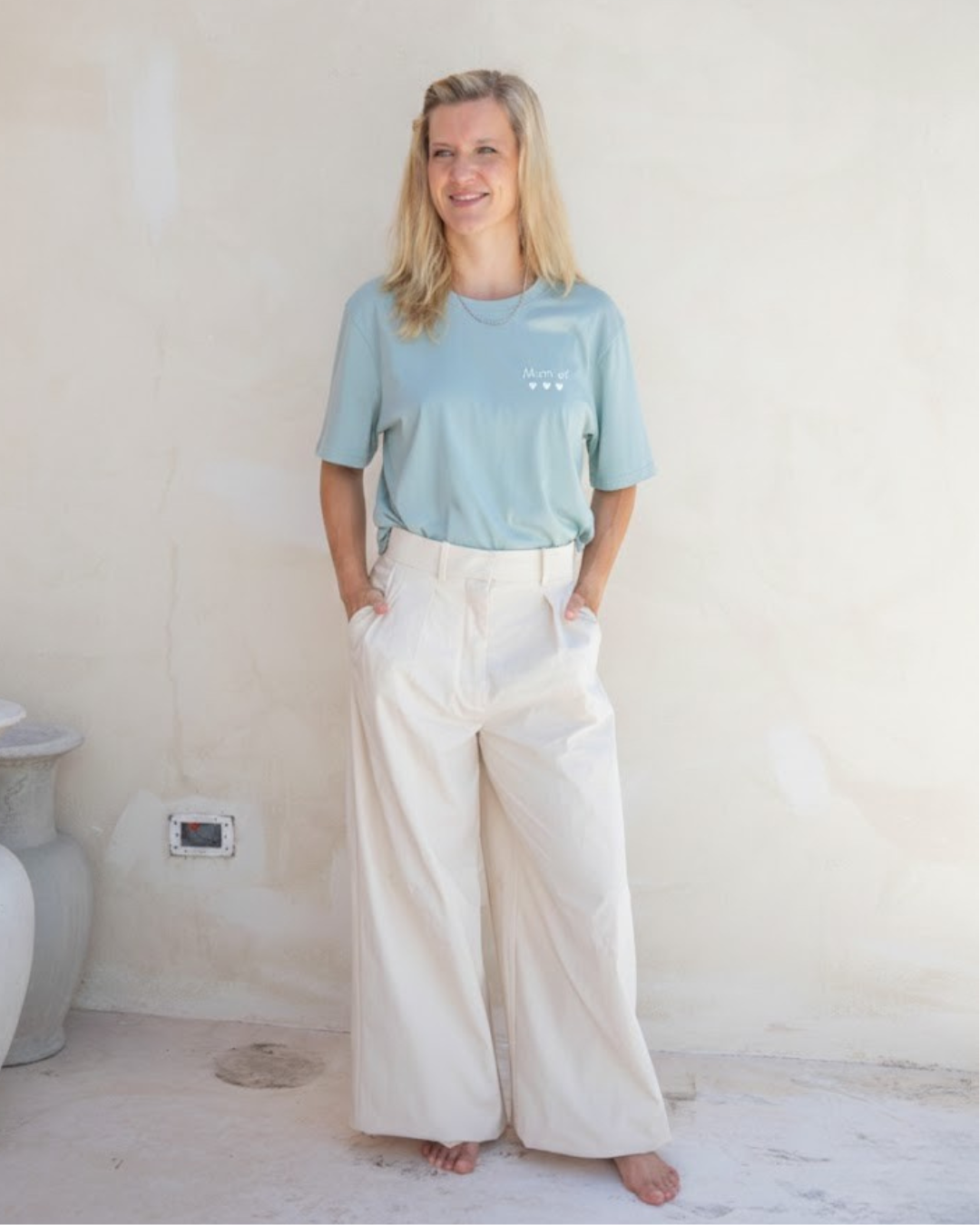
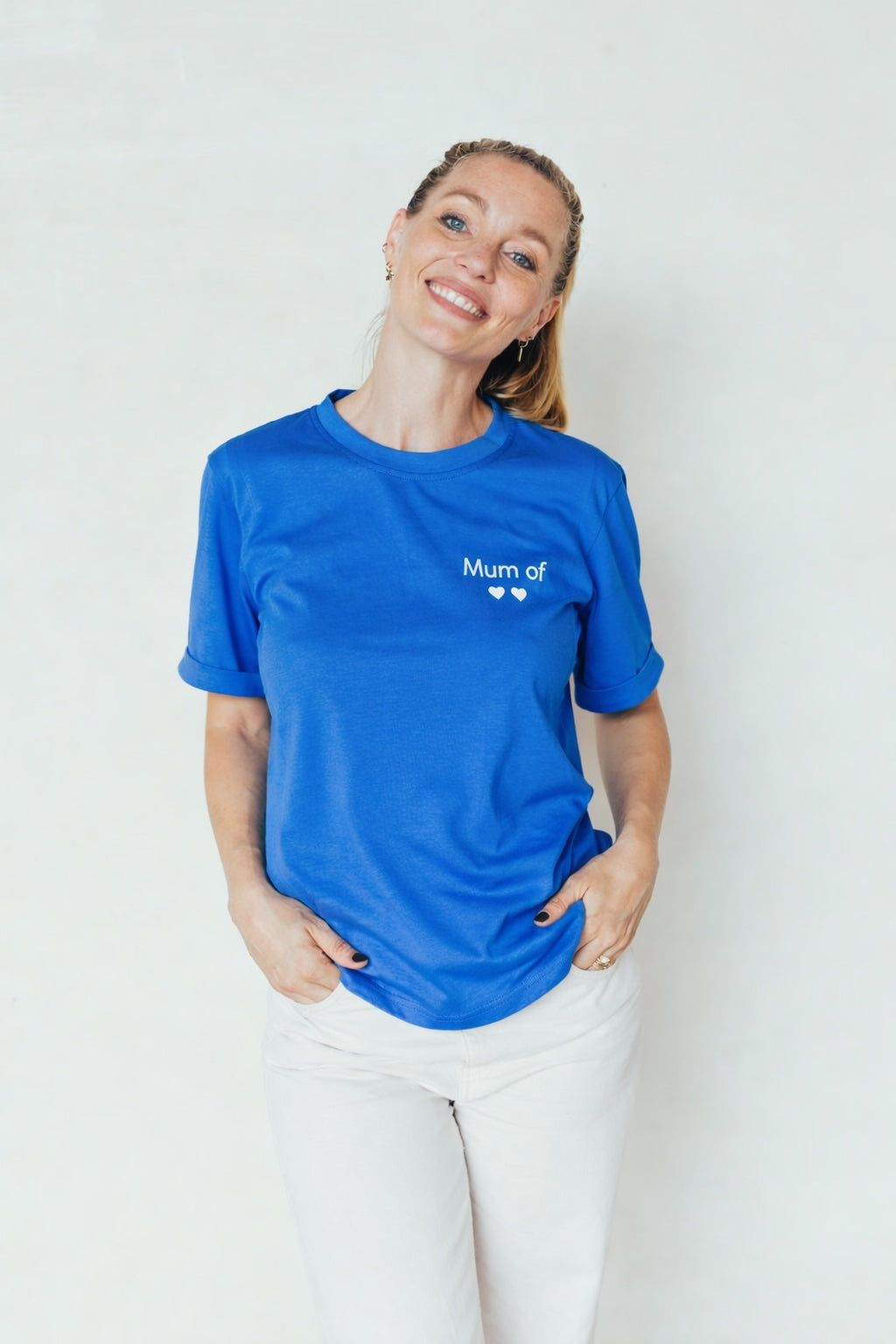
A loose or relaxed fit is the most versatile, offering maximum comfort for all body types.
The fitted stretch cut is perfect for those who want a form-fitting look while still maintaining flexibility.
The high-waisted empire-waist style is ideal for postpartum wear to conceal the belly. The straight cut remains a casual and versatile choice. In contrast, very fitted styles are not well-suited to changes in body shape.
The movement test: When trying on the top, raise your arms, bend over, and simulate the motion of breastfeeding. The garment should follow your movements without riding up, pulling, or getting in the way.
Criterion 5: Durability and Maintenance
A high-quality nursing top needs to withstand the demands of your daily life as a mom: frequent washing, stains, and heavy use.
Sustainability indicators:
You can easily tell how durable a garment is by looking at a few key factors. The fabric should be dense without being too thin or see-through. The colors should be colorfast and not look faded.
Good resistance to pilling results in a smooth surface and tightly packed fibers. Finally, easy machine washing at 30–40°C is generally a good sign of quality.
What a good nursing top should be able to handle:
- 2 to 3 washes per week for at least 6 to 12 months
- Milk stains, spit-up, drool
- Repeated stretching at the openings
- Worn for extended periods (sometimes 12–16 hours a day)
Estimated service life by quality:
The lifespan of a garment depends on its quality and price. Entry-level items (€15 to €25) generally last 2 to 4 months, resulting in a higher monthly cost.
Mid-range products (€30 to €50) last 6 to 12 months and offer a good balance between price and performance.
Finally, premium plans (€50 to €80 or more) can last 12 to 24 months or even longer, which lowers the monthly cost and makes them a more cost-effective investment in the long run.
*Calculation based on regular use
The smart calculation: A €60 top that lasts 18 months works out to €3.30 per month. Three €20 tops that each last 3 months work out to €6.60 per month. Quality is often more economical in the long run.
For more budget tips, check out our article Affordable Nursing Clothes: 5 Tips for Saving Money.

Bonus: Questions to Ask Before You Buy
Whether you're shopping in-store or online, ask yourself these questions:
Quality checklist:
- Is the opening mechanism really discreet and practical?
- Does the product contain at least 60% natural fibers?
- Are the seams even and sturdy?
- Will the fit accommodate changes in my body shape?
- Is this garment machine washable at 30–40°C?
- Does the brand specialize in breastfeeding?
- Do the reviews mention durability after several months?
Specialty brands vs. general-purpose brands:
| Brand type | Benefits | Disadvantages |
|---|---|---|
| Breastfeeding Specialist | Technical expertise, well-designed cuts, proven systems | Sometimes higher prices |
| General practitioner with a maternity practice | Affordable prices, availability | Variable quality, less expertise |
| Fast fashion | Very low price | Limited durability, inconsistent quality |
To find out how many pieces to buy, check out our article How many nursing clothes do you really need?
Summary table of the 5 criteria
Conclusion
Spotting a high-quality nursing top takes a little care, but it’s well worth the effort. A well-designed piece will see you through your entire breastfeeding journey (and even beyond), while keeping you feeling beautiful and comfortable every day.
At 23 Mai Paris, we design nursing clothes that meet these five quality criteria. Since breastfeeding already takes a lot of energy, your clothes should make your life easier, not harder.
If you are breastfeeding, here are some of our nursing clothes that may interest you:
Breastfeeding t-shirts
Breastfeeding sweaters
Breastfeeding tank tops
Breastfeeding dresses
Breastfeeding pyjamas