Article: Breastfeeding and Pain: What No One Really Tells You
Breastfeeding and Pain: What No One Really Tells You
You were told that breastfeeding is natural. That if you did it right, it wouldn't hurt. That pain was a sign of poor positioning, a poor latch, or a problem that needed to be corrected.
And there you are, gritting your teeth every time your milk comes in, your nipples on fire, wondering what you're doing wrong.
The answer, more often than not: nothing. You're not doing anything wrong.
The truth about pain during breastfeeding is more nuanced, more honest, and actually more reassuring than what you’ve been told. Some types of pain are normal and temporary. Others are warning signs that should be taken seriously. All of them deserve to be acknowledged—not downplayed, not dramatized, just acknowledged.
That's what we do here.

The Pain Nobody Talks About: The First Few Days
Let's start with those first few days in the maternity ward or back at home, when breastfeeding really gets going and no one had really prepared you for how you'd feel.
Nipple sensitivity at the beginning
The nipples have never been stimulated this way before. Even with a , even with an ideal position, they need some time to adjust. Sensitivity— sometimes sharp pain at the start of a feeding during the first seconds is common, common, and in most cases, temporary.
Thatinitial pain at the start of the feeding, sometimes called "milk let-down pain" "milk let-down pain," generally lasts a few seconds before subsiding. If it lasts throughout the entire feeding, or if it is intense and persistent, it’s a sign .
The Milk Rush
Around the second or third day after giving birth, your milk comes in begins. For some women, it’s a simple feeling of fullness in the breasts. For others, it’s painful tenderness, an intense heat, sometimes accompanied by a mild fever known as is called “milk fever,” which is benign and temporary.
Breasts may become hard, warm, tight to the point of making it difficult for the baby to latch on. Express a little milk by hand before feeding to soften the areola, alternating between warm and cold, and breastfeeding frequently —all of this helps get through this phase, which usually 24 to 48 hours.

Crevasses: the reality that is too often downplayed too often
Cracks are undoubtedly the most common form of pain breastfeeding and one of the most poorly managed, because we keep told that “if the position is right, there’s ."
That's not true. crevasses can occur even when excellent positioning, even with a perfect grip, especially in the first weeks when the nipple skin is still adjusting. What’s What is true is that a poor latch makes them considerably, and that a good latch helps to prevent and cure them.
What Are Crevasses?
Cracks cracks, sometimes open sores on the nipple and the areola. They may bleed. They can make every feeding a struggle in itself. And they can discourage moms who weren’t expecting this, —which is understandable, but avoidable with the right tools.
What Really Helps
Pure lanolin is your best ally when applied after each feeding; it creates a protective film that retains moisture and promotes healing. There’s no need to remove it before breastfeeding—it’s safe for the baby.
Breast itself has remarkable healing properties. Express a few drops and let them dry on the nipple after feeding helps promote natural healing.
The made of silicone or glass keep the nipple exposed to the air without coming into contact with clothing, which provides significant relief between feedings. They also collect any milk that leaks out.
And positioning—even if it isn't the only cause—is key: a good latch is the best way to prevent the problem from getting worse. If the pain is severe and persistent, a lactation consultant can make a difference in just a few minutes of observation.
Breast Engorgement: When Breasts Feel Like Stones
Engorgement is different from a simple milk let-down. It is a deeper congestion in which milk accumulates in the breast tissue to the point that the breasts become extremely painful, hard, and difficult to empty.
It can happen at different times: when your milk first comes in, when feedings become too far apart, when your baby sleeps through the night for the first time, or when you start to space out feedings.
Signs of engorgement
Hard, warm, sore breasts. Tight areola, making it difficult for the baby to latch on. Sometimes a slight fever. Milk flows with difficulty or, conversely, flows continuously.
How to relieve it
The golden rule for engorgement: keep the milk flowing. Breastfeeding frequently, on demand, is the first step. Start with the most engorged breast. Gently massage during the feeding to help the milk flow.
Before feeding, heat helps clear the ducts—try a warm shower or a warm compress for a few minutes. After feeding, cold helps reduce swelling—try a cold compress or cold cabbage leaves (yes, cabbage leaves really do have a recognized anti-inflammatory effect).
If the engorgement persists and is accompanied by a high fever, chills, or a localized red and painful area, seek medical attention promptly. This could develop into mastitis.

Mastitis: What You Need to Know
Mastitis is an inflammation of the breast tissue that may or may not be caused by an infection. It affects about 10 to 20% of breastfeeding women, most often during the first few weeks or when weaning.
The Signs
A red, warm, painful area on a breast. Often a high fever (over 38.5°C). Chills. Flu-like symptoms, including body aches and intense fatigue. These symptoms often appear suddenly, sometimes within a few hours.
What to do
Continue Breastfeeding is counterintuitive, but emptying the breast is the best way to promote healing. Breast milk even with mastitis remains safe for the baby.
Consultyour doctor or midwife as soon as possible, as an may require antibiotics. Don’t wait "to see if it goes away."
Rest, hydration, pain relievers that are safe for breastfeeding (acetaminophen, ibuprofen as directed ). And be very gentle toward yourself—mastitis is exhausting and painful—and it doesn’t mean that you’ve done anything wrong anything.
The athlete's foot: when the pain is caused by a fungal infection
It is one of the least commonly diagnosed causes of pain, yet one of the most common among breastfeeding mothers.
Thrush (Candida albicans) is a fungal infection that can colonize the nipples and milk ducts. The pain is characteristic: an intense burning sensation, often described as “shards of glass” in the breasts during and after breastfeeding, even with a good latch.
Signs to Look For
Pain that begins after a pain-free period, not from the very beginning. A deep burning sensation in the breast after feeding. Pink, shiny nipples, sometimes with small cracks that do not heal despite the use of lanolin. The baby may have white patches in the mouth (white patches on the tongue or cheeks).
What to do
Treatment for thrush should be administered simultaneously to both you and your baby to prevent recurring infections. Use topical antifungal medication for yourself and oral gel for your baby. The treatment works well and quickly, but without a diagnosis, the pain can last for weeks.
Vasospasm: Pain Often Mistaken for Thrush
Less well-known, rarer, but real, nipple vasospasm is a contraction of the blood vessels in the nipple, often triggered by cold or by improper .
The pain is characteristic: a burning sensation or throbbing pain after feeding, often accompanied by a change in the color of the white, then blue, then red when the baby lets go. This is the same mechanism as Raynaud’s Raynaud's phenomenon.
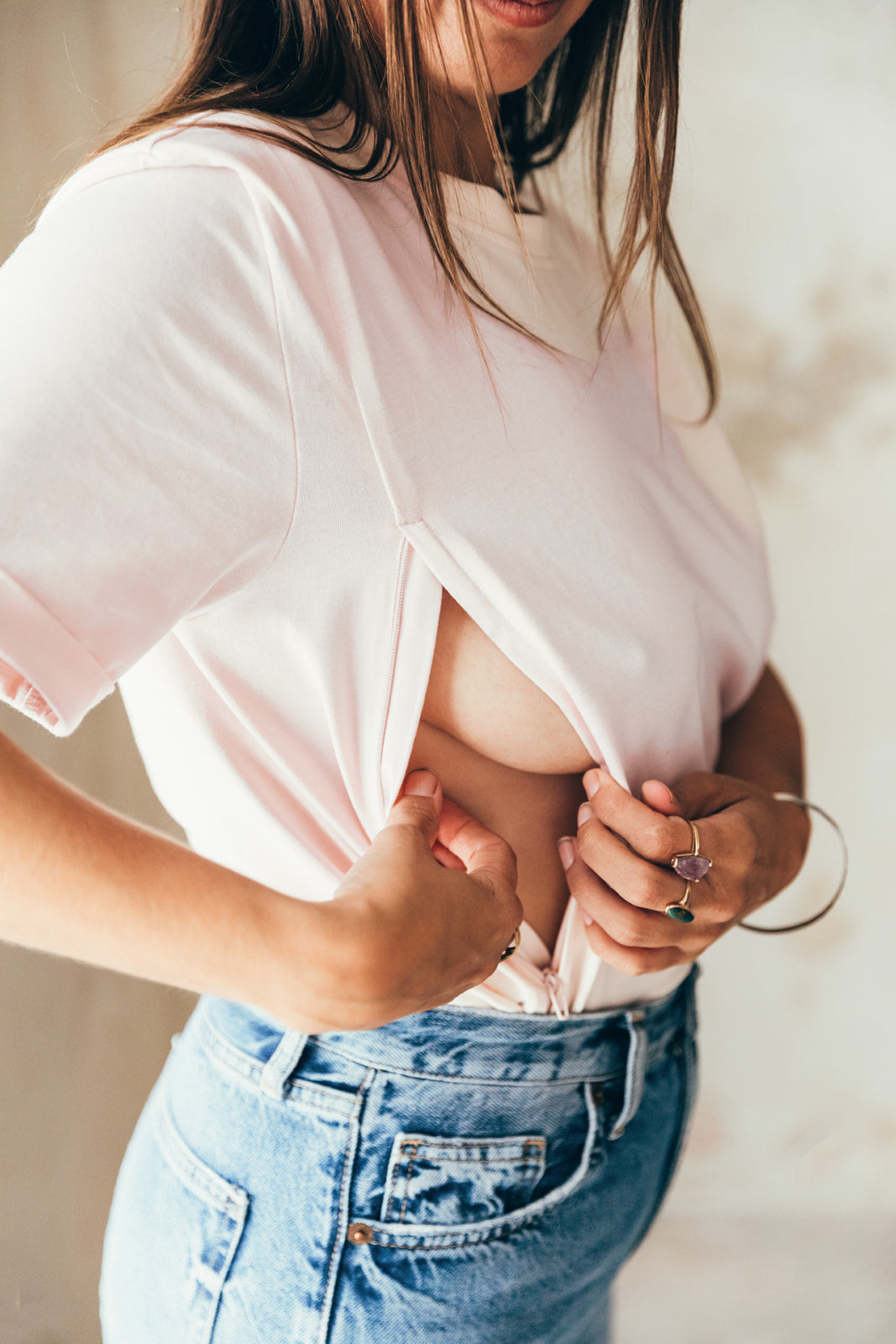
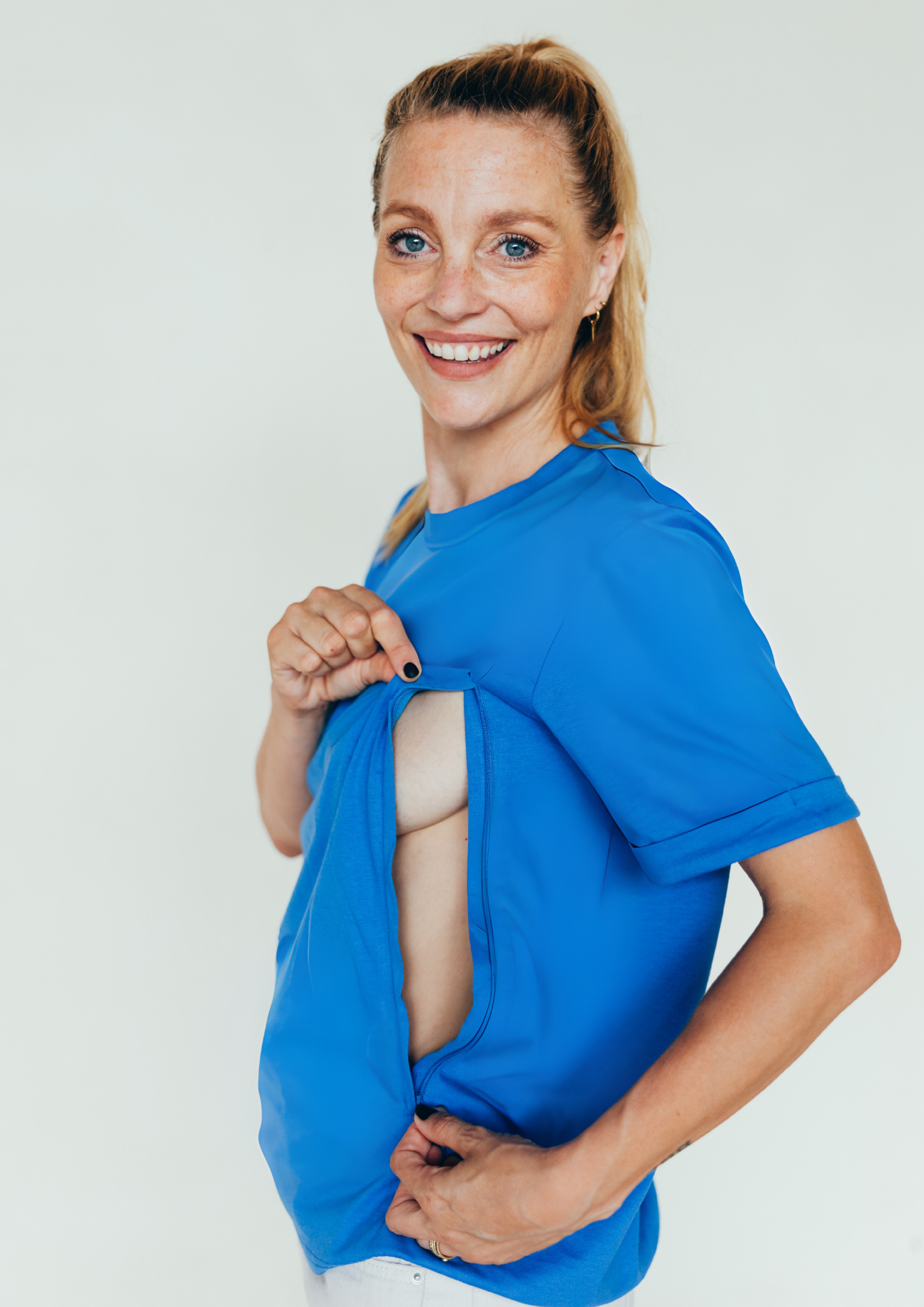
Cold is the main enemy — cover your breasts immediately after feeding, avoid sudden temperature changes, and wear Breastfeeding t-shirts with side openings that allow you to close them quickly after feeding, which helps prevent leaks.
The emotional pain: the kind we never name
There is another pain associated with breastfeeding that nobody talks about, yet very real.
Guilt when it hurts too much and you think about giving up. The shame for struggling to breastfeed even though “it’s natural.” The sadness of not experiencing these feedings as moments of pure connection, but as challenges to overcome.
These emotions are valid. They are common. And they deserve to be heard, not brushed aside with a “Hang in there, it’ll be fine.”
If you experience physical pain while breastfeeding, seek help before you it gets to be too much. A lactation consultant (IBCLC) can often resolve problems in a single session problems that you thought insurmountable. Organizations like La Leche League offer support from trained moms who are trained and available quickly.
And if, despite everything, you decide to stop because the pain is too intense, or your mental health is is suffering, or because you’ve tried, that decision is legitimate. A mother who takes care of her health and well-being is also taking care of her baby.

Table: Identifying and Managing breastfeeding
| Type of pain | Features | What to Do |
|---|---|---|
| Initial sensitivity | Pain at the start of a feeding, then subsides | Lanolin, patience, check the grip |
| Crevasses | Visible sores, pain throughout the entire feeding session | Lanolin, breast milk, lactation consultant |
| Engorgement | Tender and warm breasts, difficulty drain | Breastfeed often, warm warm before, cold after |
| Mastitis | Fever, red rash, pain severe | Consult quickly, continue breastfeeding |
| Lily of the Valley | Deep burn, shiny nipples | Antifungal treatment for moms and baby |
| Vasospasm | Pain after breastfeeding, change in color | Avoid the cold; cover up quickly |
Depending on your outfit can change
This is not trivial. The clothes you you wear while breastfeeding can help exacerbate or alleviate certain discomforts.
A rough or synthetic fabric that rubs against cracked nipples can worsen the pain and slows down healing. A T-shirt that’s too that compresses engorged breasts that are engorged increases congestion. An that is ill-fitting and forces you to complex maneuvers may discourage breastfeeding at the very the baby needs it.
Nos Breastfeeding t-shirts made from soft and breathable fabrics, with a silent side zippers, are designed to minimize anything that might exacerbate existing discomfort . Our nursing tank tops without allows engorged breasts to breathe without compression. And our Breastfeeding pyjamas made of soft cotton protect sensitive nipples during the night without irritating them.
These details may seem minor. But every feeding is a struggle, they’re not.

You are not alone
That's perhaps the to take away from this article.
The pain during breastfeeding is common, though than is commonly acknowledged. Millions of women have been through it before you. Many have found solutions. Many have continued to breastfeed for a long time after thinking that it was impossible. And some stopped and went on to be wonderful moms all the same.
No matter your experience, it is valid. Whatever decision you make, it deserves respect.
Breastfeedingis not a test. It is not a measure of your love for your child. It’s a way to feed them wonderful when it goes well, hard to get through when it hurts. And in all cases, it’s something you do with everything you’ve got.
Discover our collection of nursing clothes designed to make every feeding—even the most challenging ones—a breeze. And our new collection to find the perfect piece to accompany you on this journey.