Breastfeeding in Hot Weather: Our Tips for Summer
Summer is here, bringing with it the joys of longer days, outdoor cafes, and evenings spent outside. But it also brings its own challenges for breastfeeding moms—the heat adds another layer of complexity to days that are already quite busy.
Your body produces heat as it makes milk. Your baby, snuggled up against you, generates heat. The room, which isn’t air-conditioned, generates heat. And there you are, in the middle of it all, trying to stay cool, hydrated, and calm enough to make sure feedings go smoothly.
It's possible. In fact, it's totally manageable if you follow the right habits. Here's our complete guide to breastfeeding with ease this summer.

How Heat (Really) Affects Breastfeeding
Let’s start by debunking a few common misconceptions, because the summer heat can cause a lot of anxiety for breastfeeding moms—anxiety that isn’t always justified.
Heat does not reduce your milk supply
That’s the number one fear. And it’s a common misconception. Heat can cause dehydration, and severe dehydration can indeed affect your milk supply. But normal summer heat—even intense heat—doesn’t directly reduce the amount of milk you produce, as long as you drink enough fluids.
Breast milk adapts to the heat
In fact, this is one of the most remarkable aspects of breastfeeding: in hot weather, the composition of your milk naturally adjusts to provide your baby with more water. The first spurts of milk at the start of a feeding—known as "foremilk"—are particularly watery and help keep your baby hydrated.
Breastfed babies do not need extra water
Even in hot weather, a baby under six months of age who is exclusively breastfed does not need any additional water. Your milk is enough to keep your baby hydrated, as long as the baby feeds on demand and you yourself are well hydrated.
What's really changing
What changes is your comfort. The increased sensation of warmth during feedings. Sweating at night. The discomfort of skin-to-skin contact when temperatures rise above 30 degrees. And sometimes, your baby may feed more frequently but for shorter periods—which is completely normal and a natural adaptation.
Hydration: The Top Priority for Summer
While breastfeeding, your body needs about 700 ml more water per day than usual. In hot weather, this need increases even further depending on how much you sweat, your activity level, and the room temperature.
The most reliable sign: your thirst. While breastfeeding, thirst is often heightened during feedings themselves—this is a hormonal mechanism linked to oxytocin. Pay attention to it. Always have a large glass of water within reach before you start a feeding.
Recommended drinks: Water, either still or sparkling, depending on your preference. Cold herbal teas made with hibiscus, mint, or verbena, which hydrate and refresh. Homemade infused waters with cucumber, lemon, or strawberry for variety, with no added sugar. Light broths if you have trouble drinking plain water.
What to limit: Excessive amounts of coffee and tea—their mild diuretic effect can increase dehydration in hot weather. Sugary drinks and sodas. Alcohol, which causes dehydration and passes into breast milk.
Here’s a tip that really works: keep glasses of water in every room where you usually breastfeed. You’ll never have to get up to get a drink while feeding, which makes a huge difference on hot days.

How to keep your baby cool during feedings
It’s often the extra heat generated by the contact between your body and your baby’s during a feeding that’s the most uncomfortable part.
Choose your feeding spot wisely
The coolest room in the house isn't necessarily the bedroom. Often, it's a north-facing room or a room where the shutters have been closed since morning. In Parisian apartments without air conditioning, the interior rooms are often cooler than those facing the street.
A fan set to circulate air without blowing directly on the baby. A misting spray placed nearby—a few seconds of mist before feeding—makes a real difference in how warm it feels. Keep shutters and curtains closed during the day to preserve the cool night air.
Avoid direct skin-to-skin contact if you're too hot
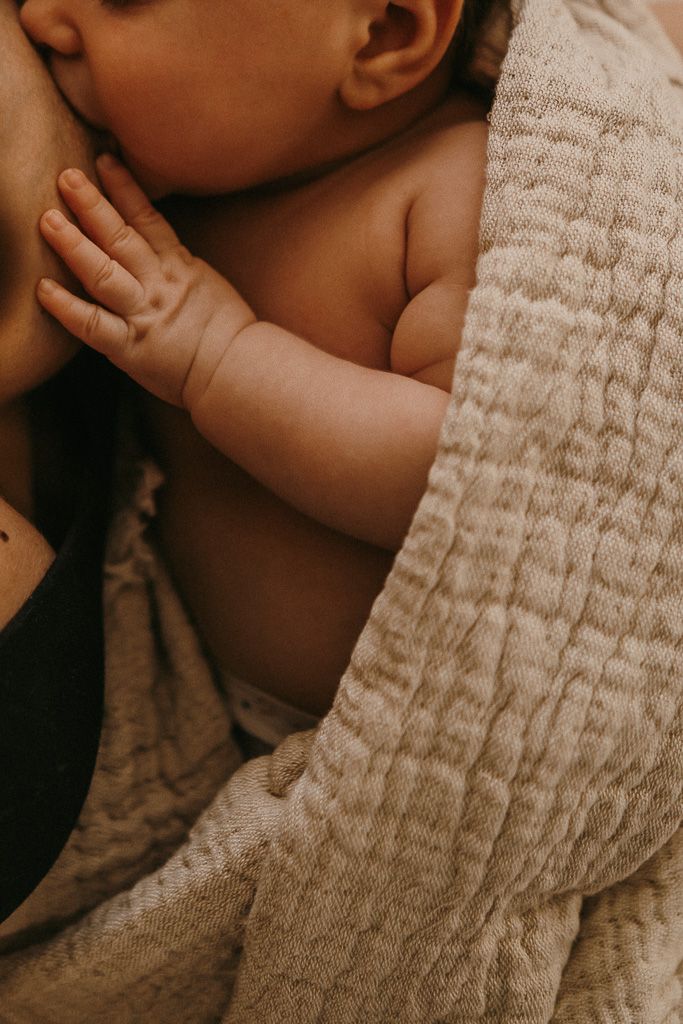
A light piece of fabric between you and your baby can, paradoxically, be more comfortable than direct skin-to-skin contact in hot weather. A small cotton muslin cloth placed on your stomach while breastfeeding absorbs sweat and creates a light thermal barrier without interfering with skin-to-skin contact.
Breastfeed more often, but for shorter periods
In hot weather, your baby may want to nurse more often—not necessarily because they’re hungry, but to stay hydrated and feel comforted. These shorter, more frequent feedings are perfectly normal. Don’t try to space them out; nurse on demand and trust your baby’s rhythm.
What to Wear (and Take Off) for Breastfeeding in the Summer
Summer is the season when choosing the right nursing clothes matters even more than in winter. You don’t want to overheat in synthetic fabrics or find yourself having to take off several layers in 35-degree heat.
Materials That Make All the Difference
Lightweight organic cotton is your best summer ally—breathable, soft, and designed to wick away sweat without irritating the skin. Linen is perfect for the hottest days; cool to the touch, it allows the skin to breathe better than any other fiber. Modal, which is soft and temperature-regulating, is ideal for hot nights. Avoid polyester and synthetic blends, which make you sweat and trap heat.
Must-have pieces for summer
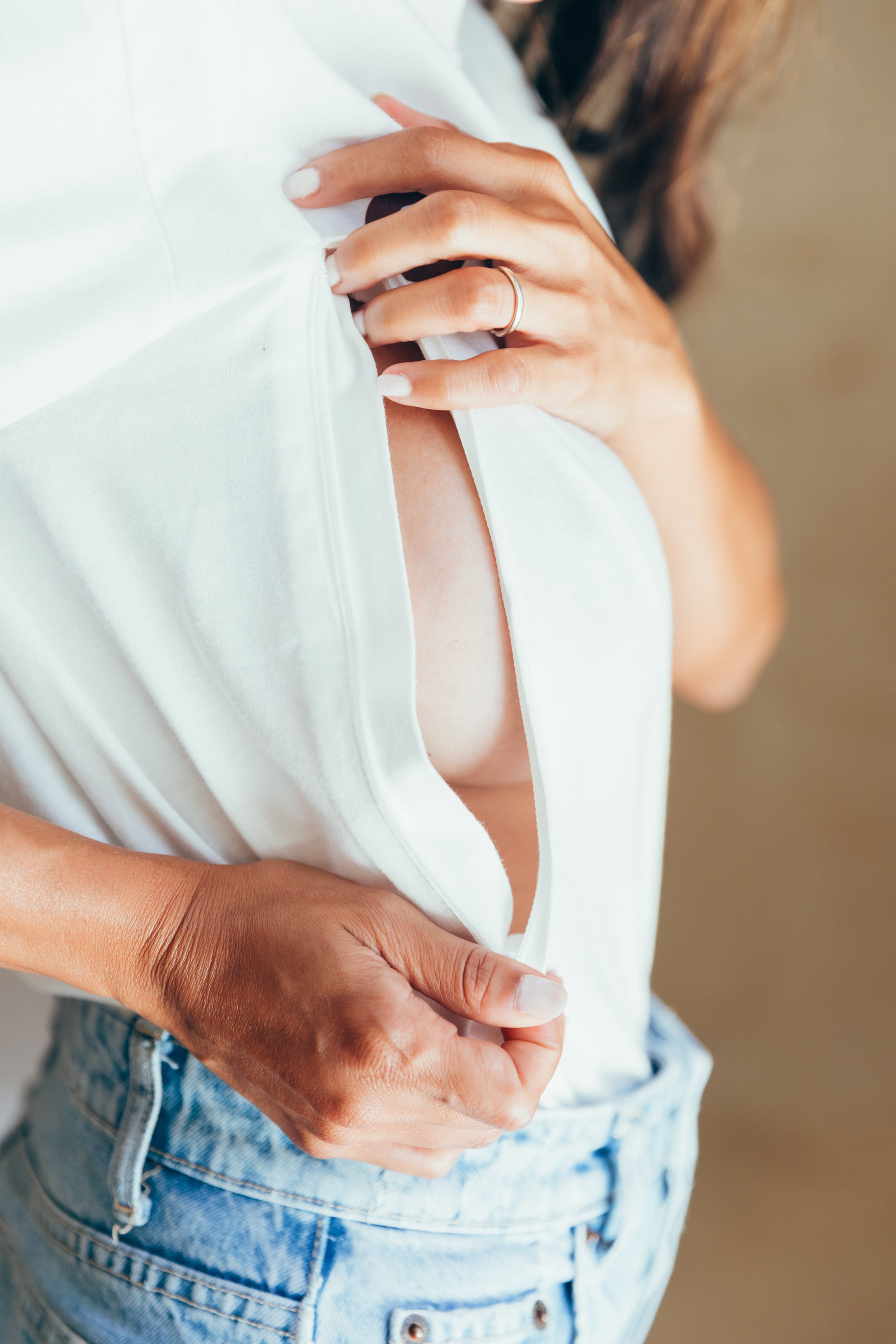
A nursing tank top is the ultimate summer essential for breastfeeding moms. With its minimalist design, it covers what needs to be covered, provides immediate access to the breasts, and leaves the arms and shoulders free for maximum ventilation. Whether worn on its own at home or under a light, open-front shirt when going out, it’s perfect for any occasion.
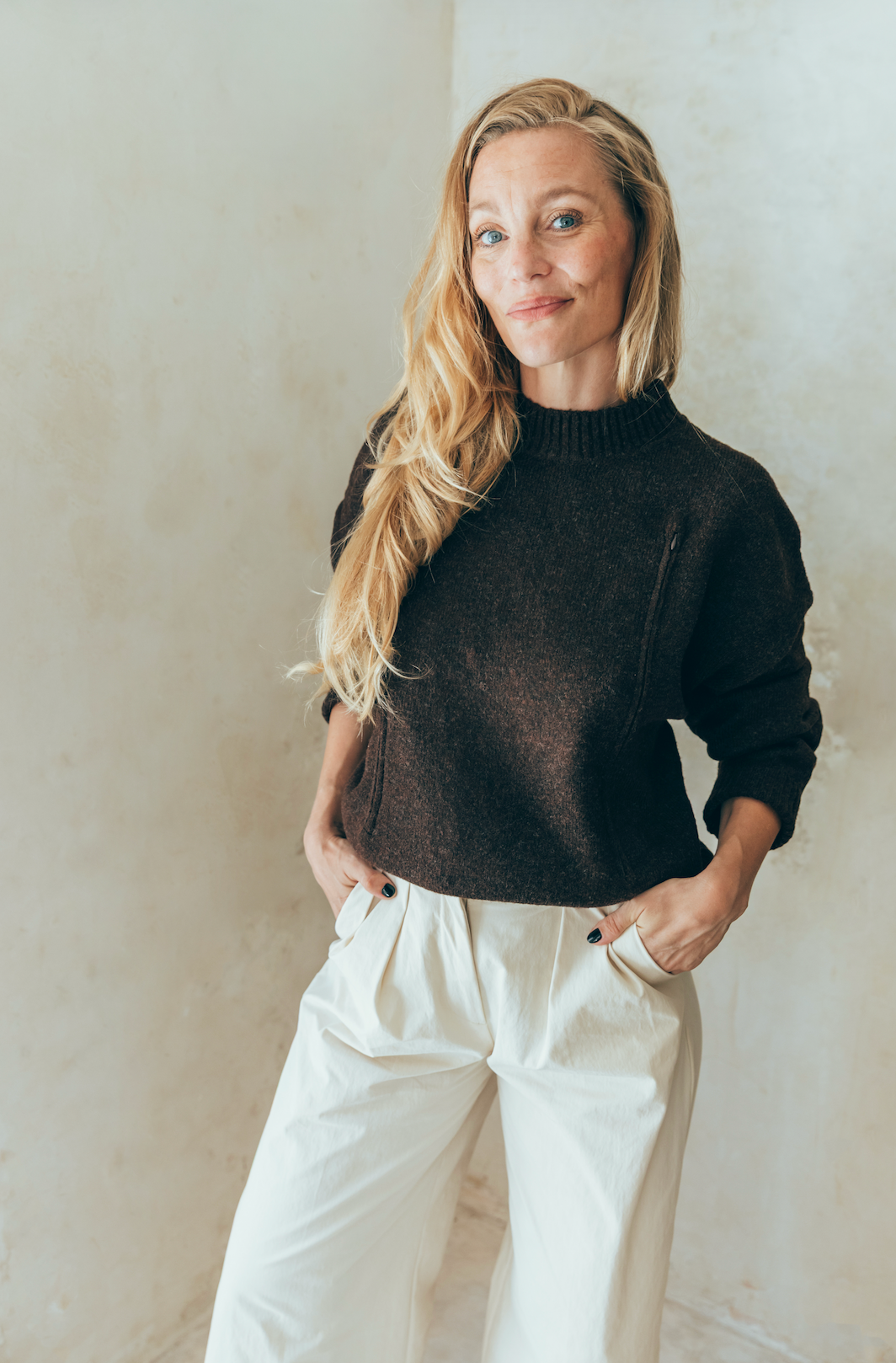
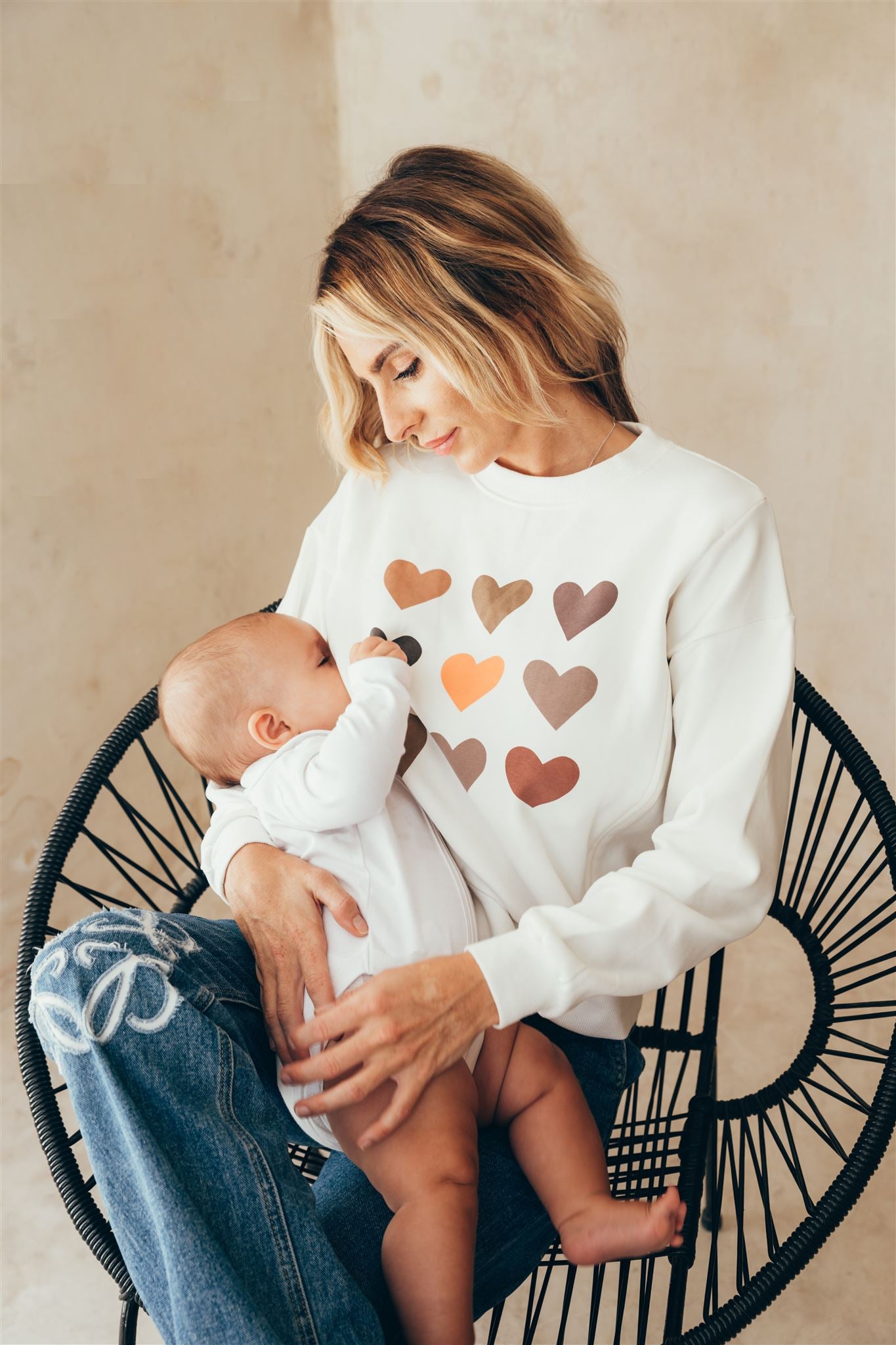
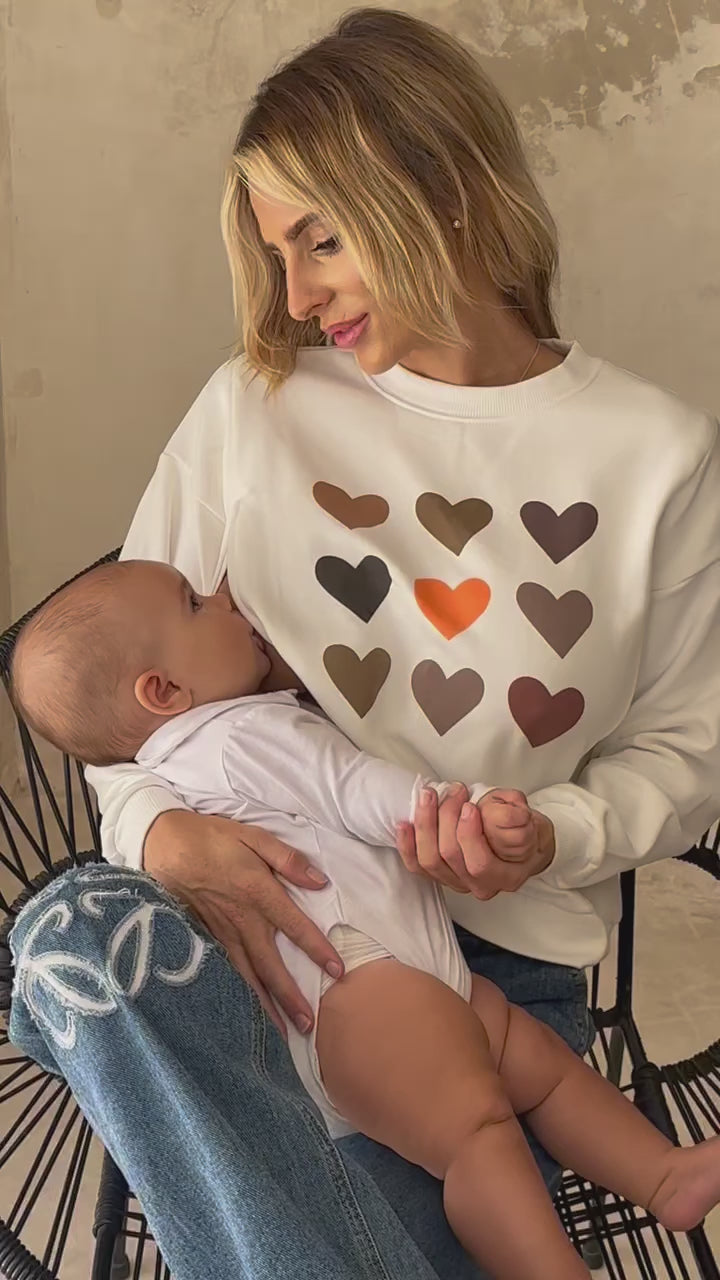
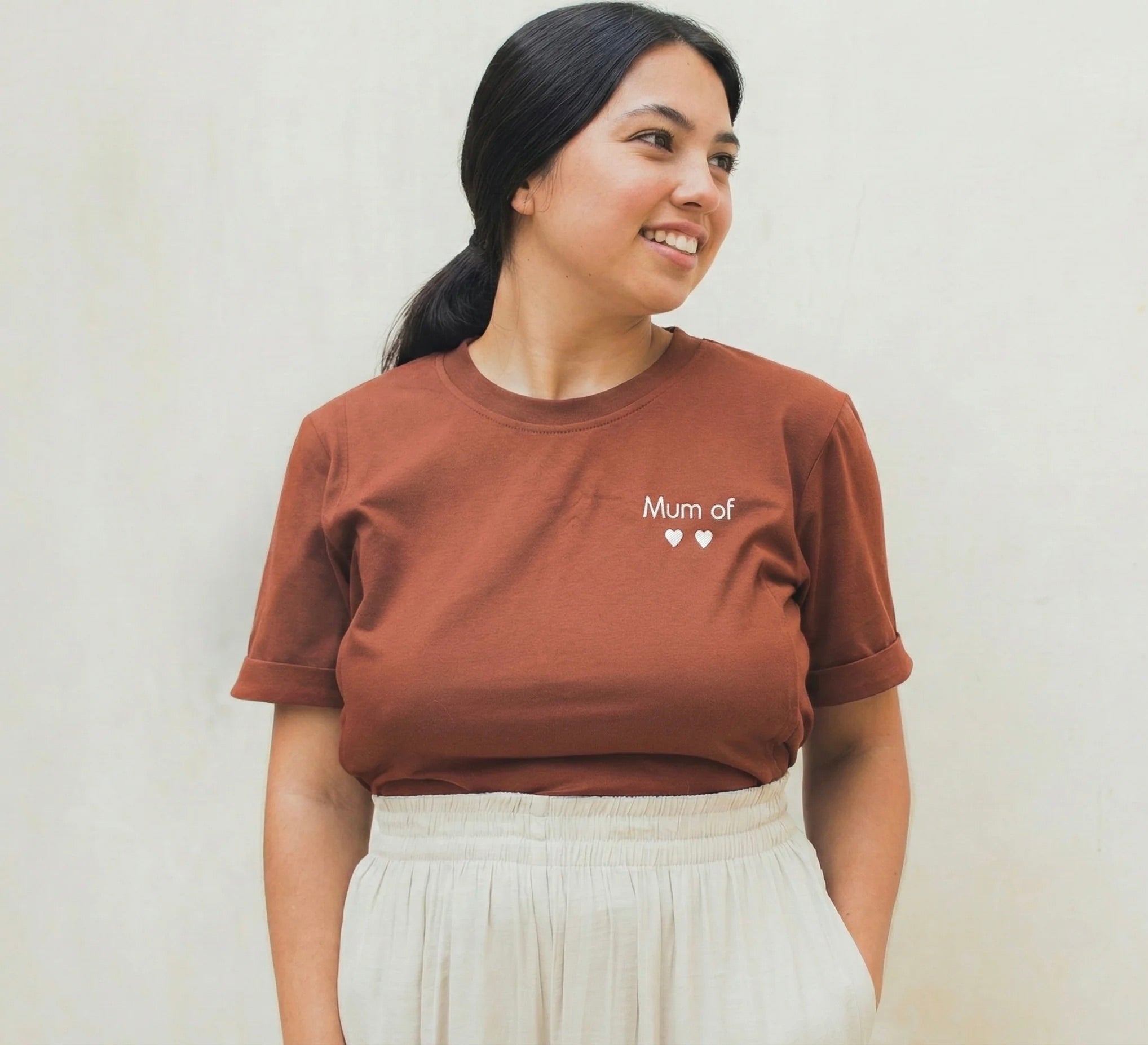
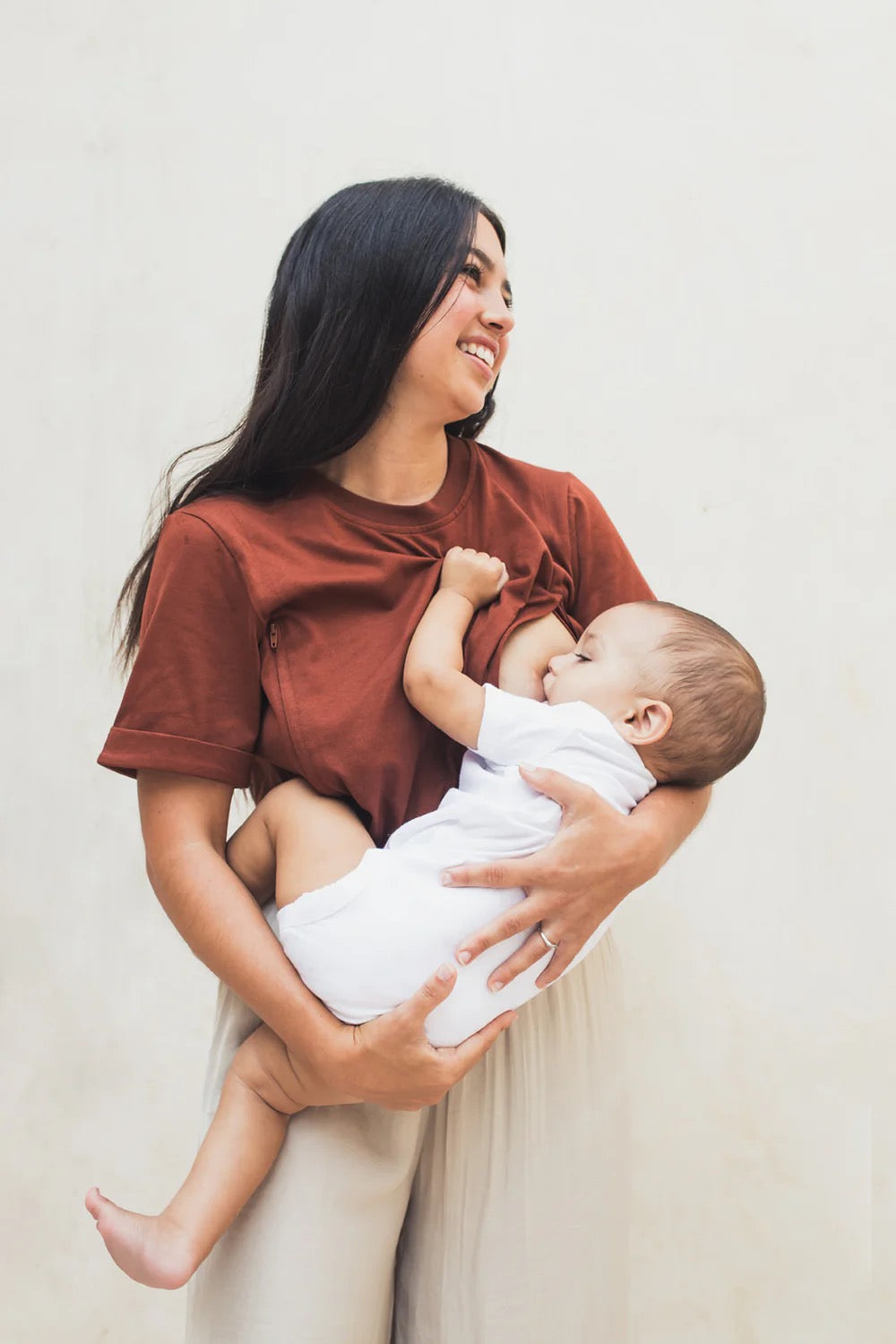
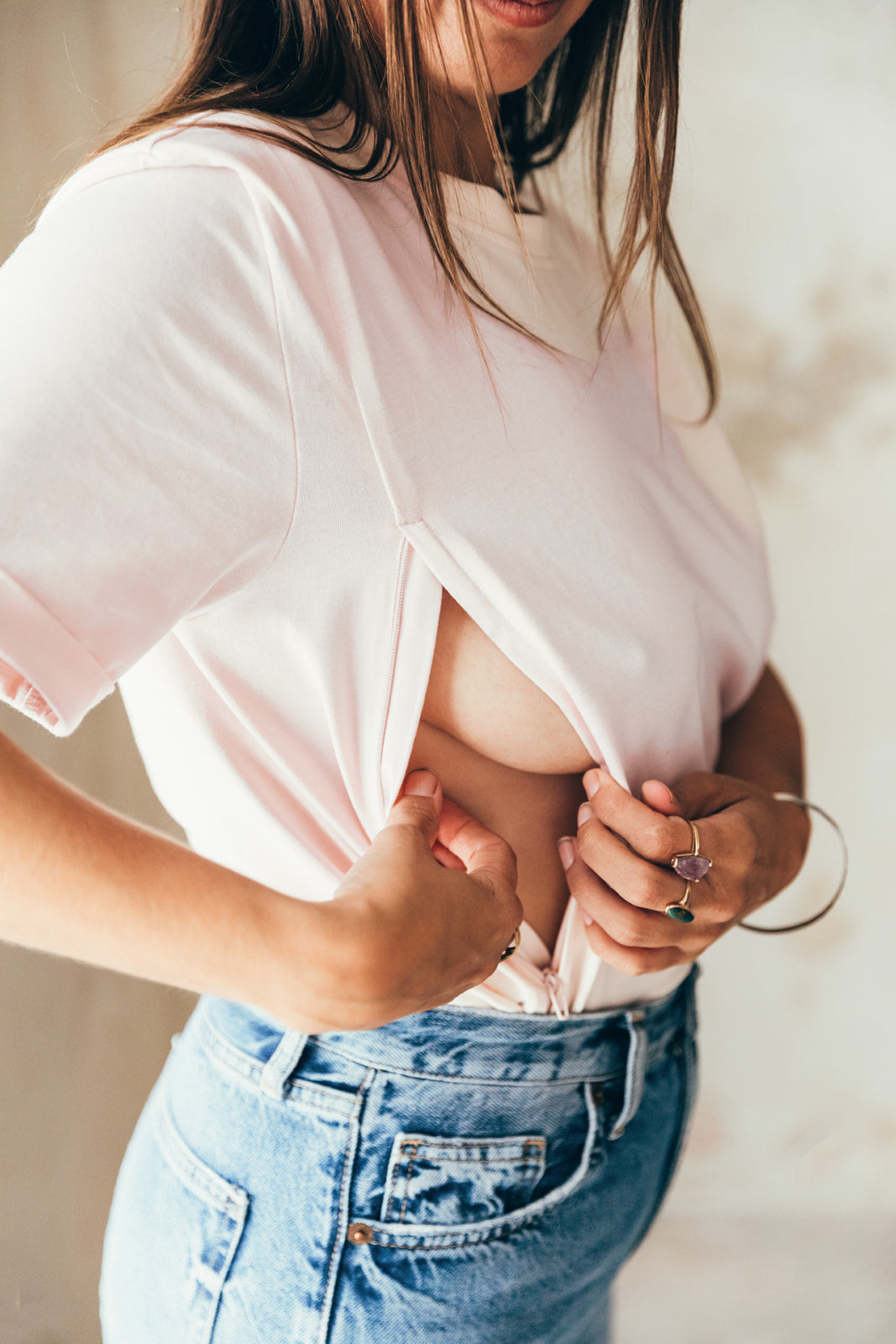
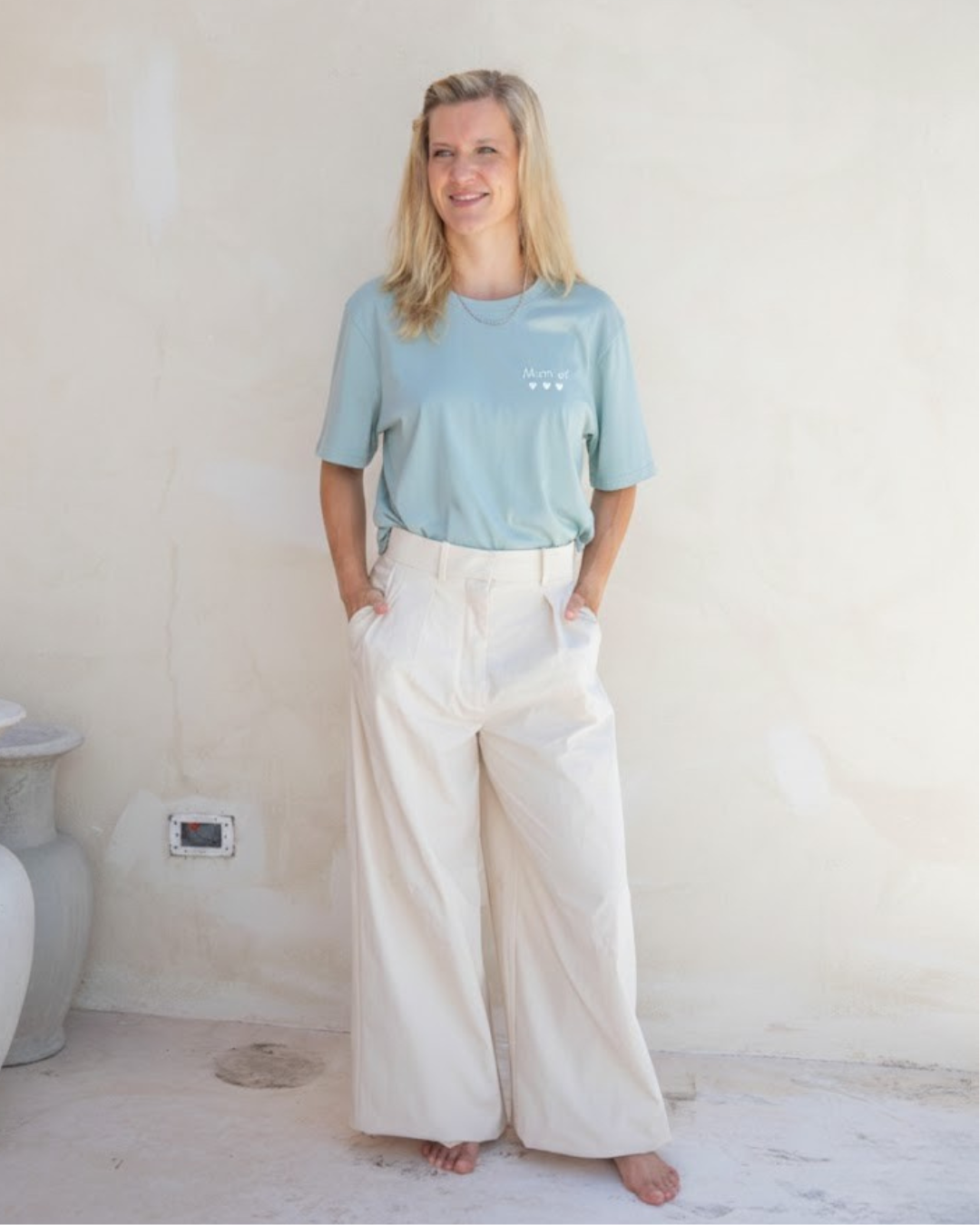
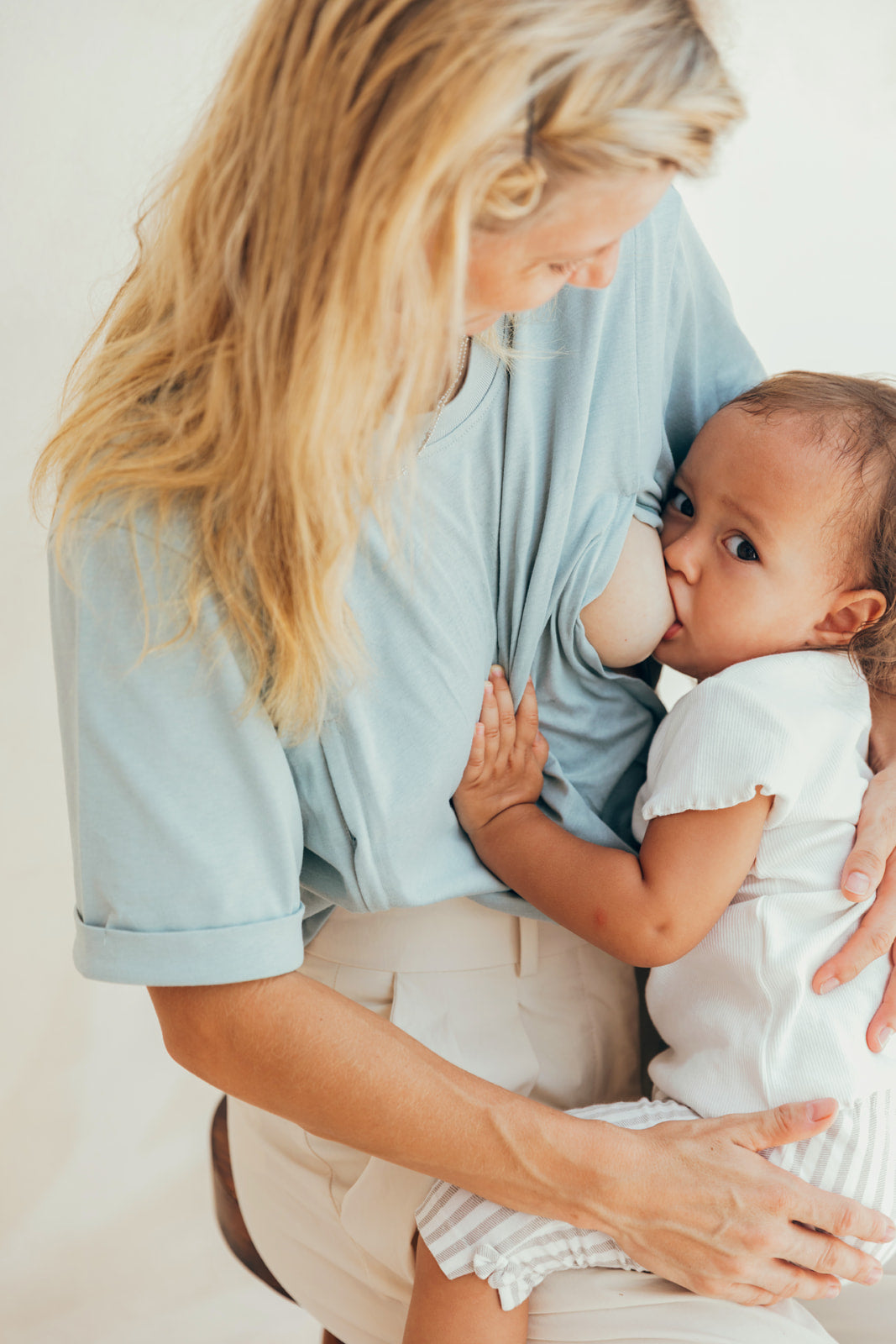
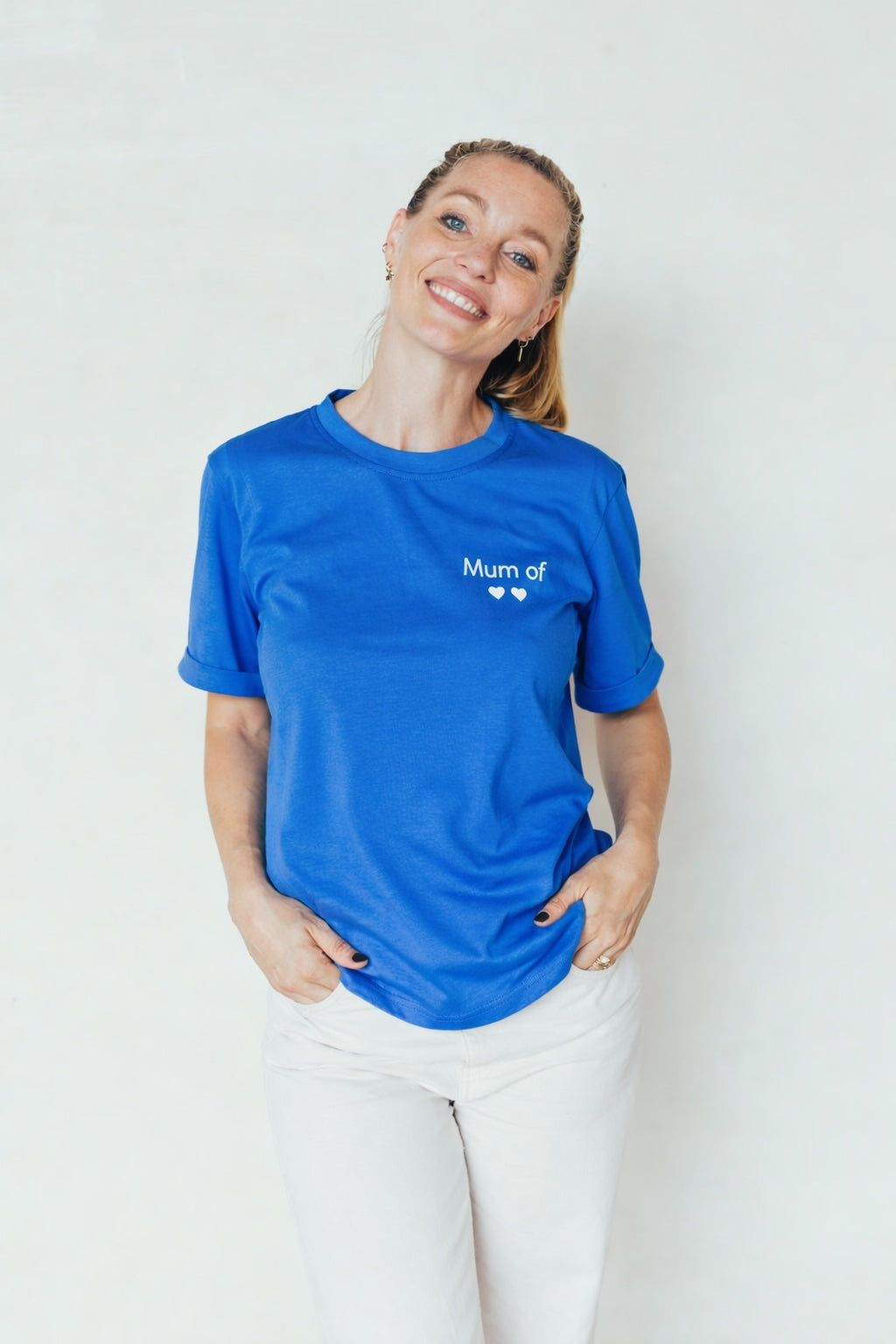
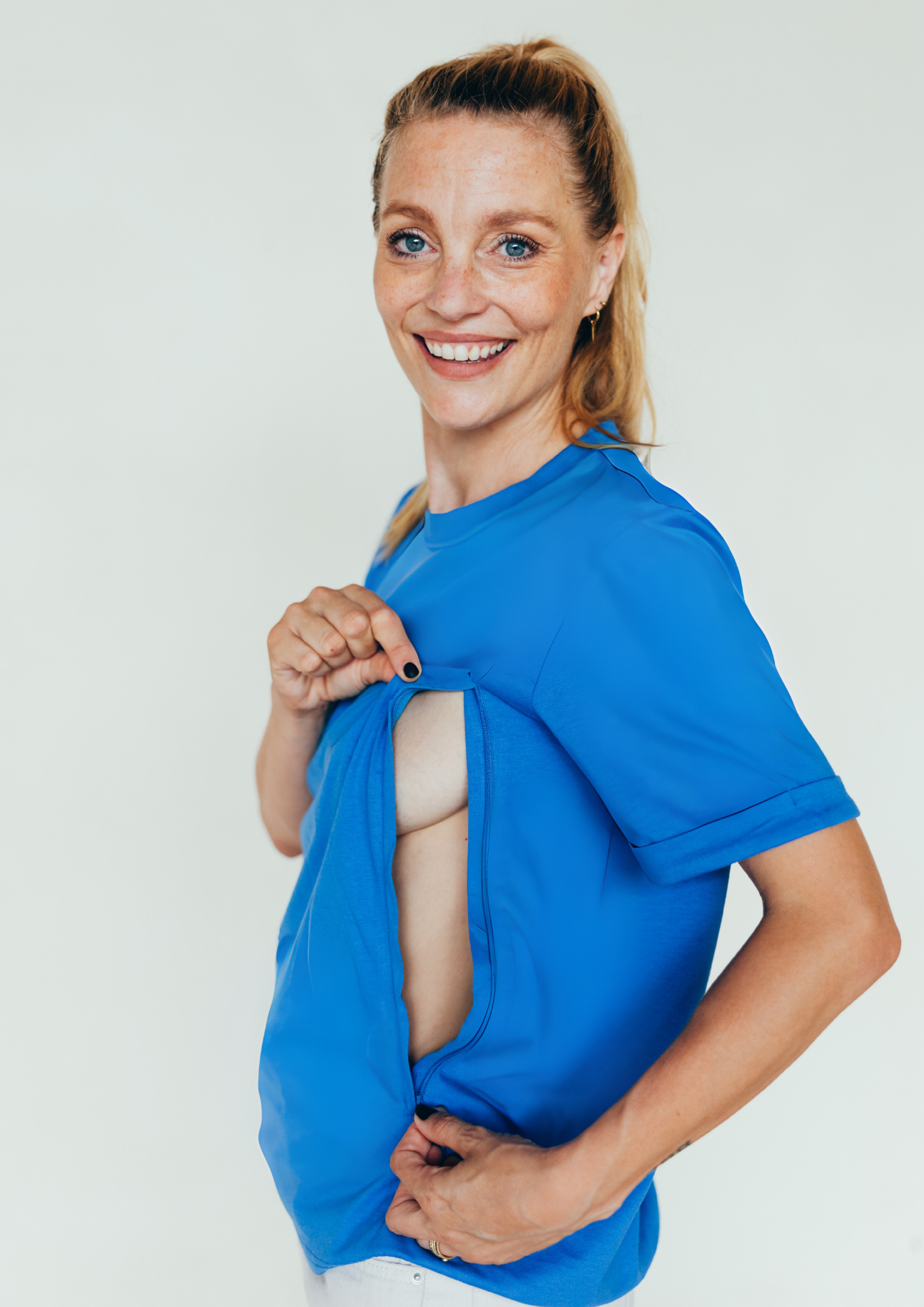
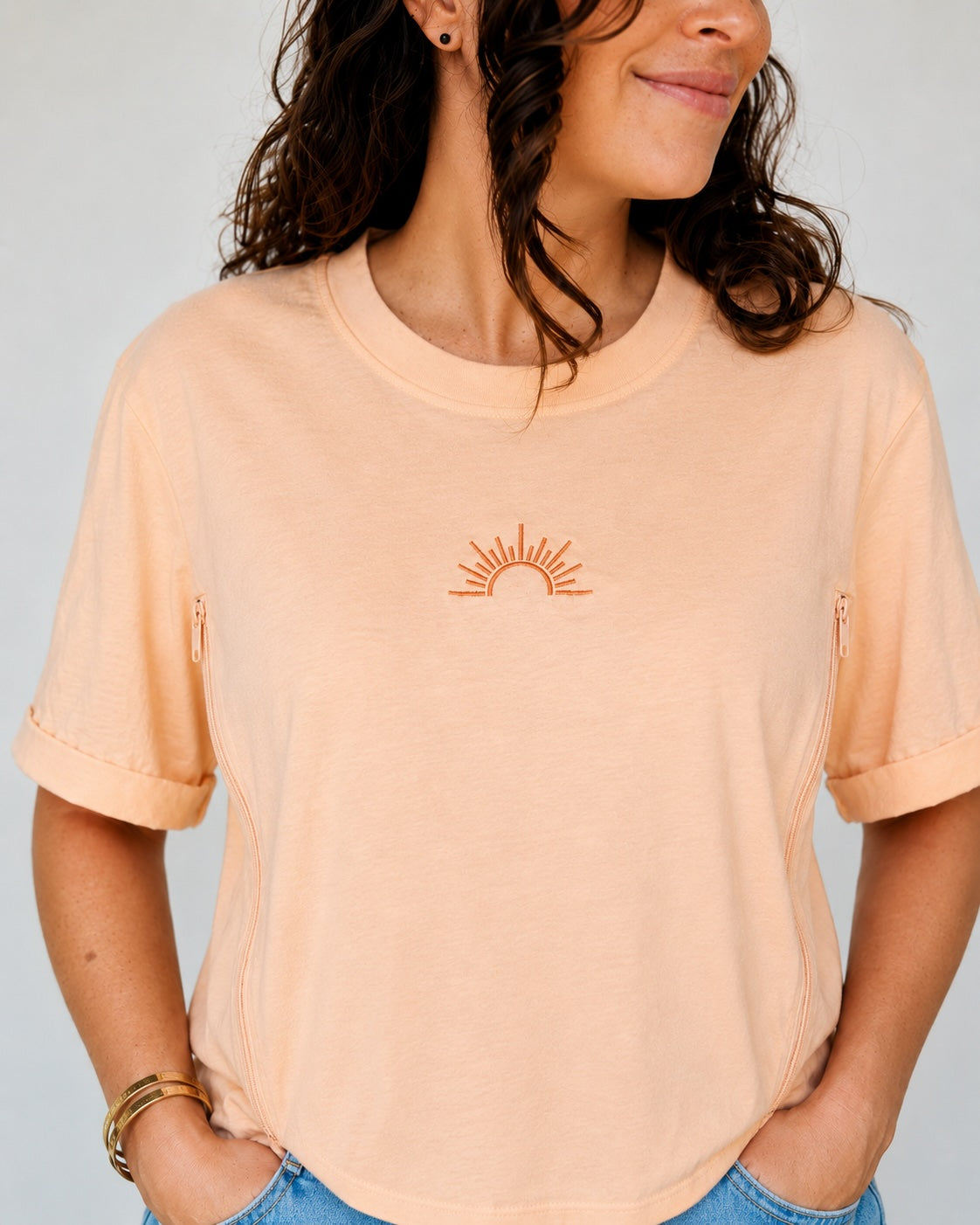
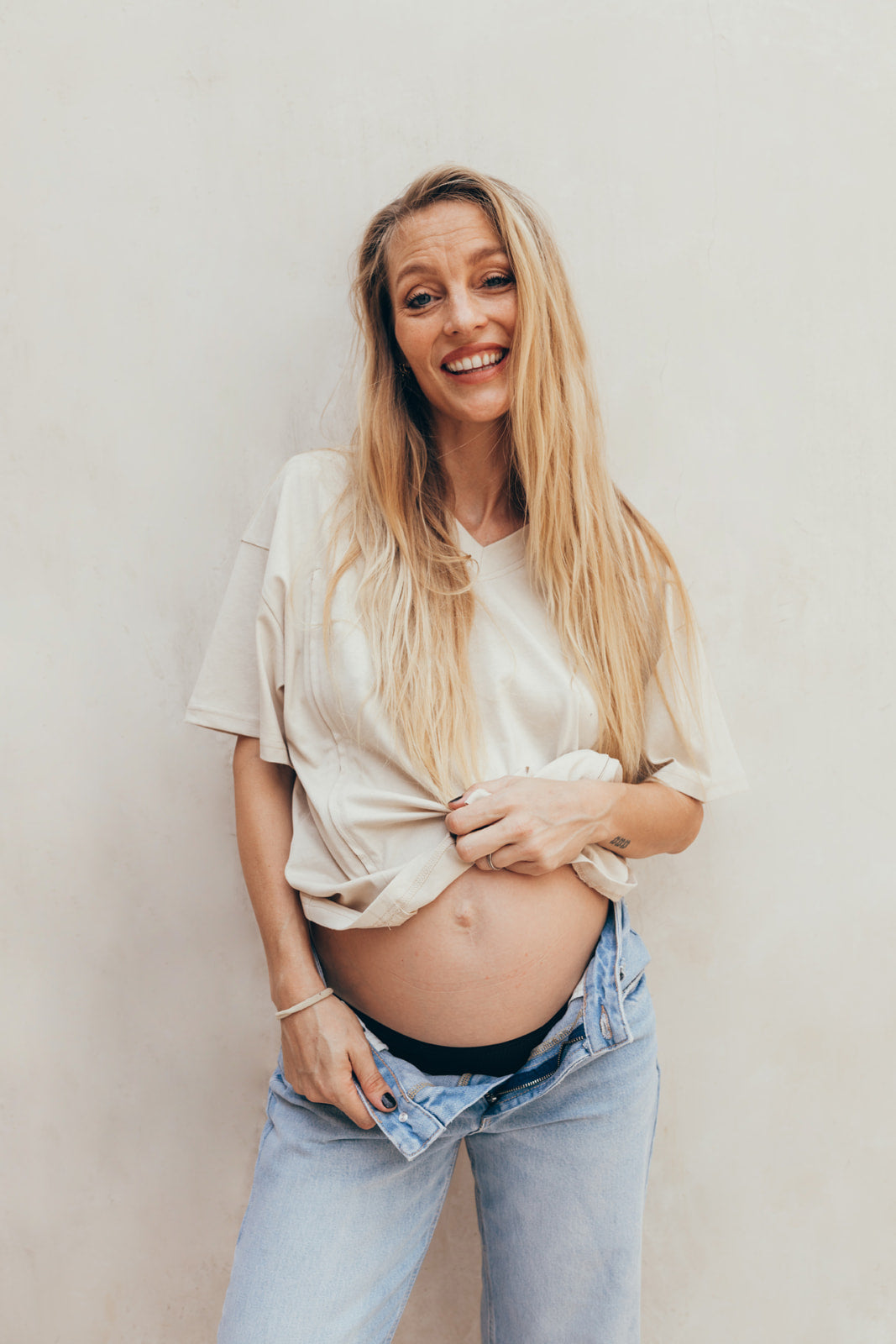
Our Breastfeeding t-shirts made of soft cotton are also perfect for summer—choose light colors that reflect heat rather than dark colors that absorb it. And our Breastfeeding dresses made of lightweight, flowing fabric are the most comfortable option for the hottest days—a loose-fitting, breathable one-piece that covers you while allowing air to circulate.

Nighttime: the biggest challenge
Summer nights with a breastfeeding baby are perhaps the most intense challenge of the season. You’re hot. Baby’s hot. The sheets are hot. And the nighttime feedings come one after another in a stifling atmosphere that makes it even harder to fall back asleep.
Here are a few tips that really help: use a light cotton sheet instead of even a lightweight comforter. Point a fan toward the ceiling, not directly at you or your baby. Wear nursing pajamas made of thin cotton or modal instead of sleeping naked—paradoxically, a light fabric absorbs sweat better and maintains a more stable temperature than being naked.

Heat waves with a baby: warning signs to watch for
There’s the summer heat, which is uncomfortable but manageable. And then there’s a heat wave, which requires extra caution, especially with an infant.
Signs of dehydration to watch for in babies: Fewer wet diapers than usual (fewer than 6 per day for an infant). A sunken fontanelle. A dry mouth and dry mucous membranes. Crying without tears. Unusual irritability or, conversely, lethargy. If you notice one or more of these signs, seek medical attention immediately.
Here are the warning signs to watch for: Severe headaches. Dark, scant urine. Dizziness. Confusion. These are signs of severe dehydration—drink plenty of fluids and seek a cool place immediately.
On hot days: Stay indoors during the hottest hours of the day (11 a.m.–5 p.m.). If you don’t have air conditioning, find nearby air-conditioned public spaces—such as libraries, shopping malls, and museums—and feel free to spend a few hours there with your baby. Regularly wetting the back of the neck and wrists helps quickly reduce the sensation of heat.
Breastfeeding outdoors this summer
Summer is the perfect time to head out to parks, patios, pools, and beaches. And breastfeeding outdoors in the summer is totally doable—with a little planning.
At the beach or the pool
Breastfeeding at the beach is possible, but make sure to find a spot with some shade. Avoid exposing your baby to direct sunlight while feeding, especially for very young infants whose skin is extremely sensitive. Whether it’s a beach umbrella, the shade beneath a parasol, or the shade of a tree, find your spot before you need to breastfeed.
When it comes to what to wear, a Breastfeeding t-shirt worn over a one-piece swimsuit or bikini top is the most practical option. You take off the T-shirt to swim and put it back on to breastfeed.

On the terrace or on a picnic
Shaded areas in a park or a covered patio are perfect for summer feedings. Get comfortable, keep a bottle of water within reach, and enjoy the moment—breastfeeding in the middle of summer, bathed in the golden light of an afternoon in the park, is one of those quiet little joys that you’ll remember for a long time.
Summer is a great time to breastfeed
We don’t say it often enough: summer is also a great time for breastfeeding. You wear fewer clothes, so feedings start more quickly. You go out more, and breastfeeding on a patio or in a park is more pleasant than in a waiting room in winter. The abundant natural light helps regulate your baby’s circadian rhythm. And the vitamin D you absorb outdoors also benefits your milk.
With the right clothes, good hydration habits, and a few simple adjustments, summer can be one of the most beautiful and seamless times of your breastfeeding journey.
At 23 Mai Paris, our Breastfeeding t-shirts , tank tops, dresses, and new summer collection are designed to help you enjoy the season with lightness, comfort, and that extra touch of style that makes breastfeeding a little more joyful—even when it’s 95 degrees.
Discover our complete collection of nursing wear designed for all seasons—and especially for summer.