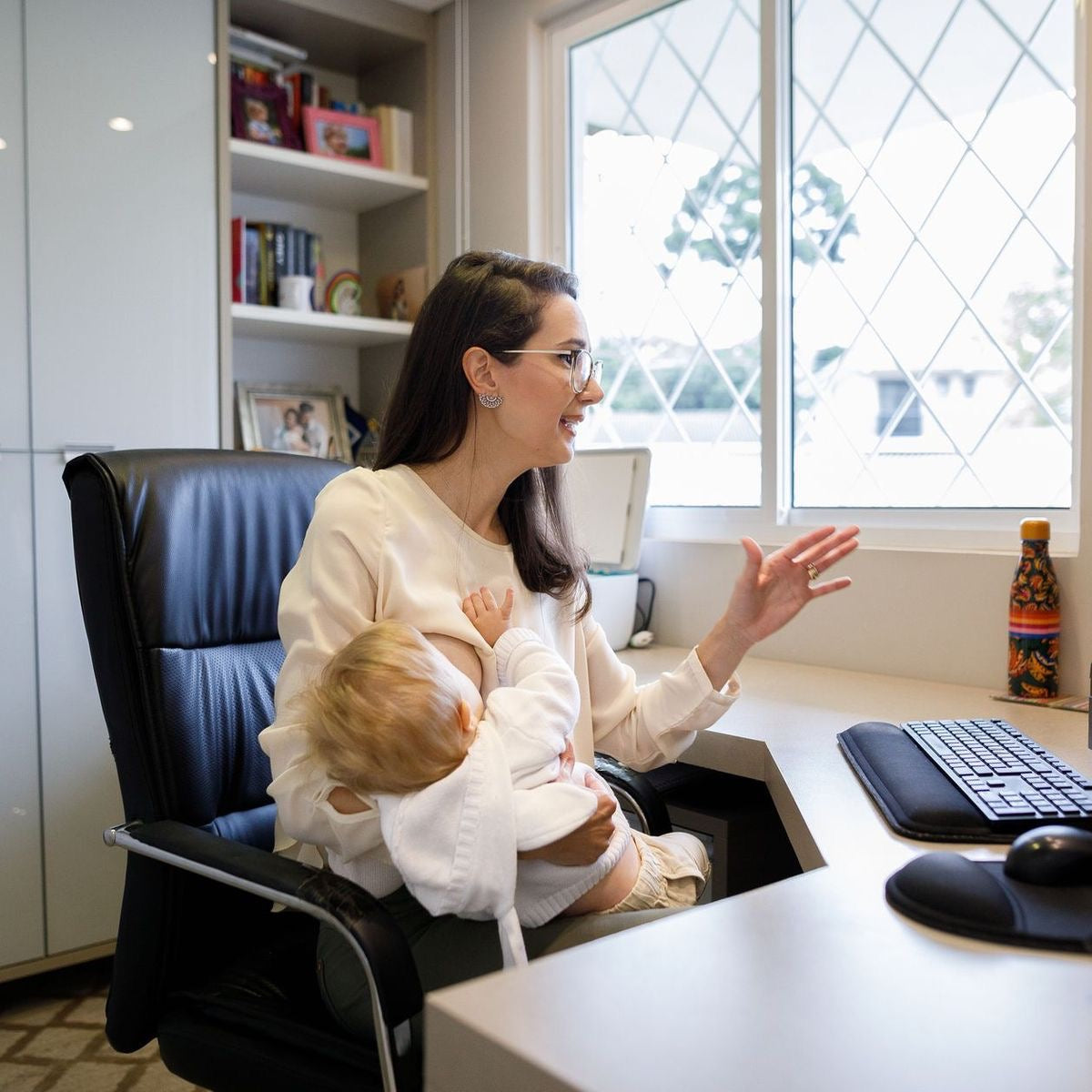
Breastfeeding During a Heat Wave: Our Tips for a Stress-Free Summer
Breastfeeding During a Heat Wave: Our Tips for a Stress-Free Summer
Summer is here, the temperature is rising, and with it comes a host of questions for breastfeeding moms. Does my baby need more milk? Should I give him or her water? How can I stay cool and comfortable while breastfeeding? And most importantly, how can I keep from completely melting while holding a little human oven against me every two hours?
Good news: Breastfeeding during a heat wave is totally doable. All it takes is a few simple adjustments for both you and your baby to get through the heat with ease. We'll explain everything.

Why Heat Affects Breastfeeding
When temperatures rise, your body functions differently—and that goes for both you and your baby.
As for you, you sweat more and lose more water. If you don't replenish enough fluids, your milk supply may decrease—not because the heat "melts the milk," but because dehydration directly affects lactation.
As for your baby, the heat increases their need for water. And guess what: breast milk is about 88% water. Your body naturally adapts by producing a thinner, more hydrating milk at the beginning of feedings—what’s known as “foremilk.” So your baby doesn’t need any extra water as long as they’re exclusively breastfed. They’ll simply nurse more often, for shorter periods, to stay hydrated.
Staying Hydrated: The Number One Rule
During a heat wave, staying well-hydrated becomes a top priority when you're breastfeeding. The goal: at least 2 to 3 liters of water a day, and more if you're sweating a lot or are particularly active.
A few simple habits to adopt:
- Put a large bottle of water in every place you usually go (couch, bedroom, patio).
- Drink water before, during, and after each feeding—make it a habit.
- Mix it up: cold water, lukewarm herbal teas, coconut water, cold broths, and water-rich fruits (watermelon, cucumber, strawberries).
- Avoid drinking too many diuretic beverages: coffee, alcohol, and sugary sodas.
A good indicator: if your urine is dark, you're slightly dehydrated. It should remain clear and plentiful.
Breastfeeding During a Heat Wave: What to Expect
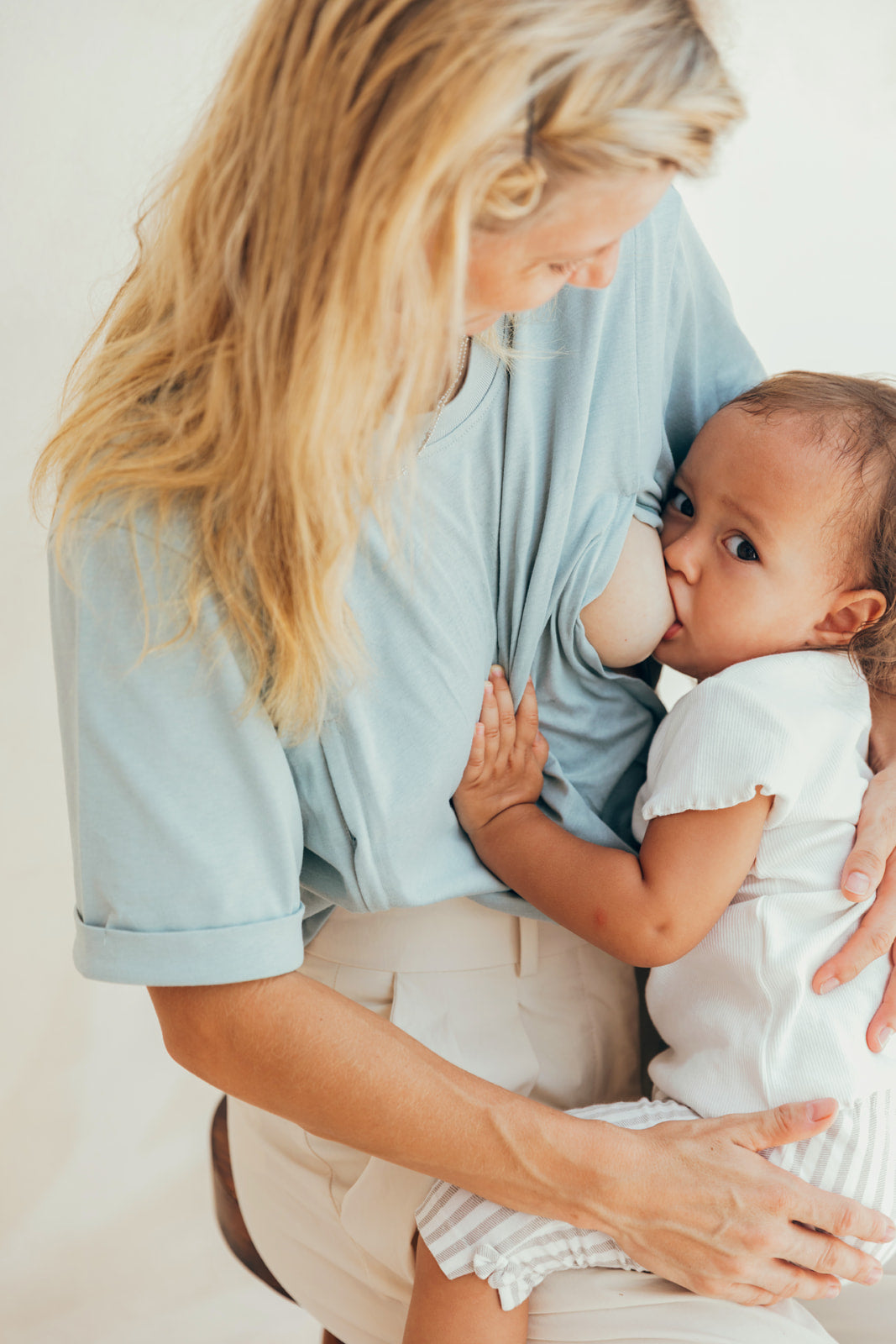
During hot weather, feeding patterns often change. Your baby may want to nurse more frequently—sometimes every hour. This is normal and even reassuring: your baby is using breastfeeding as a natural source of hydration.
Don't try to regulate or space out feedings. Feed your baby on demand, even if it seems like a lot. These short, frequent feedings are exactly what your baby needs.
Should you give water to a baby who is exclusively breastfed?
No. Up to 6 months of age, breast milk is sufficient, even in hot weather. Giving additional water can disrupt lactation by reducing stimulation of the breast. If your baby is over 6 months old and is already eating solid foods, you can offer a few sips of cool water as a supplement.
Staying Cool While Breastfeeding
This is often the most uncomfortable part: holding your baby close when it’s 35°C—it gets hot quickly. Here’s how to make feedings more bearable.
Choose the right place:
- The coolest room in the house, with the shutters closed during the day.
- A fan pointed toward you (not directly at the baby).
- Outside in the shade, during the coolest part of the day.
Limit close skin-to-skin contact:
- Place a light muslin cloth between you and your baby to absorb sweat.
- Cool your wrist and the back of your neck with a damp washcloth before feeding.
Moisturize your skin:
Heavy sweating can irritate your nipples. Apply a few drops of breast milk after each feeding and let it air-dry—it’s the best natural remedy.
Nursing Clothes: Your Best Friend in the Summer
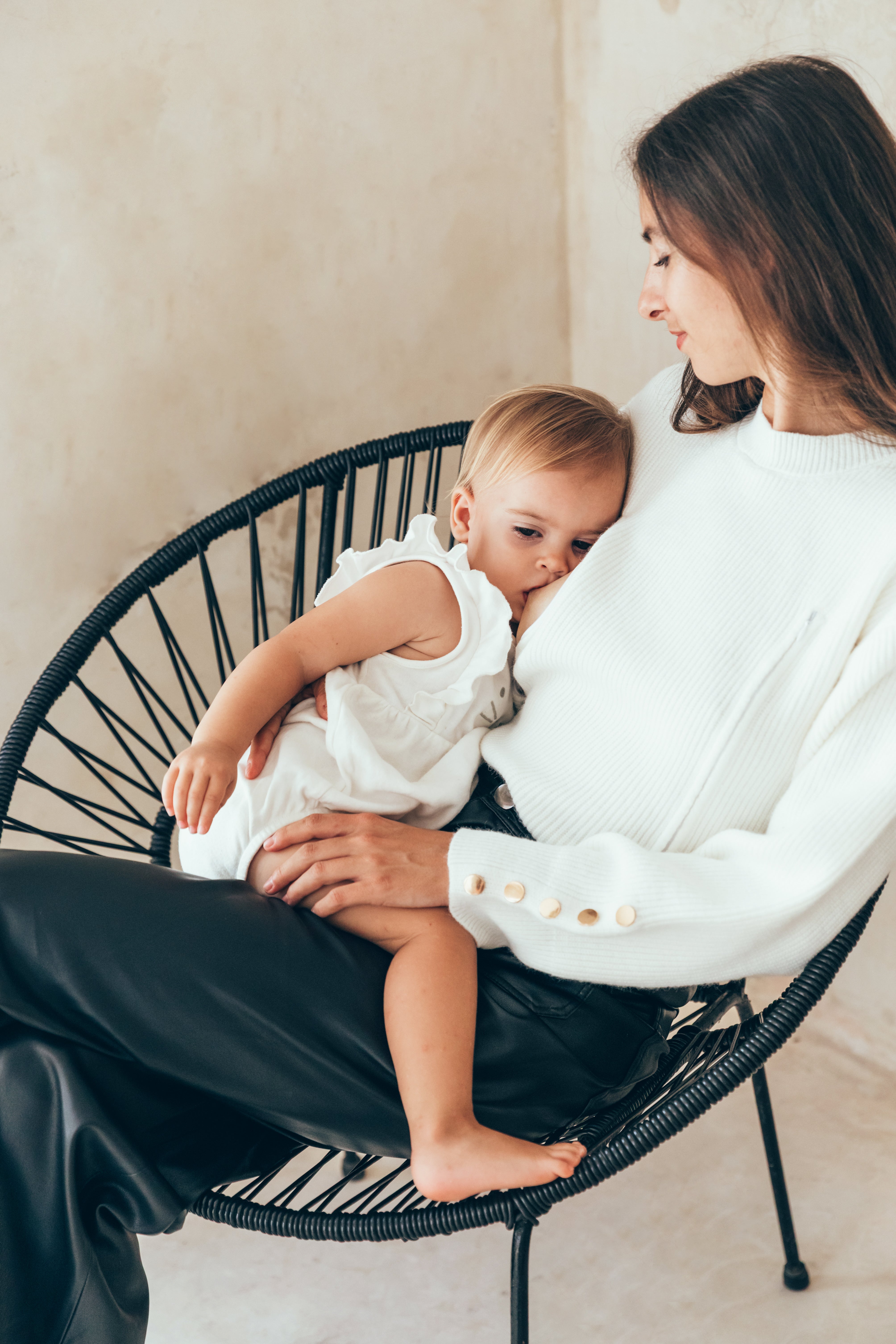
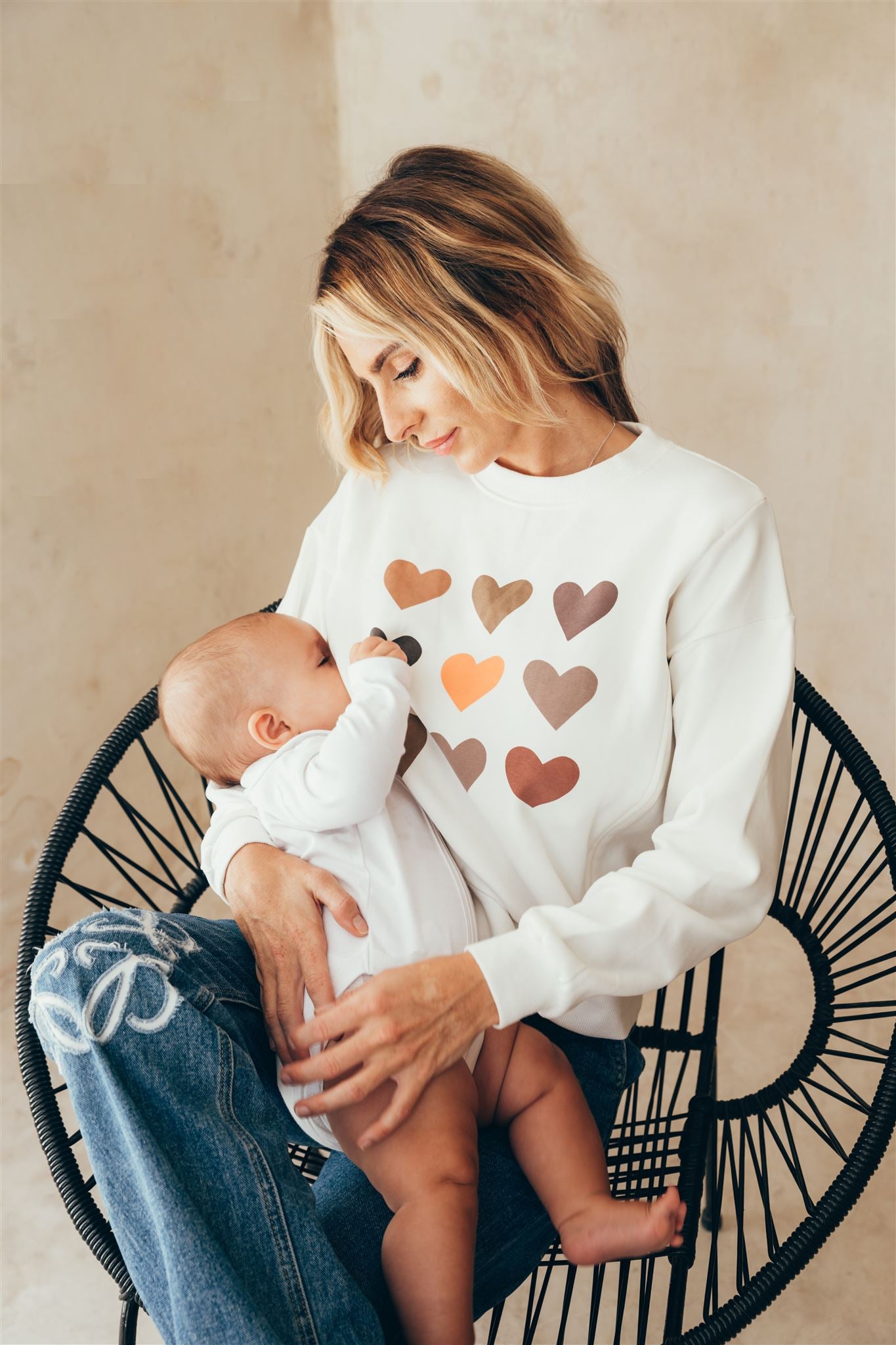
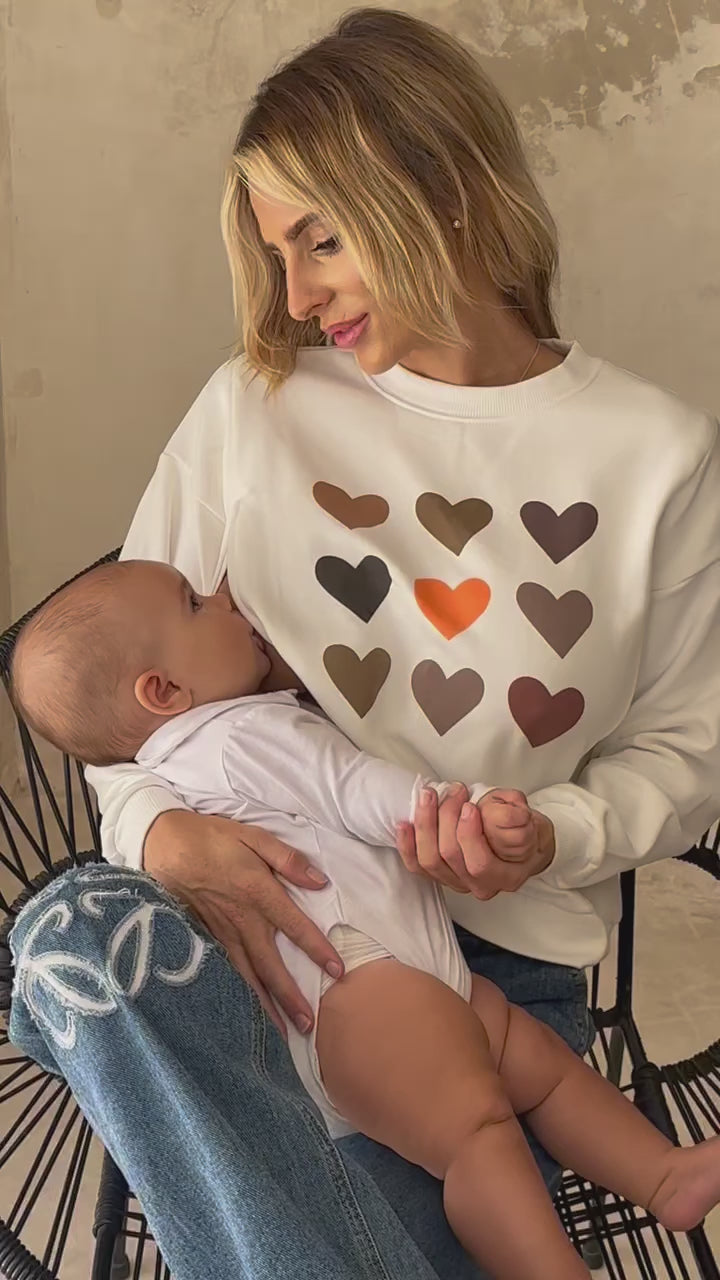
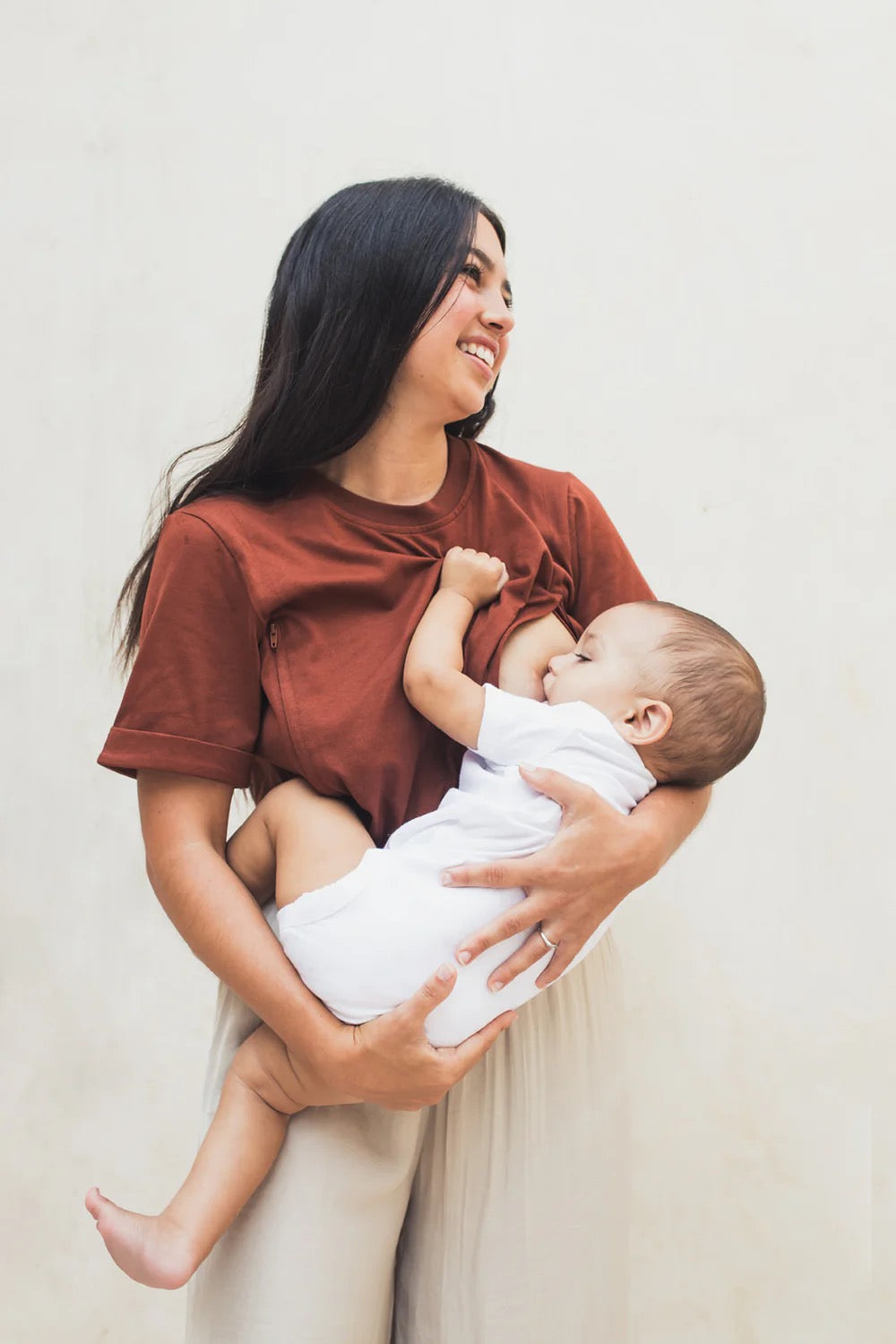
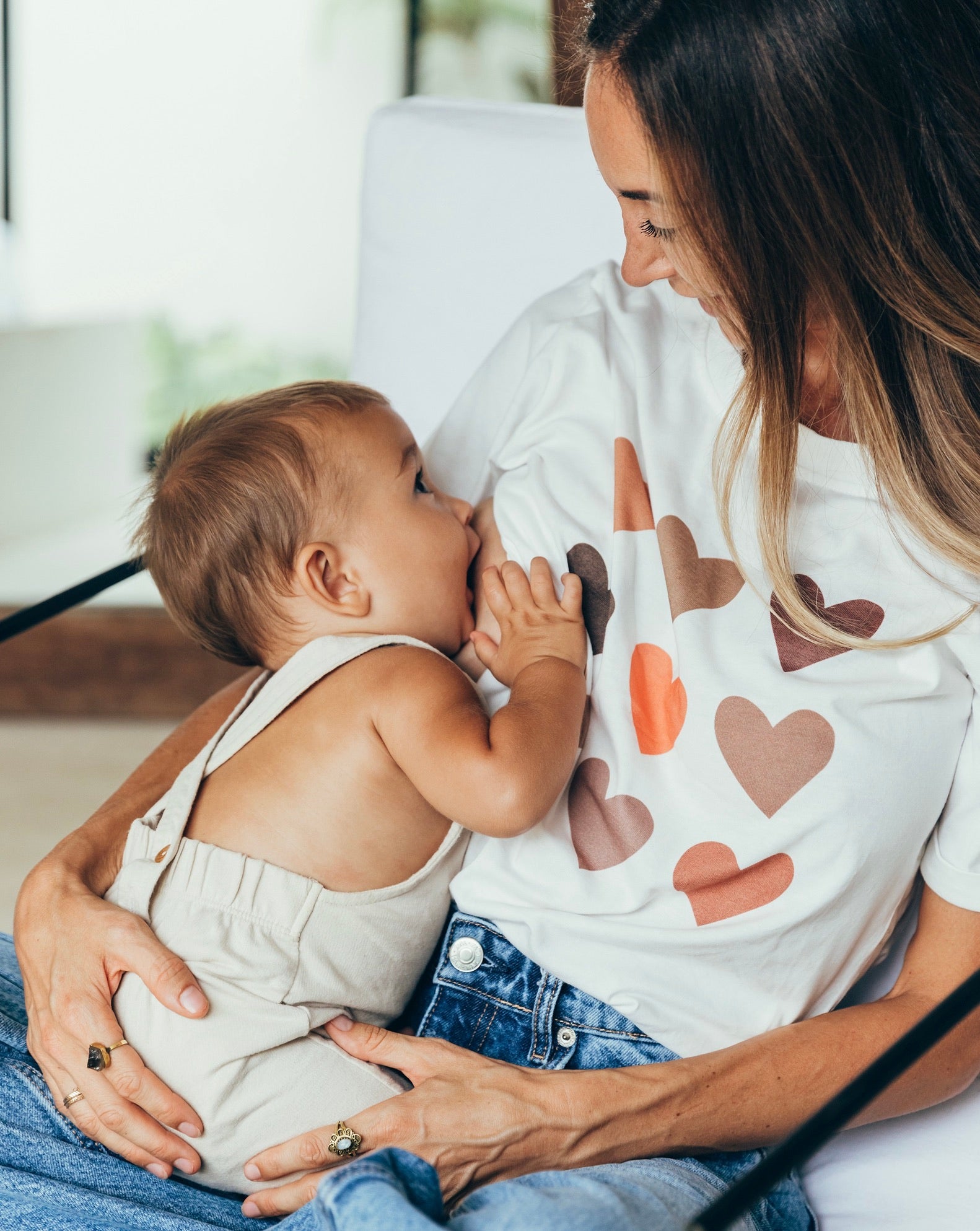
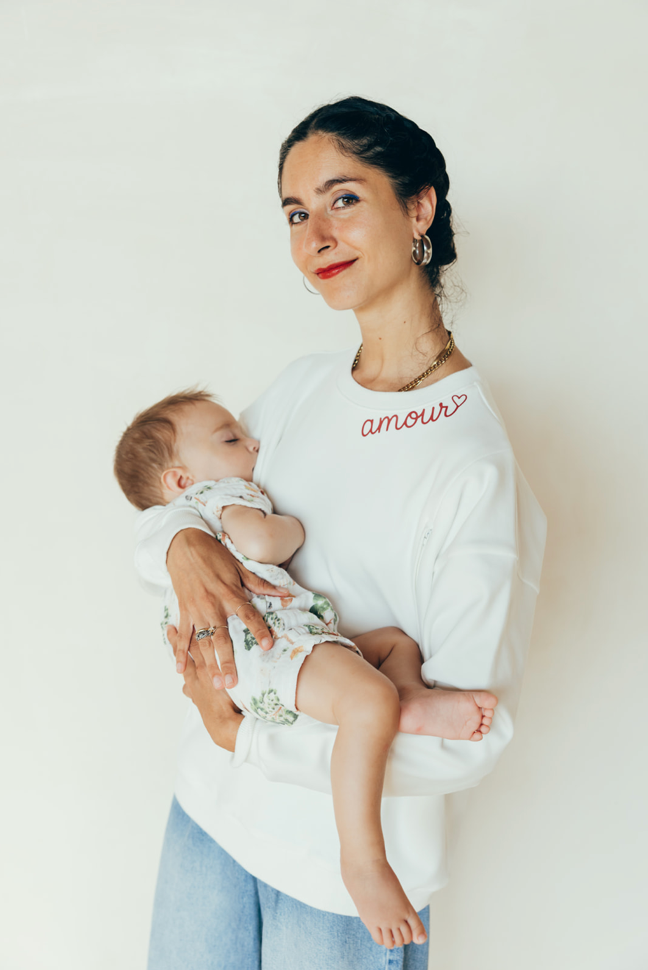
During a heat wave, the ideal nursing garment combines three qualities: lightness, breathability, and easy access to the breast for quick and discreet feedings.
Go for natural fabrics:
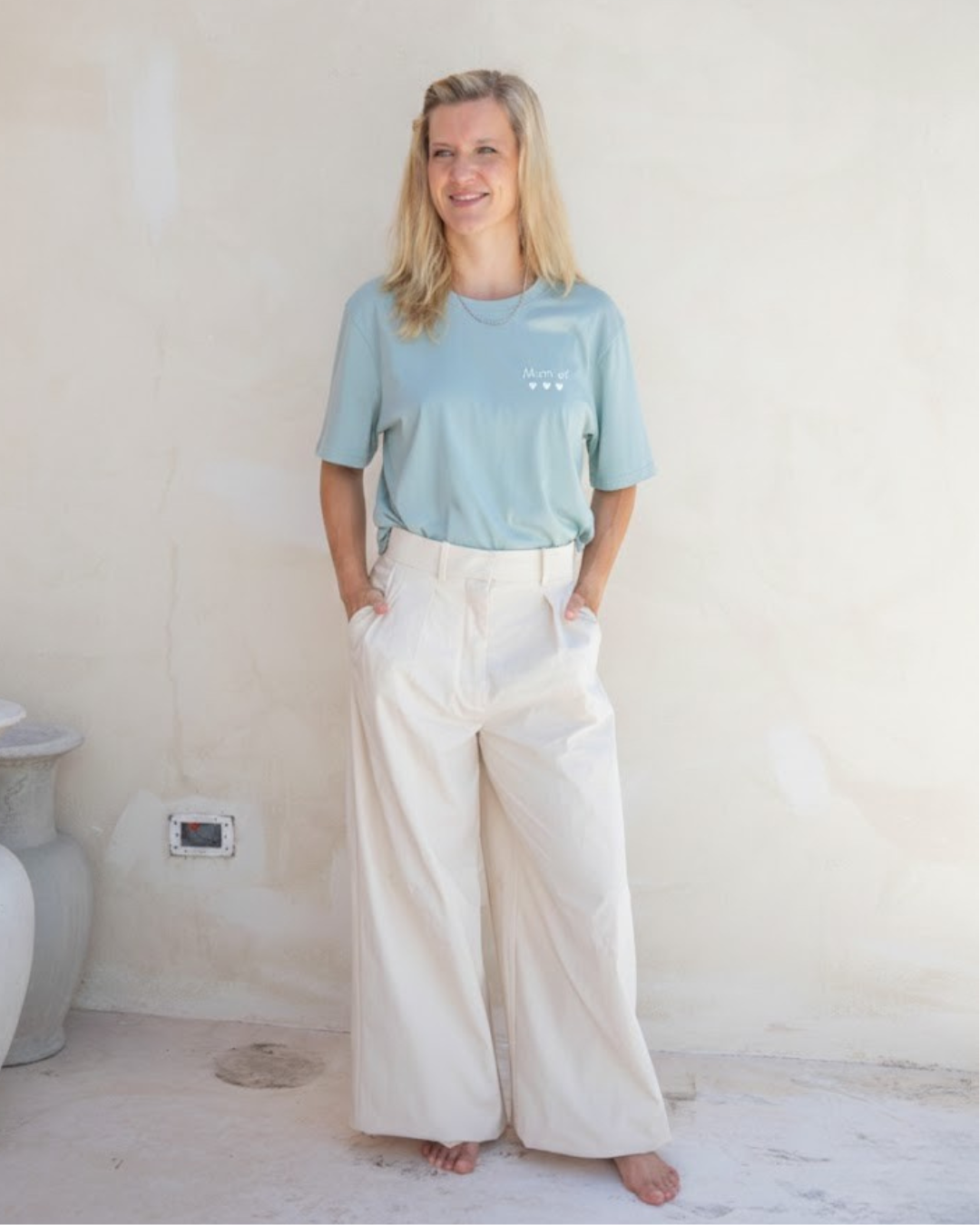
Cotton and lightweight jersey are still the best options. They wick away sweat, let your skin breathe, and don't stick to your skin.
Opt for loose-fitting styles:
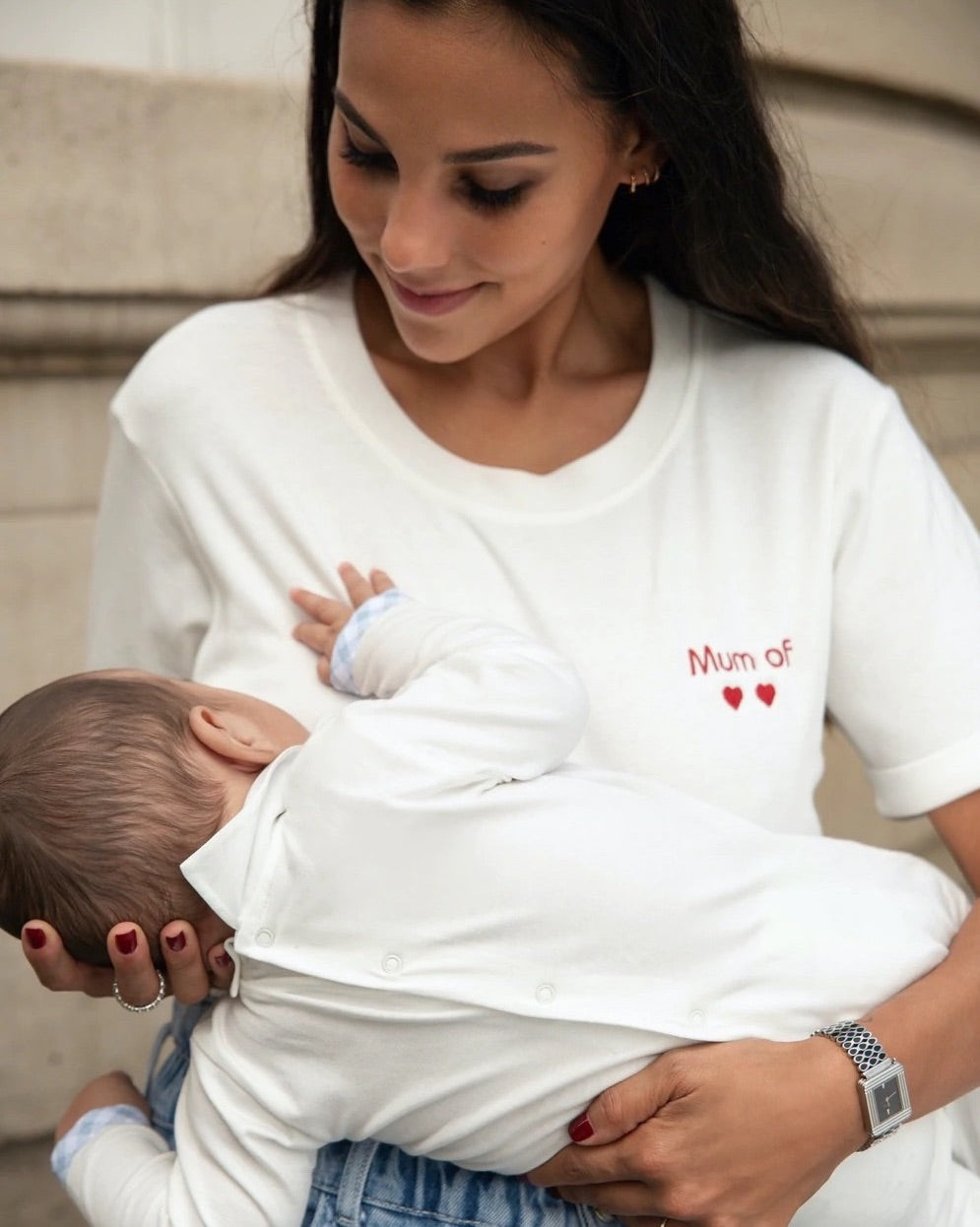
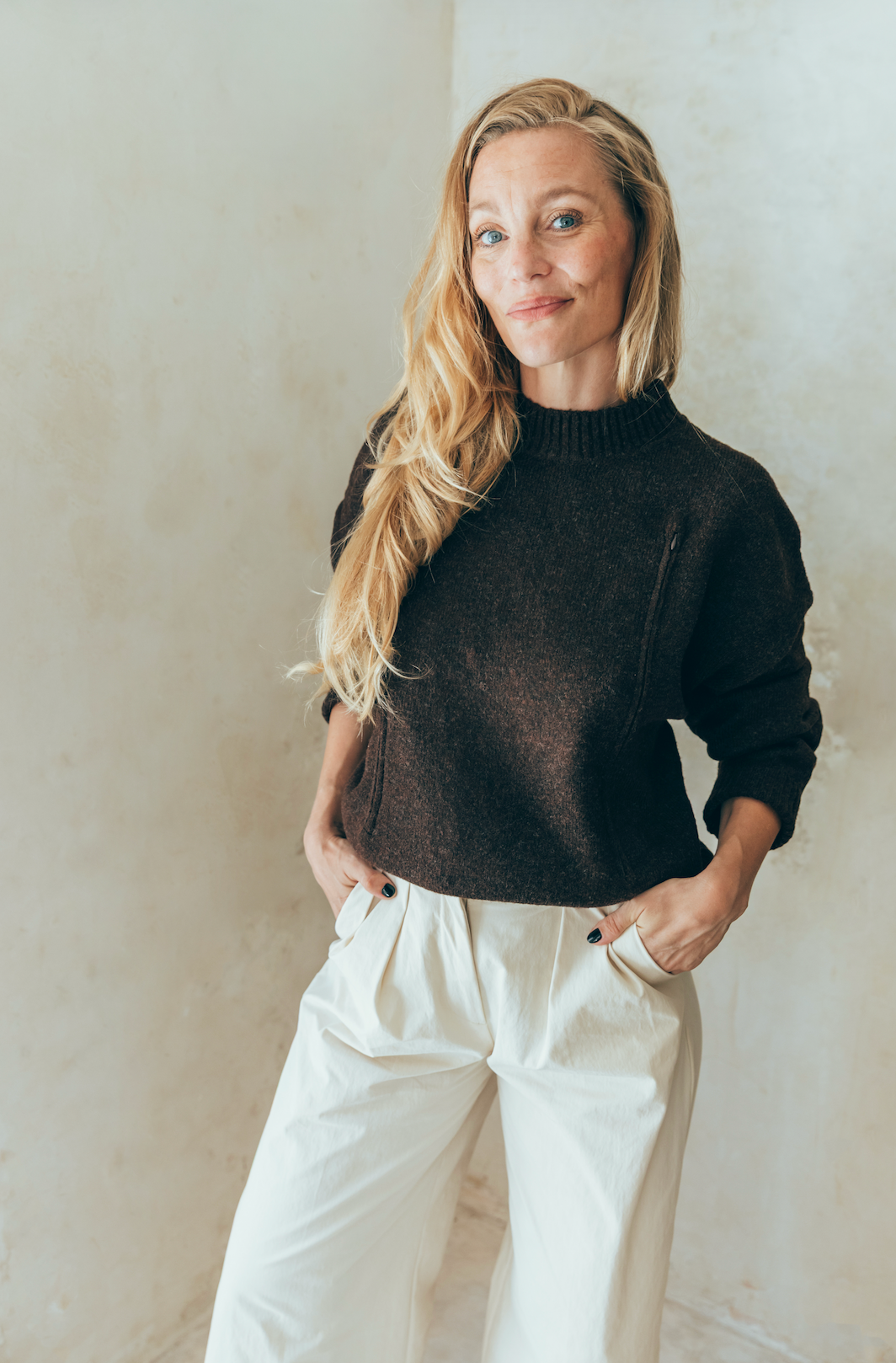
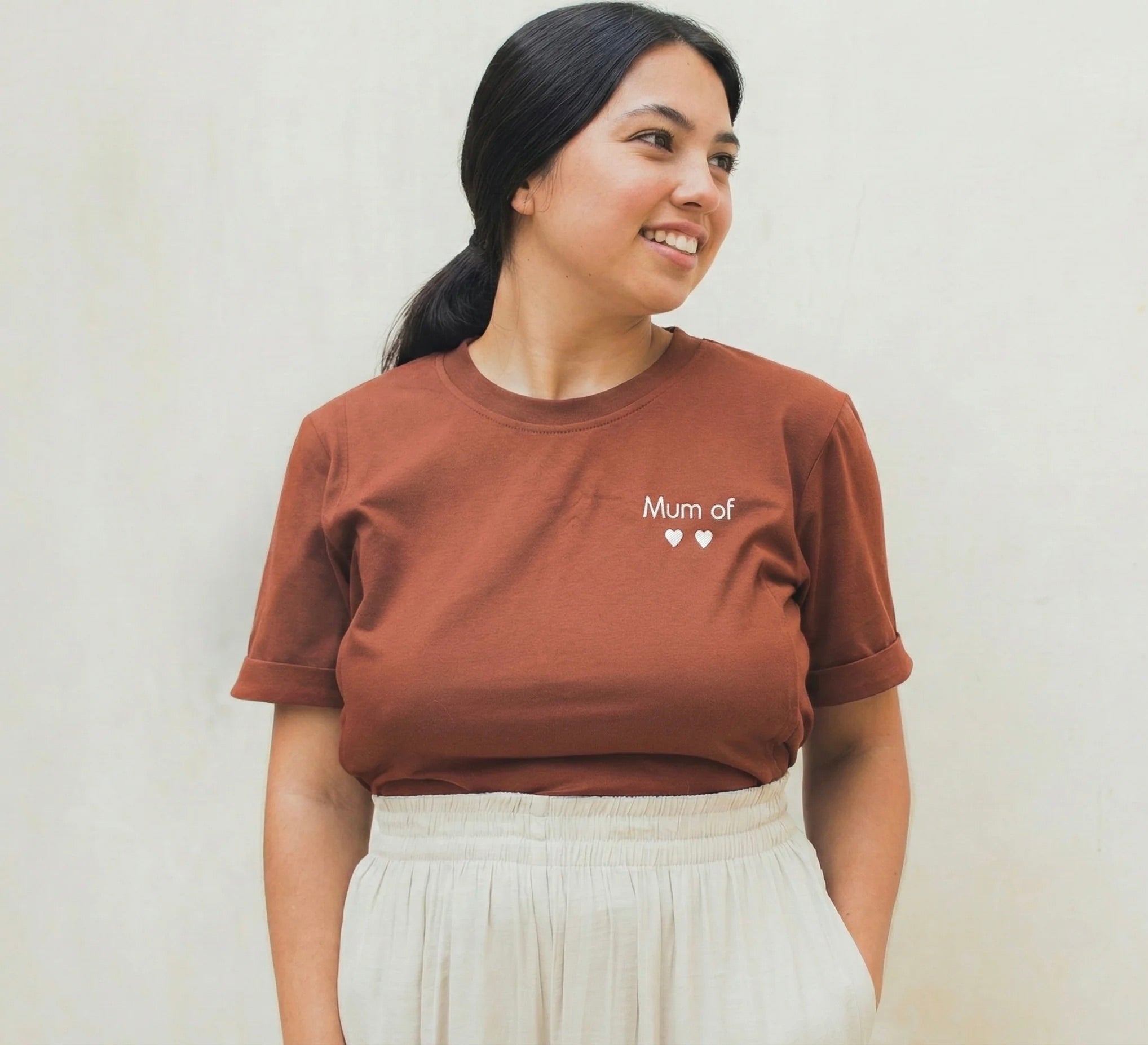
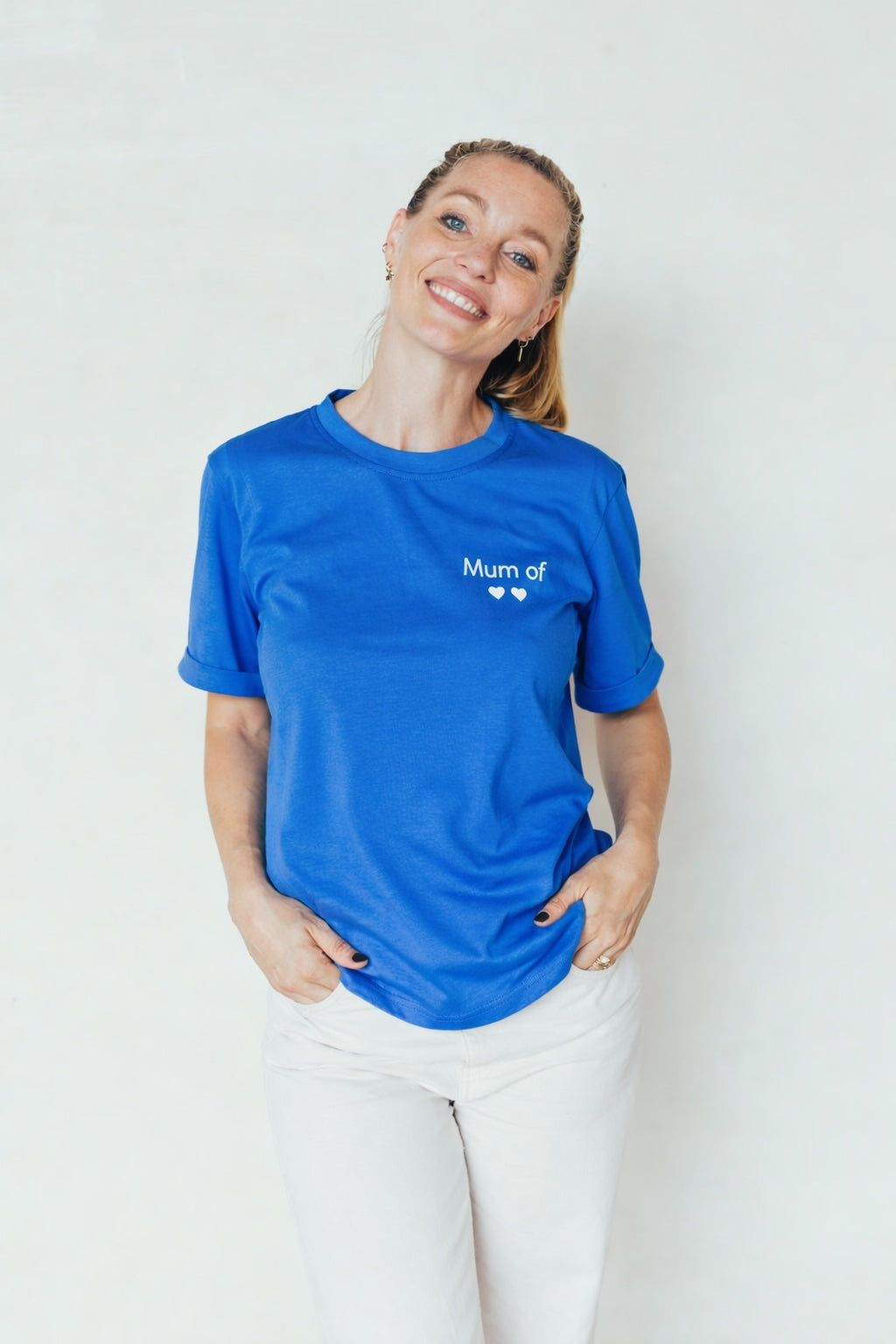
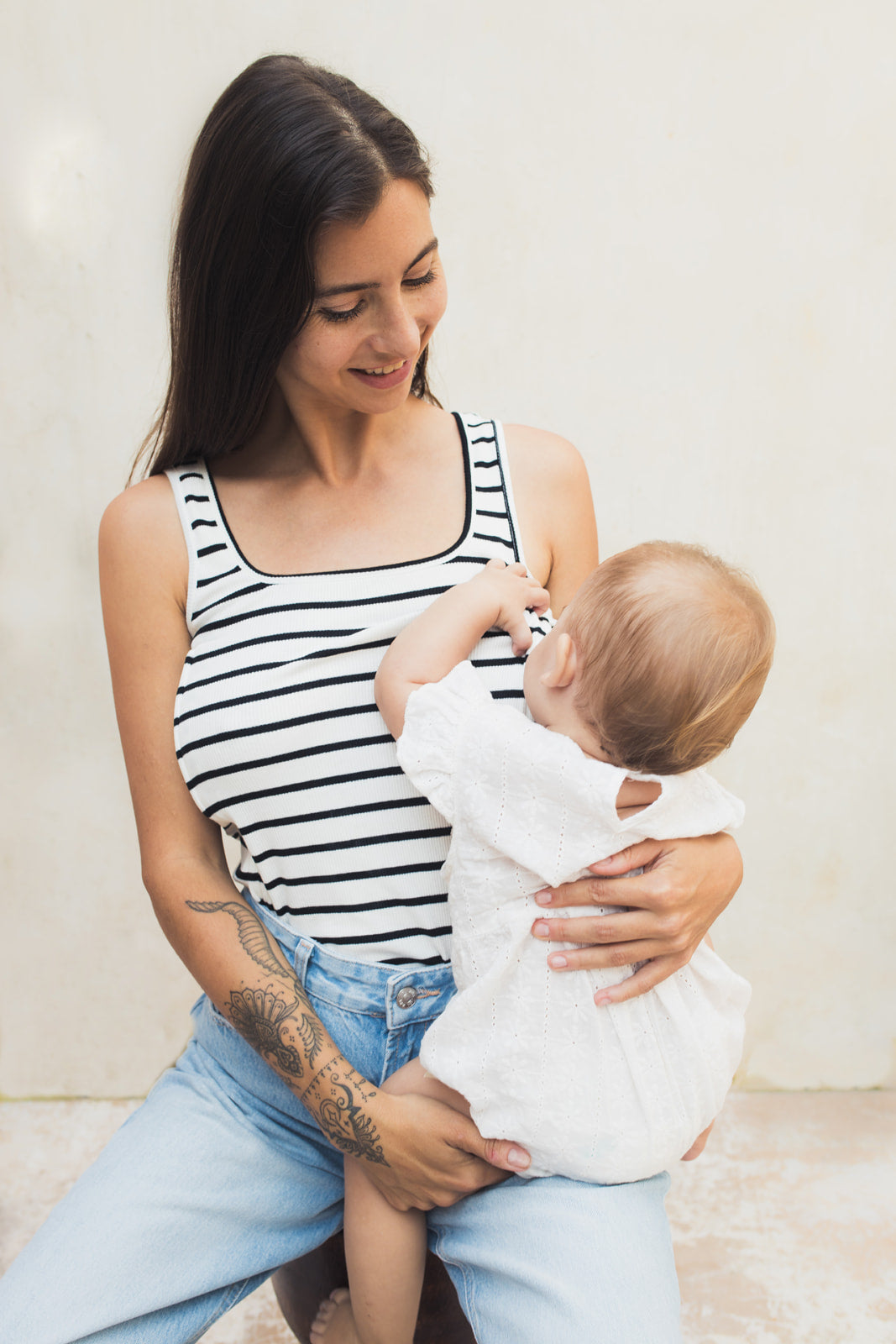
Tight-fitting clothes trap heat. A loose-fitting nursing tank top or a lightweight cottonnursing T-shirt is the foundation of your summer nursing wardrobe.
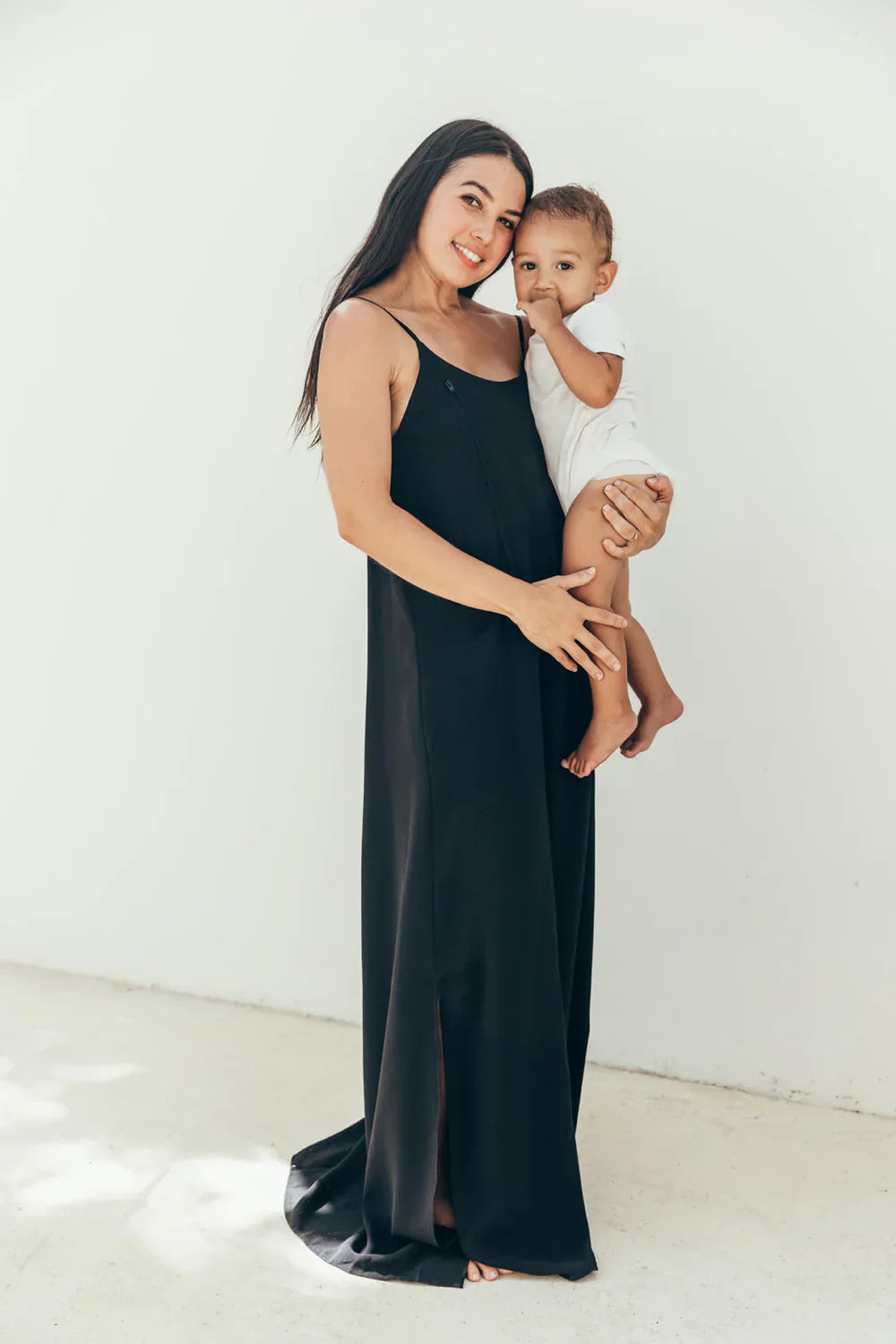
Check out these dresses:
A Breastfeeding dress that’s lightweight with a discreet opening—it’s the most practical piece for summer: cool, feminine, and you can breastfeed in a second without having to undress.

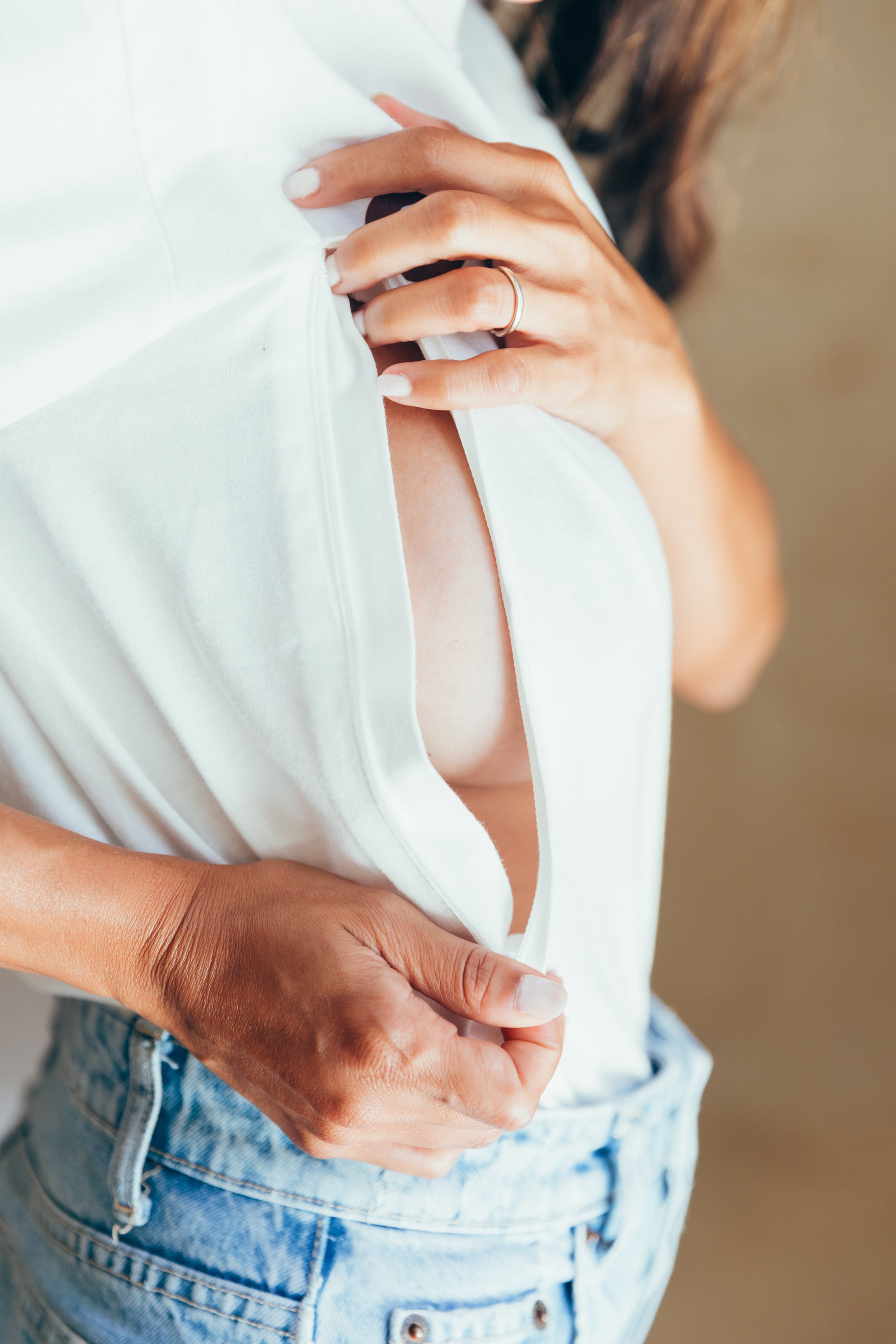
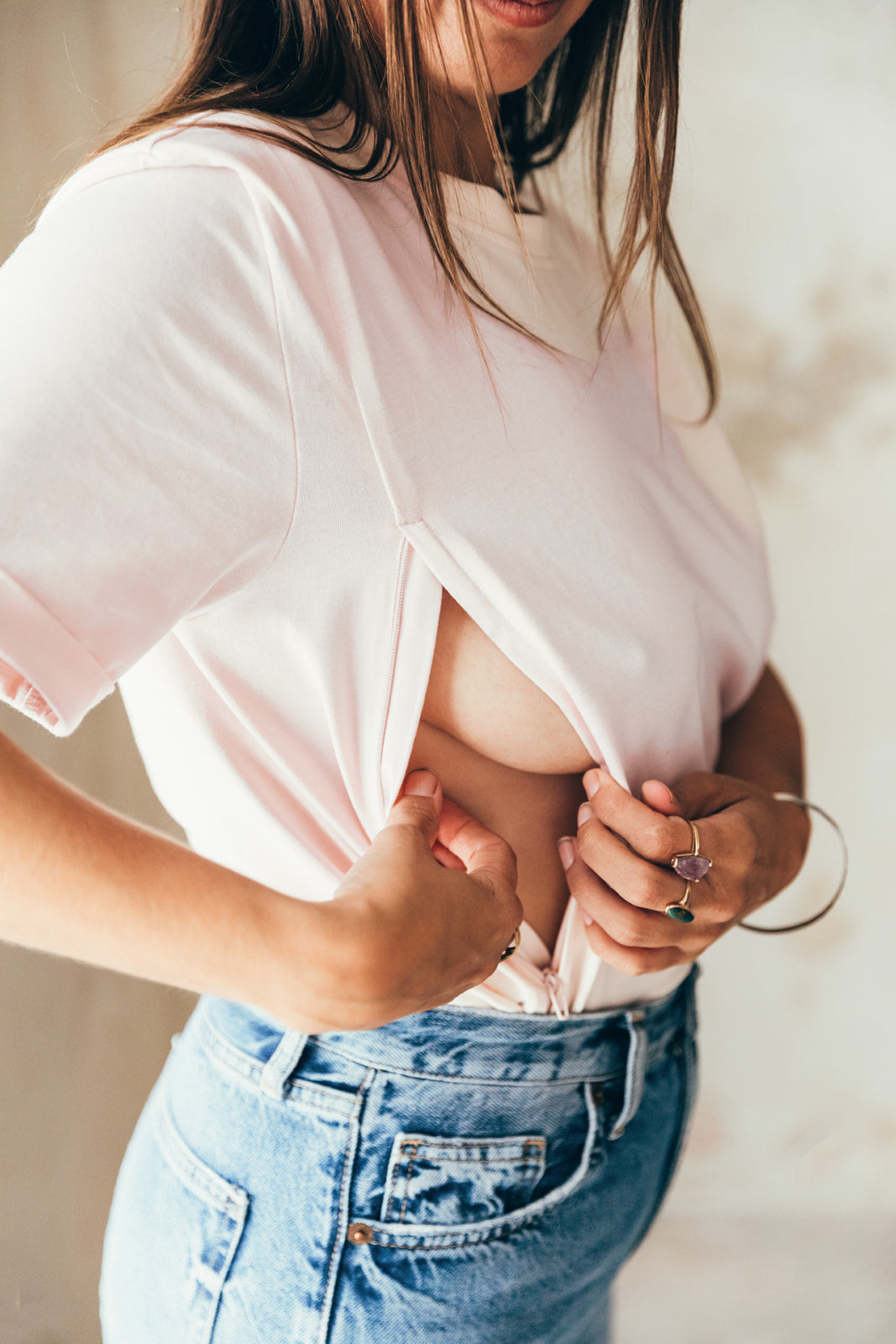
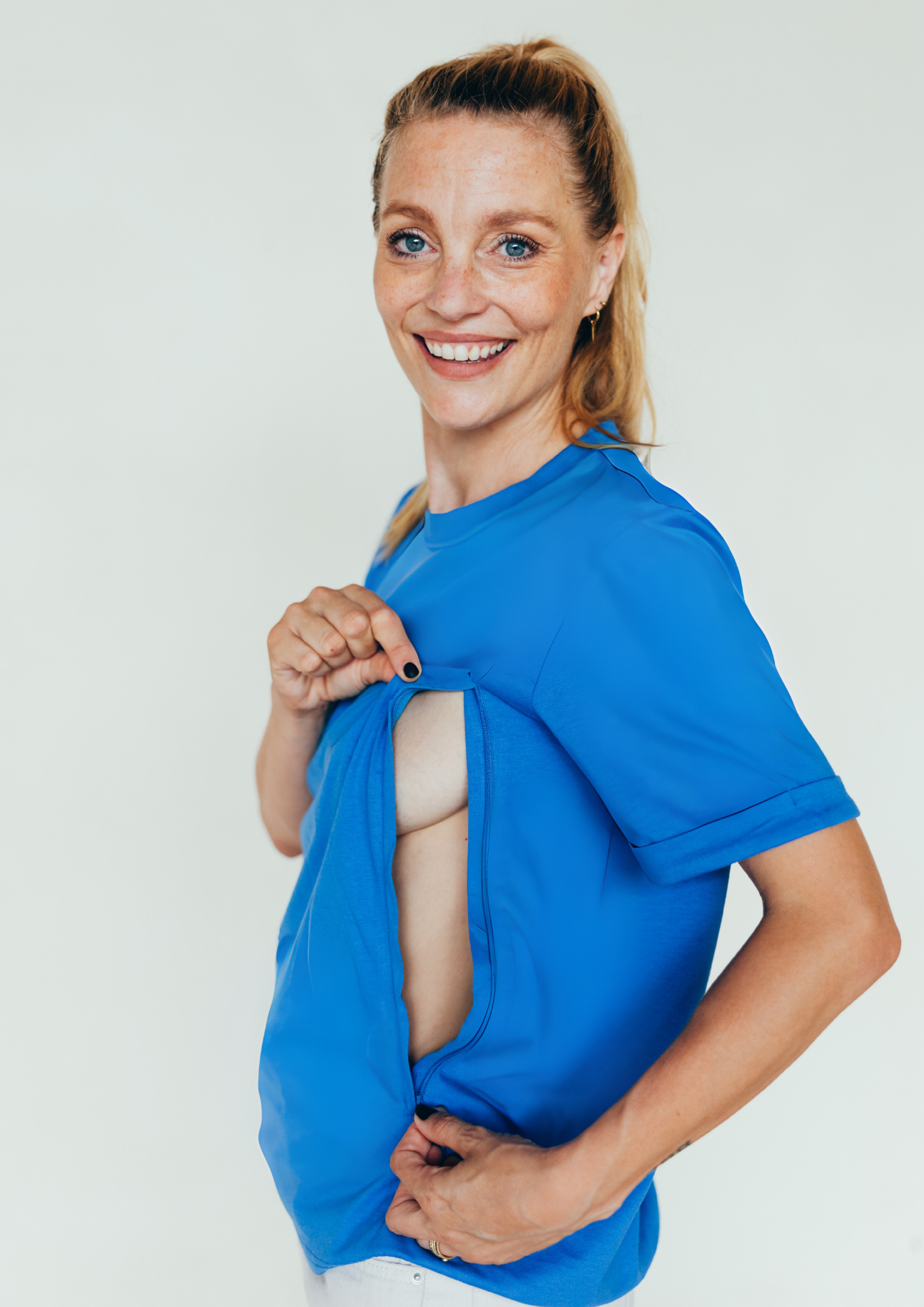
The opening system features:
The side zipper openings allow for quick and discreet access to the breast without exposing the entire stomach or back. Ideal for breastfeeding on a patio, at the beach, or while out and about without feeling exposed.
Check out our selection of summer nursing clothes designed for hot weather.
Watch for signs of dehydration in babies
During a heat wave, it's important to watch for signs that your baby is suffering from the heat or becoming dehydrated.
Signs to watch for:
- Fewer wet diapers than usual (fewer than 6 per day for an infant).
- Dark or strong-smelling urine.
- Sunken fontanelle.
- The baby is lethargic and less responsive than usual.
- Crying without tears.
If you notice several of these signs, see a doctor right away or call 15.
Reassuring signs:
- The baby asks to nurse often but sucks actively.
- His diapers are really wet.
- He stays alert, curious, and responsive between feedings.
Protecting Your Baby from the Heat Every Day
Breastfeeding is an excellent way to regulate body temperature, but it isn't enough on its own. Here are a few essential tips to keep your baby safe this summer:
- Never leave a baby in a car, even for just a few minutes, even with the windows open.
- Avoid going out between noon and 4 p.m. during heat waves.
- Dress your baby lightly: a diaper and a lightweight onesie are often enough at night during a heat wave.
- Keep the room cool: keep the shutters closed during the day, use a fan (never point it directly at the baby), and use a room thermometer.
- Bathe your baby in lukewarm (not cold) water to help them regulate their body temperature.

Taking care of yourself, too
We often think of the baby first, and that's normal. But an exhausted and dehydrated mom isn't able to breastfeed comfortably. Taking care of yourself is also taking care of your baby.
A few simple steps to help you cope during a heat wave:
- Get as much sleep as you can (we know, it's easier said than done).
- Eat fresh, light meals: salads, fruits, and water-rich vegetables.
- Take advantage of the times when your baby is sleeping to rest in the coolest room.
- Accept help from those around you with everyday tasks.
- Treat yourself to a refreshing (not cold) shower in the morning and at night.
In conclusion
A heat wave is uncomfortable for everyone, but it doesn't affect your ability to breastfeed. With the right habits and the right clothes, you can get through the summer with ease, with your baby at the breast and a smile on your face (or almost).
Check out our collection of summer nursing clothes to stay cool and stylish all season long. And if you're looking for the perfect outfit for the beach, take a look at our Breastfeeding dresses and tank tops designed for moms who don’t want to compromise on either comfort or style.