Hydration and Breastfeeding in the Summer: How Much to Drink and What to Eat
Hydration and Breastfeeding in the Summer: How Much to Drink and What to Eat
Breastfeeding is an adventure in itself. But breastfeeding in the middle of summer—with the heat, sweating, trips to the beach, and short nights—takes it to a whole new level. And among all the questions breastfeeding moms ask themselves when temperatures rise, there’s one that comes up time and time again: Am I eating and drinking enough?
The short answer: probably not as much as your body needs. The long answer is in this article.

Why Hydration Is Even More Crucial in the Summer When You're Breastfeeding
Breast milk is about 88% water. Every feeding draws on your water reserves. Under normal circumstances, your body naturally compensates: when you’re thirsty, you drink, and milk production continues.
In the summer, things get more complicated. You sweat more, and you lose more water through breathing and your skin. If you don’t drink enough to make up for it, your body will prioritize its vital functions, and lactation may suffer as a result. It won’t happen dramatically overnight, but even mild chronic dehydration is enough to gradually reduce your milk supply.
Another summer phenomenon: babies nurse more often in hot weather to stay hydrated. More feedings = more milk produced = more water you need to drink. The virtuous cycle works—as long as you keep the machine running.
How Much to Drink While Breastfeeding in the Summer
The usual recommendation for a breastfeeding mother is 2 to 2.5 liters of water per day. In the summer, due to the heat and sweating, this amount increases to at least 2.5 to 3 liters—or even more if you’re exercising or if there’s a severe heat wave.
To keep track without counting every glass, use the color of your urine as a guide:
| Urine Color | Hydration Level |
|---|---|
| Pale yellow / transparent | Stay hydrated |
| Medium yellow | Limited hydration — drink more |
| Dark yellow / orange | Dehydration — drink water immediately |
The right approach: Drink a large glass of water with each feeding. Since your baby feeds 8 to 12 times a day (and more in the summer), this is an easy way to make sure you’re staying hydrated without even thinking about it.
 What to Drink: Our Recommendations
Water is still the best option, but variety helps you stick with it over time. Here's what works well in the summer when you're breastfeeding.
Must-sees:
- Still or sparkling wateris the basics. Keep a bottle or water bottle with you wherever you go.
- Warm or cold herbal teas made from fennel, verbena, or raspberry leaves. Be careful with high doses of galactogenic herbal teas (fenugreek, milk thistle): they are effective but should not be consumed in excess without medical advice.
- Coconut wateris naturally rich in electrolytes and excellent for replenishing fluids lost through sweating.
- Cold broths —often overlooked but very hydrating and rich in minerals.
Enjoy in moderation:
- Coffee and tea: Caffeine passes into breast milk in small amounts. One or two cups of coffee a day are acceptable, but they have a mild diuretic effect that does not promote hydration.
- Fruit juices are hydrating but high in sugar. Opt for homemade smoothies made with whole fruits.
Avoid:
- Alcoholic beverages: Alcohol passes into breast milk and causes dehydration. Not ideal during a heat wave.
- Sugary sodas that cause dehydration and offer no nutritional benefits for breastfeeding.
What to Eat to Support Breastfeeding in the Summer
Eating right in the summer while breastfeeding presents a twofold challenge: maintaining your milk supply AND adjusting to the heat to stay light on your feet and full of energy. The good news is that these two goals are perfectly compatible.
Water-Rich Foods to Prioritize
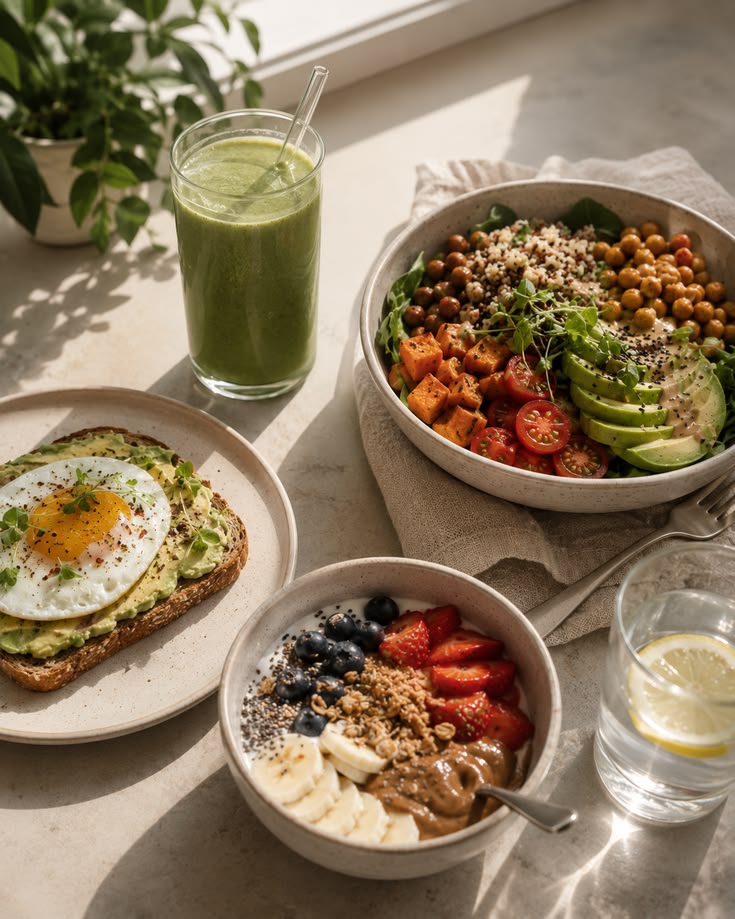
In the summer, some of your hydration can come from the foods you eat. Here are the best foods for breastfeeding moms when it's hot out:
- Watermelon: 92% water, naturally sweet, refreshing.
- Cucumbers are 96% water and are perfect in salads or cut into sticks.
- Strawberries, raspberries, and melon —moisturizing and rich in vitamins.
- Tomatoes —94% water—perfect for summer salads.
- Zucchini and bell peppers —light, easy to digest, and very hydrating.
- Lettuce and leafy greens are up to 95% water.
Galactogenic Foods to Include
Certain foods are known to support lactation. They can be especially helpful in the summer if you notice a slight drop in milk supply due to the heat:
- Oatmeal is a staple of milk-boosting breakfasts; enjoy it hot or as cold overnight oats.
- Flax and chia seeds, rich in omega-3, to add to yogurt or smoothies.
- Raw fennel in a salad is refreshing and helps stimulate milk production.
- A handful of almonds as a snack—perfect.
- Legumes such as lentils and chickpeas in tabbouleh or hummus.

The Perfect Summer Meals for Breastfeeding Moms
No need to spend hours cooking in the heat. Here are some ideas for quick, fresh meals that are suitable for breastfeeding:
Breakfast:
Overnight oats (oatmeal + plant-based milk + chia seeds + berries) prepared the night before, fresh when I wake up.
Lunch:
A salad made with quinoa, cucumber, cherry tomatoes, chickpeas, feta, and fresh herbs—ready in 10 minutes and very hydrating.
Dinner:
Homemade gazpacho followed by grilled fish with steamed vegetables and a green salad—light, fresh, and nutritious.
Snacks:
Watermelon slices, Greek yogurt with fruit, hummus and vegetable sticks, a handful of almonds.
Signs That You're Not Drinking Enough
Beyond the color of your urine, your body sends you other signals when you're dehydrated:
- Frequent headaches, especially in the middle of the day.
- Unusual fatigue that can't be explained solely by lack of sleep.
- A persistent feeling of dry mouth.
- A noticeable drop in milk production —the baby seems less satisfied and nurses for longer periods.
- Constipation is often caused by a lack of hydration.
If you notice several of these signs, increase your water intake immediately and rest in a cool place.
Your Diet Stays the Same: What You Can Eat as Usual
One reassuring thing: breastfeeding doesn't require a drastic or restrictive diet. Most of the foods you normally eat are safe to eat while breastfeeding, even in the summer.
The commonly cited “no-nos” (spices, garlic, cabbage, citrus fruits, etc.) are actually myths in the vast majority of cases. Breast milk adapts to your diet, and some babies even enjoy this variety of flavors. If you notice that a specific food consistently upsets your baby (gas, fussiness after a feeding), you can temporarily eliminate it from your diet, but don’t cut it out as a preventive measure.
Staying Cool While Breastfeeding: The Importance of the Right Clothing
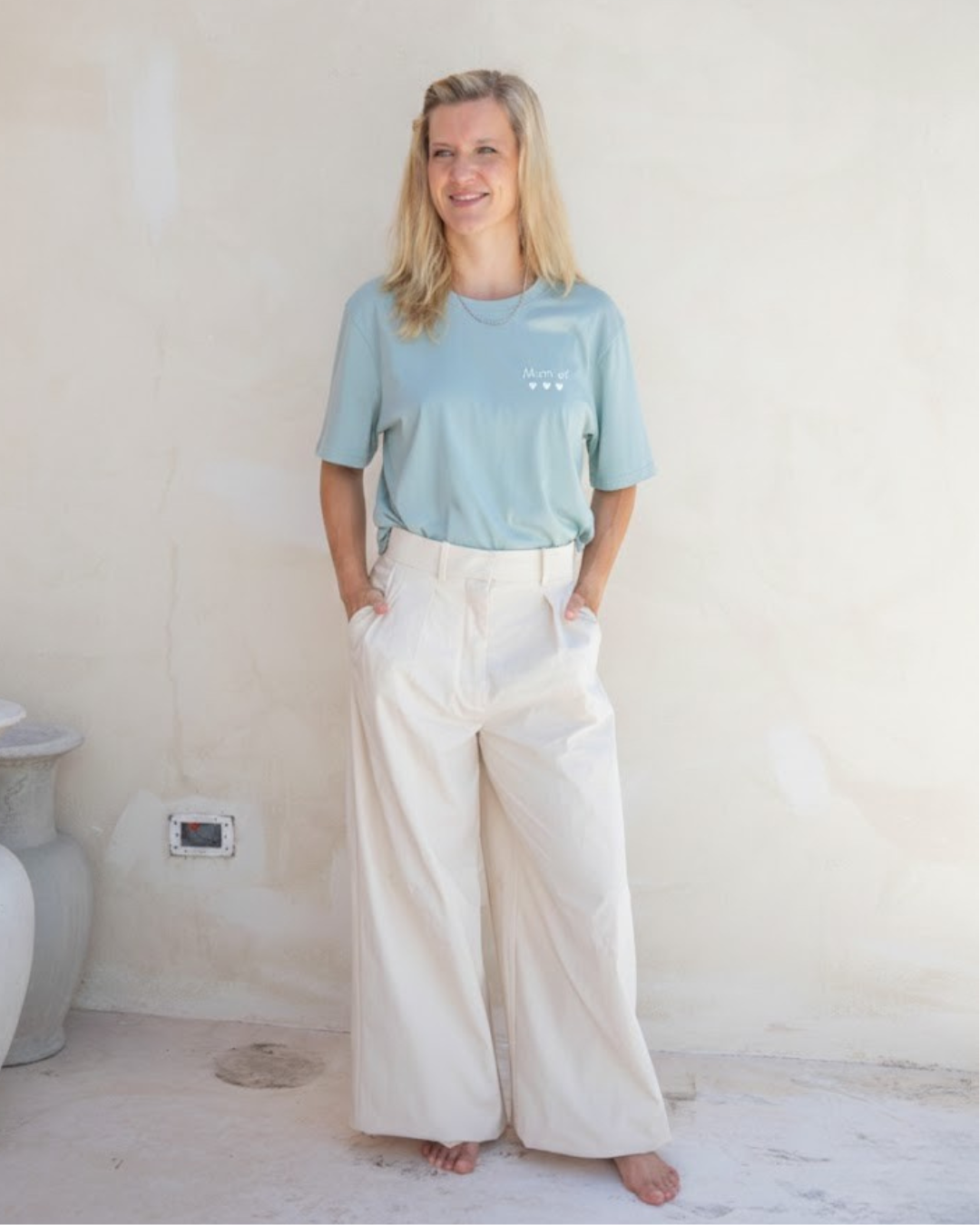
Staying hydrated also depends on thermal comfort. Wearing light, breathable clothing while breastfeeding reduces sweating and limits your body's water loss.
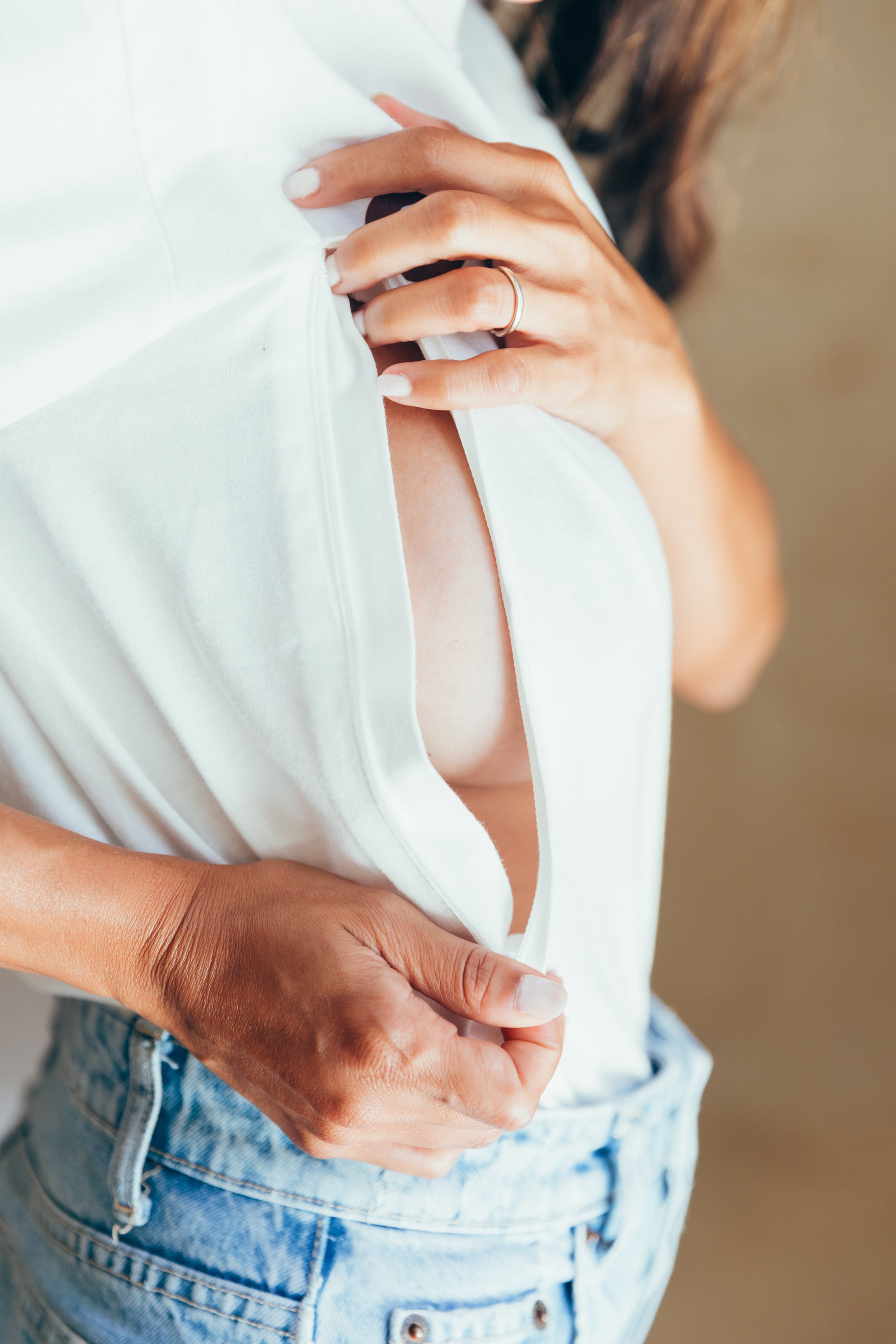
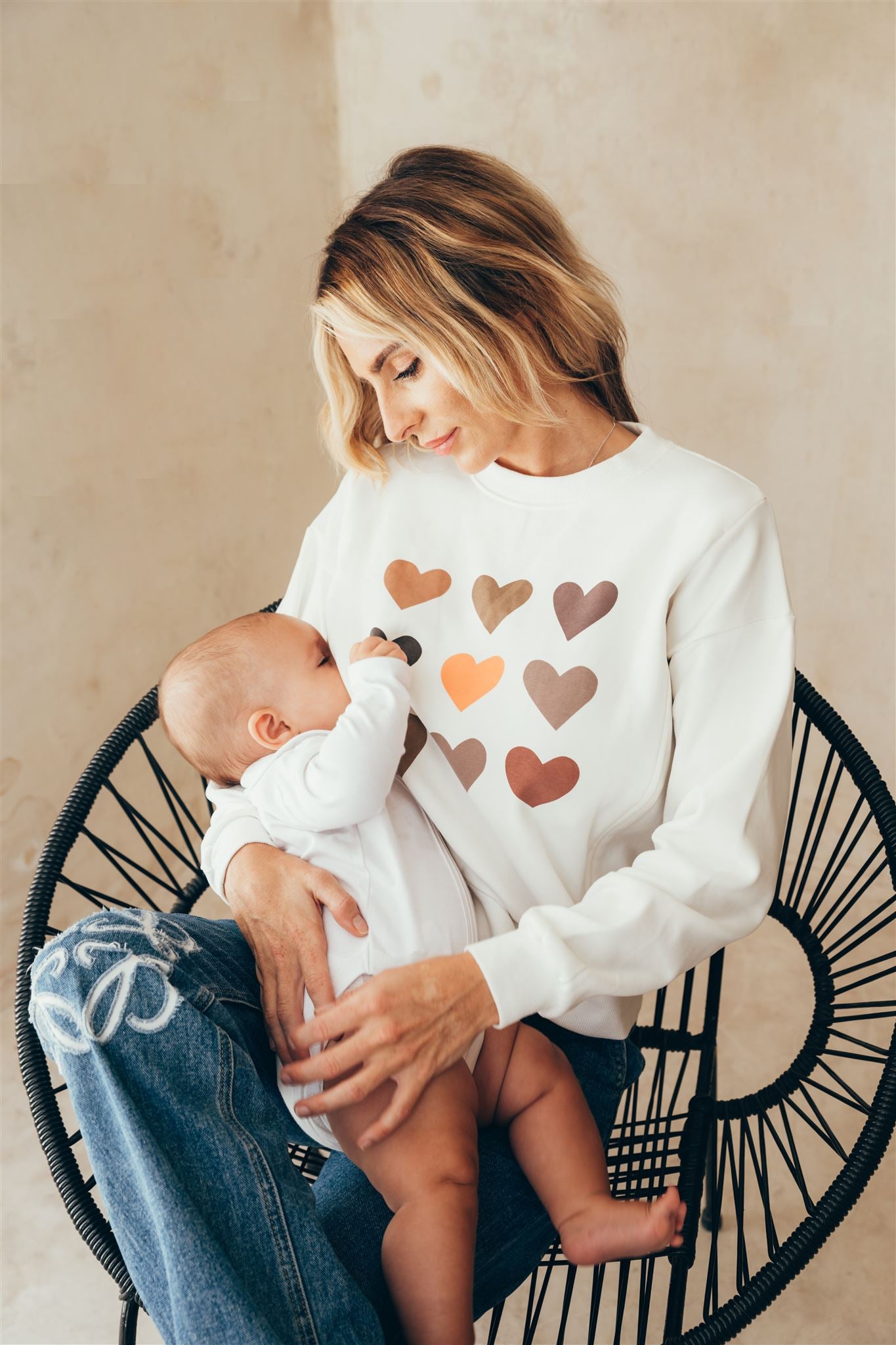
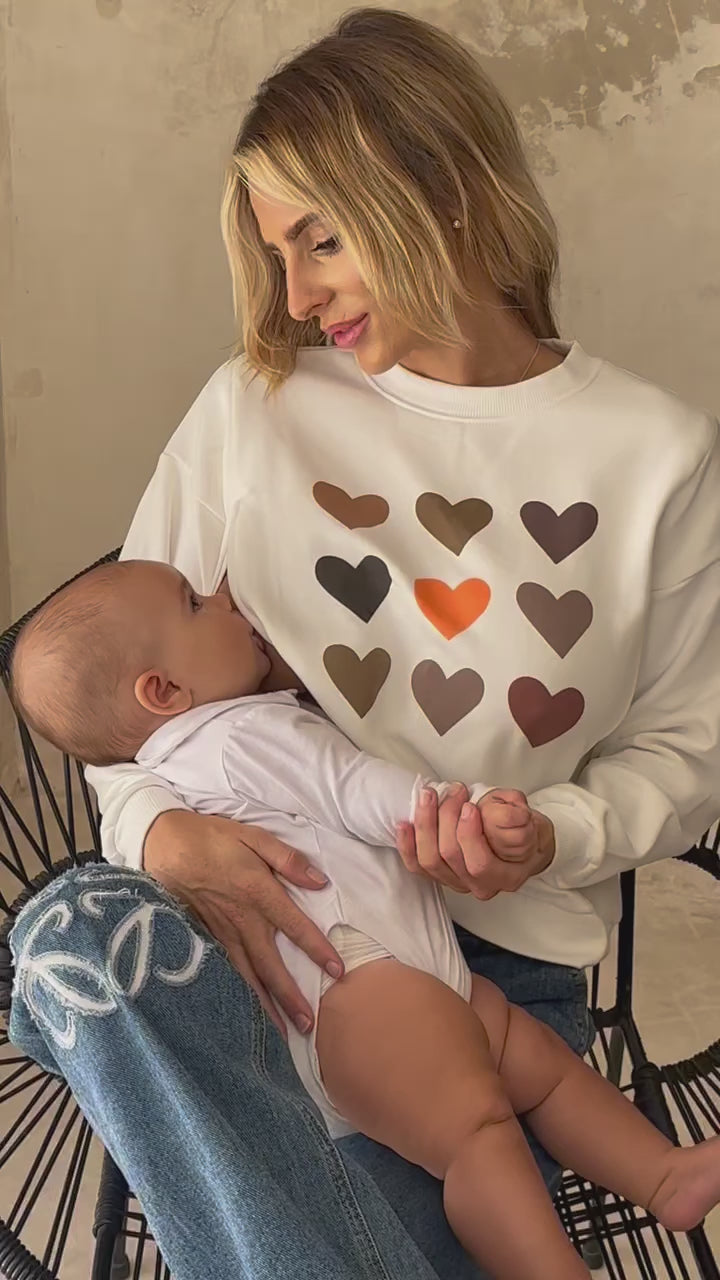
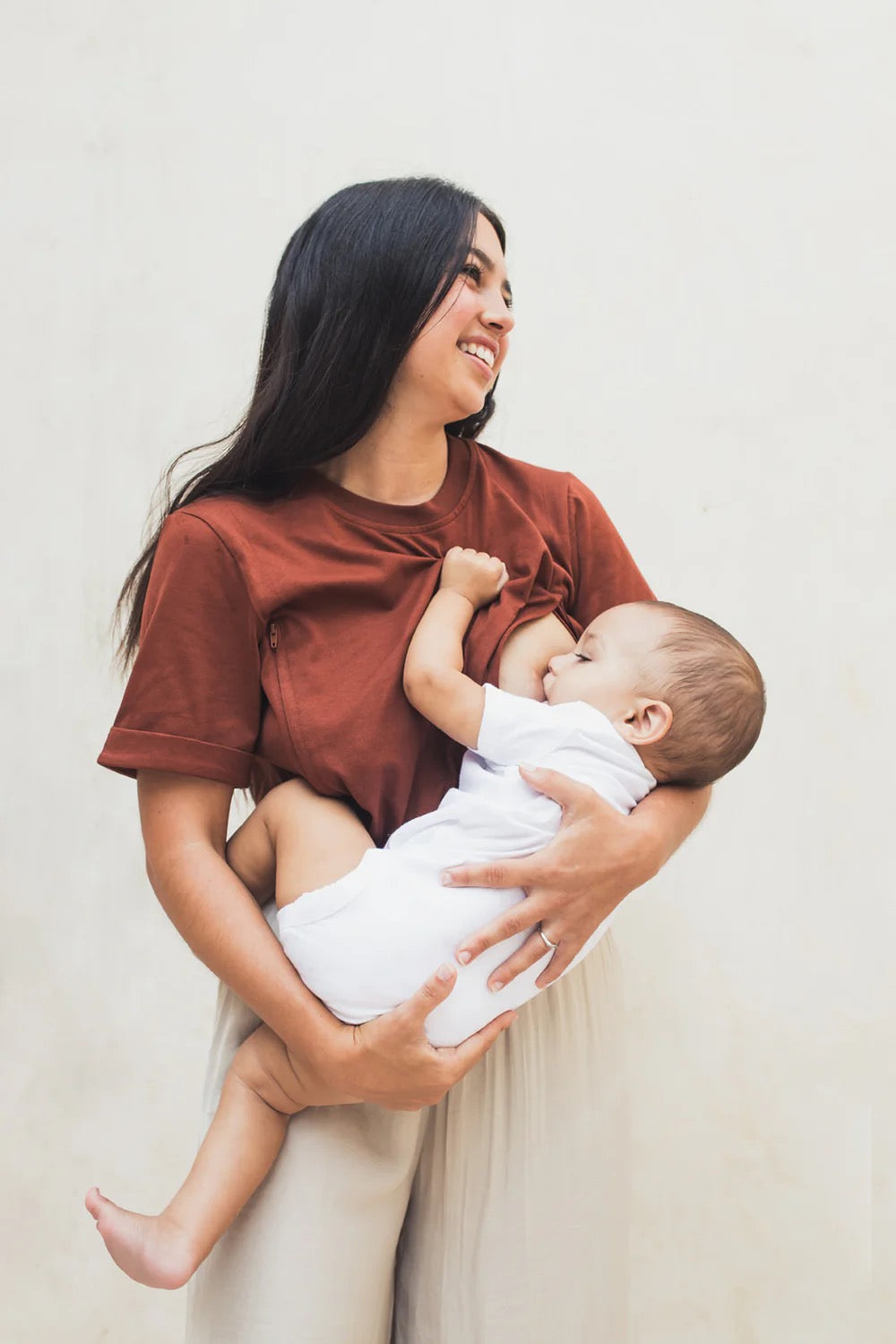
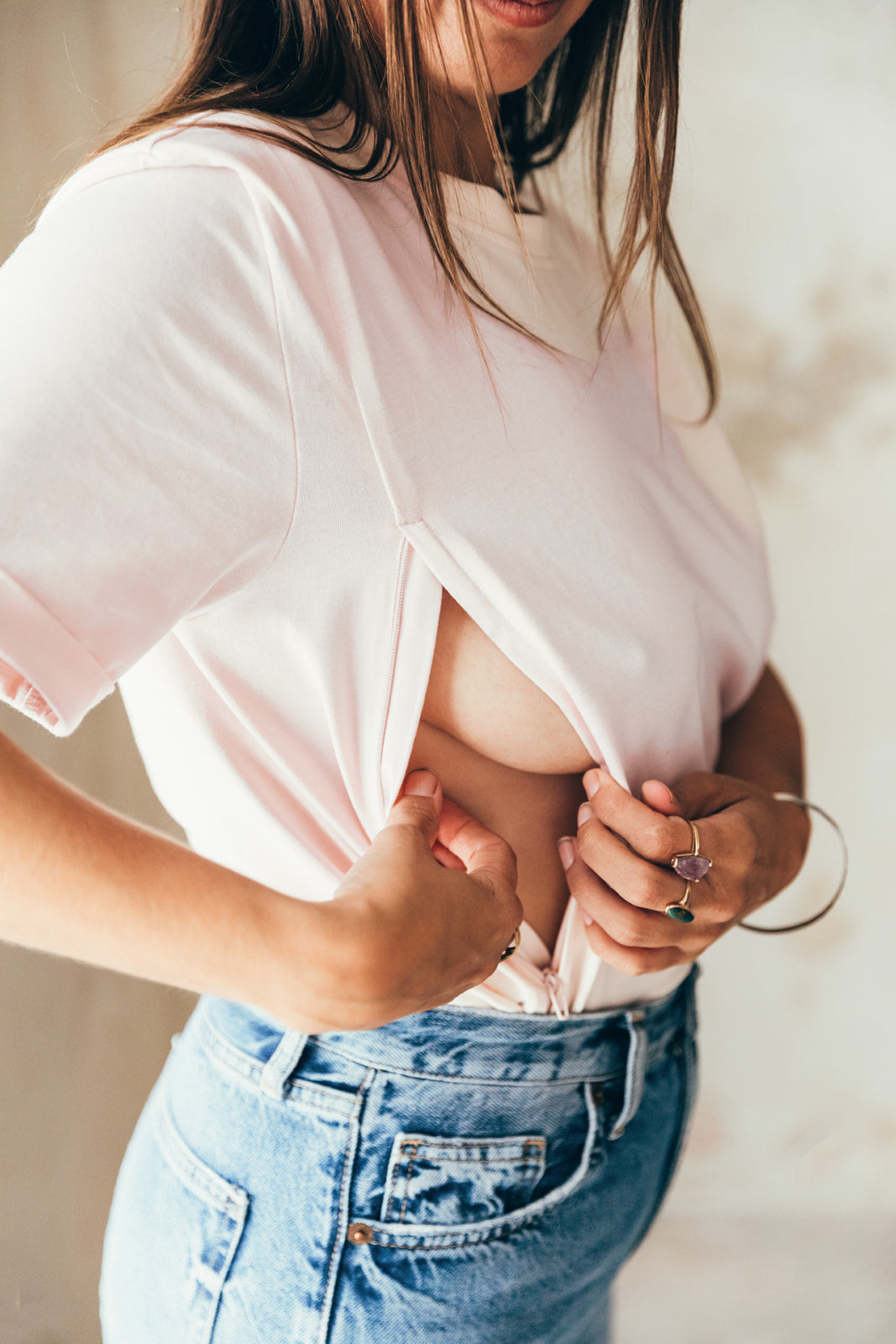
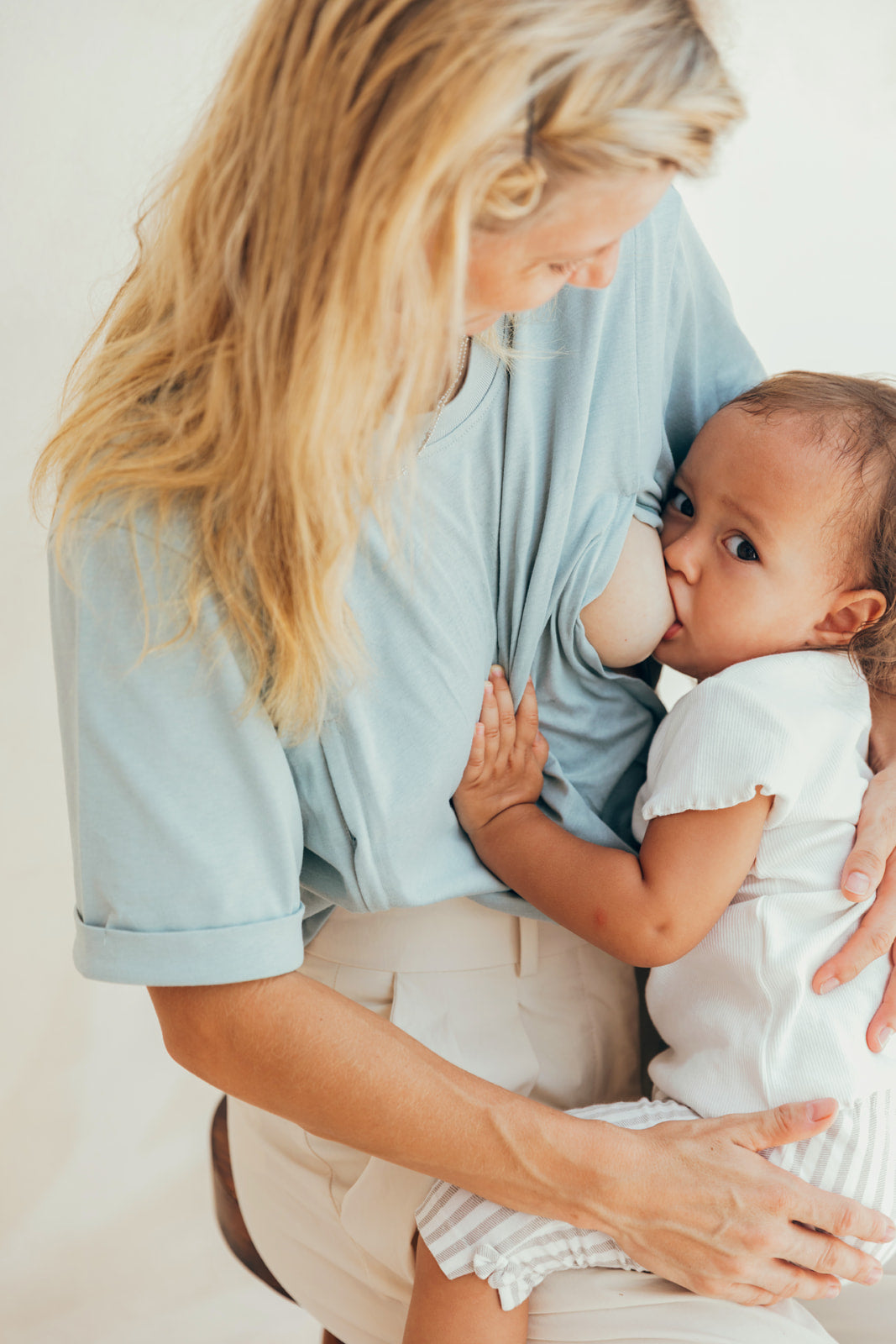
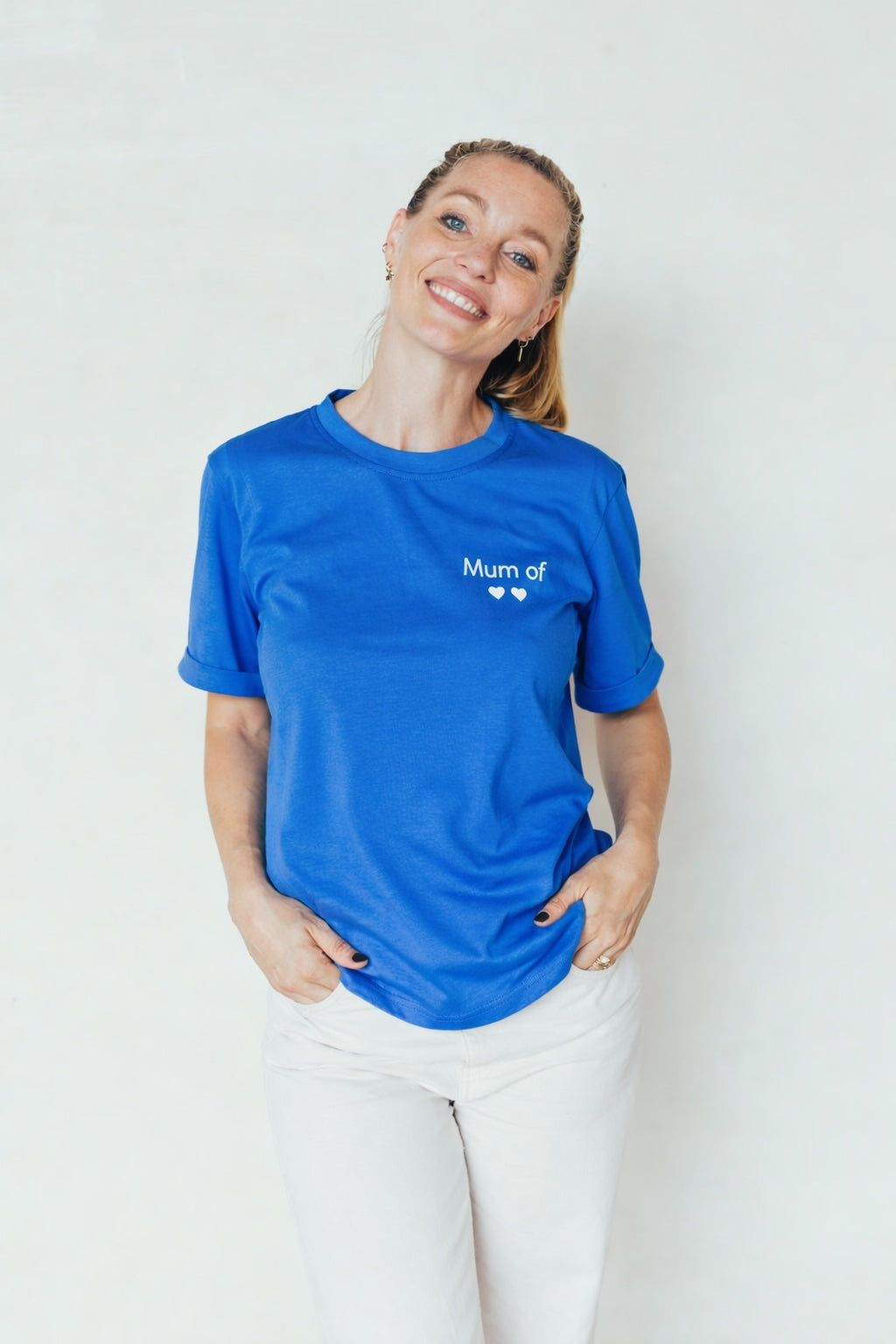
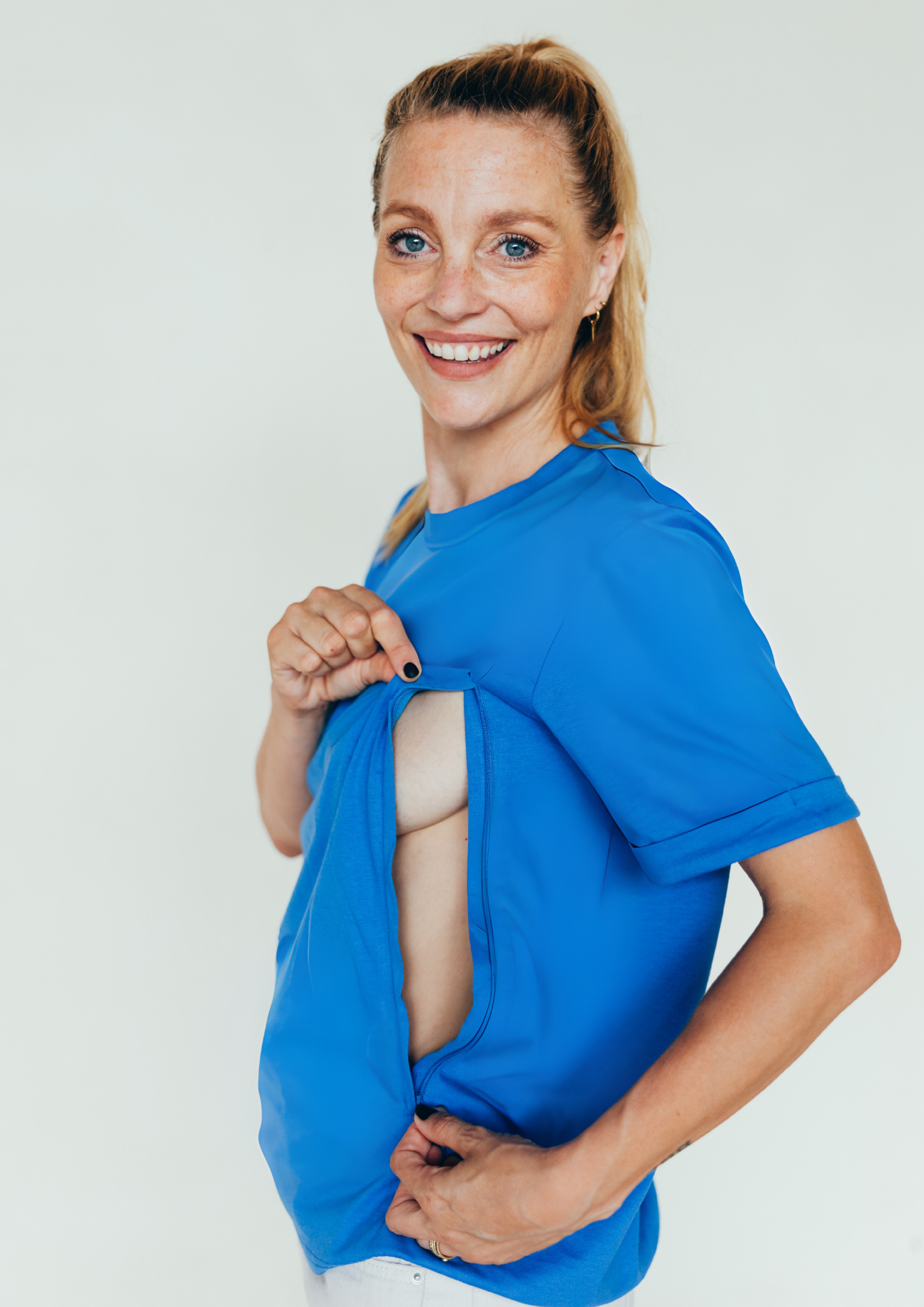
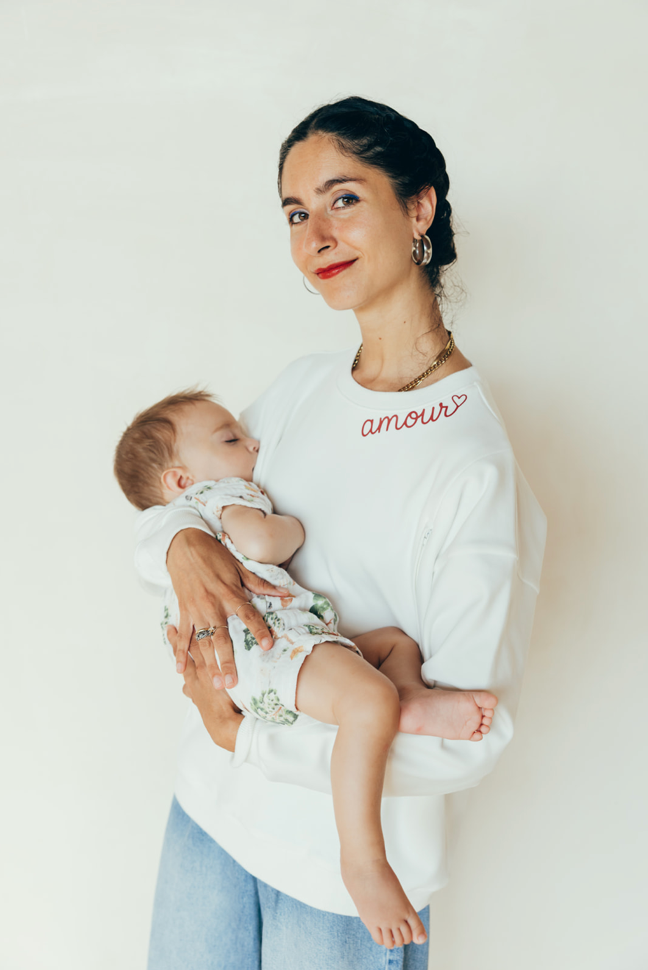
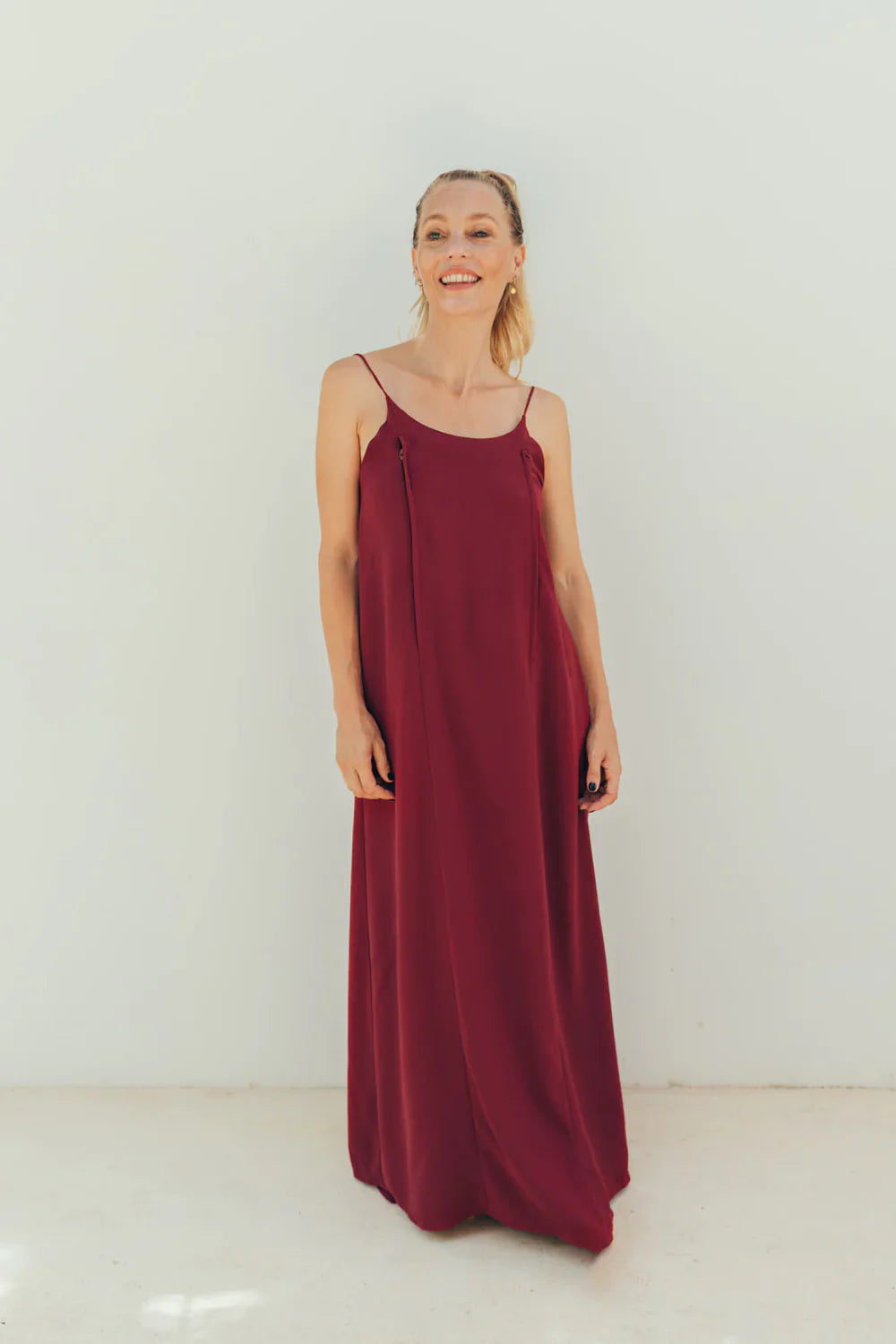
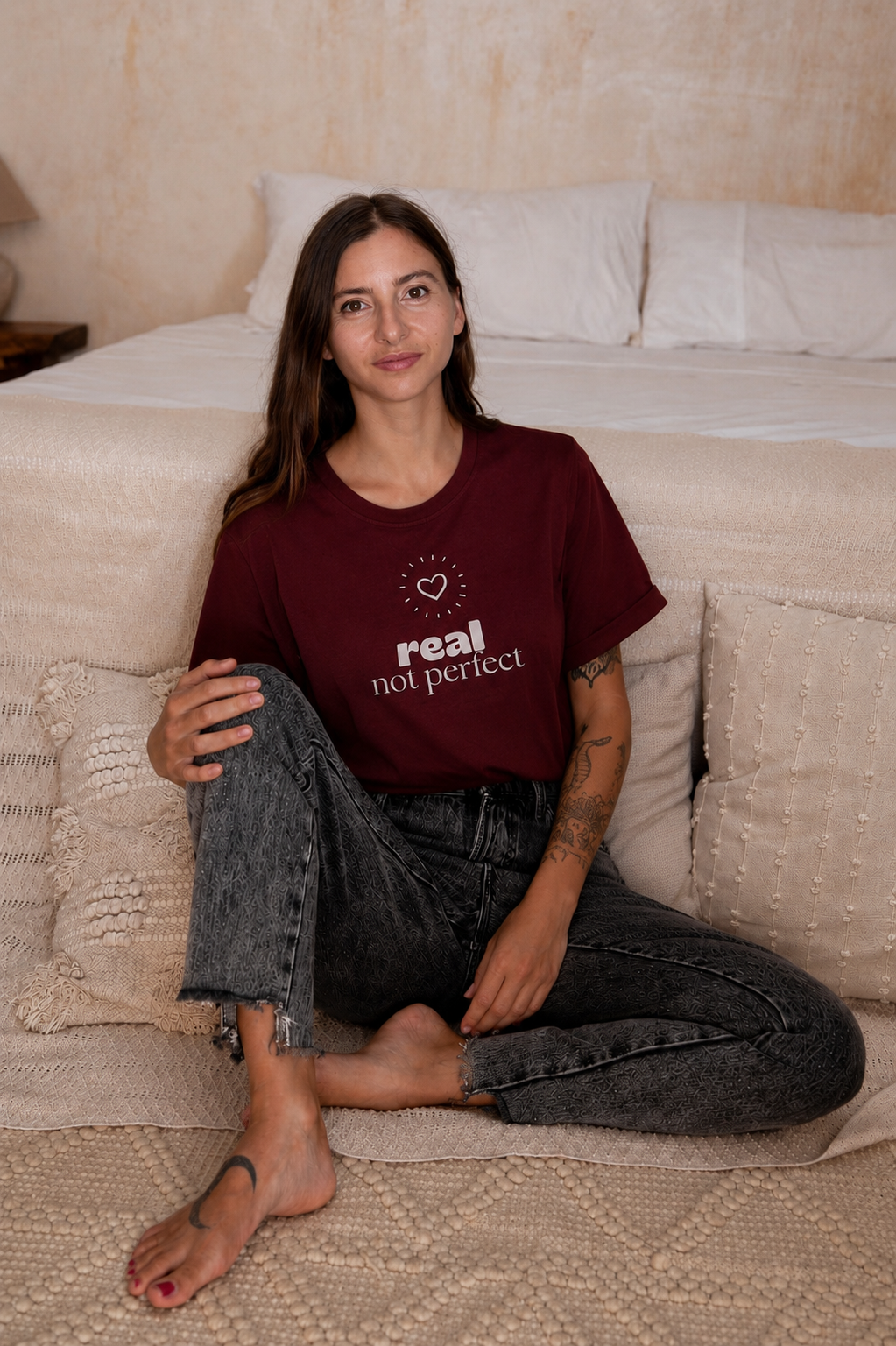
A Breastfeeding t-shirt made of lightweight cotton or a breathable nursing tank top is the foundation of any nursing mom’s summer wardrobe. The zippered side openings allow for quick nursing without having to undress—perfect for feedings on a patio or at the beach with a large glass of water within reach.
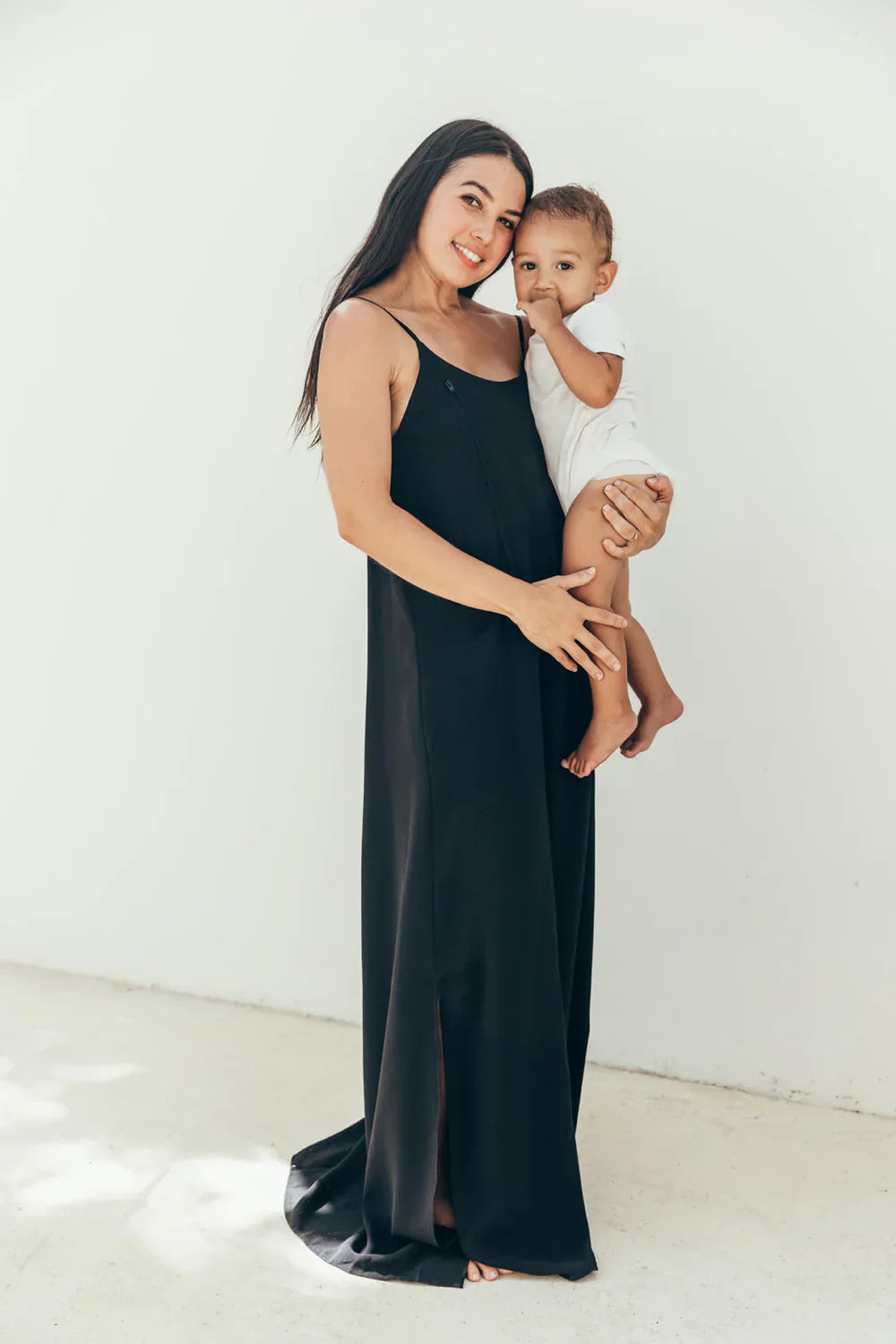
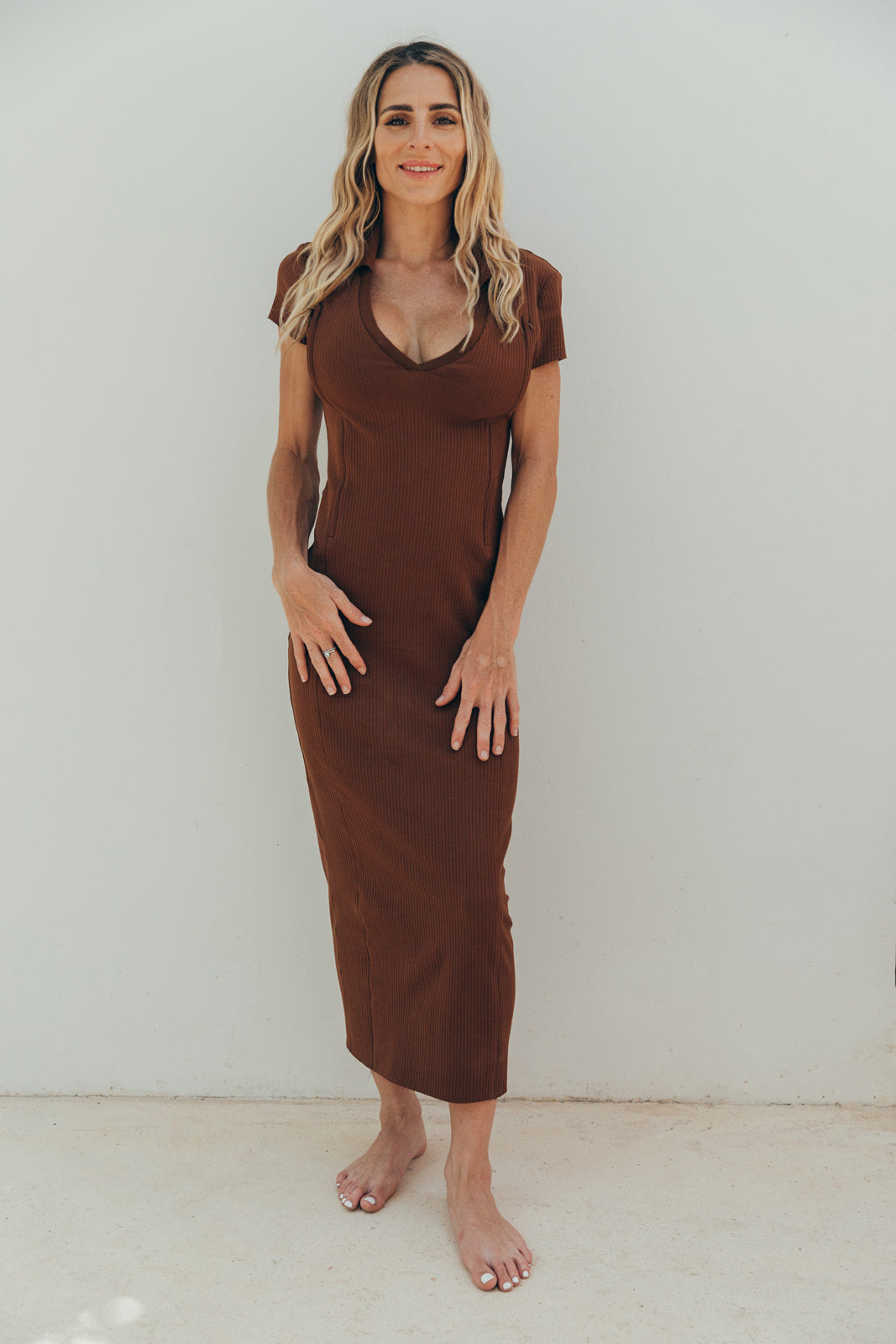
For outings and days spent outdoors, our Breastfeeding dress is the coolest and most versatile piece for summer. Check out our entire summer selection in our nursing wear collection.
In a nutshell: The Hydration Kit for Breastfeeding Moms in the Summer
- ✔ At least 2.5 to 3 liters of water per day—more during a heat wave or when engaging in physical activity.
- ✔ A large glass of water with every feeding —the simplest and most effective habit.
- ✔ Foods high in water content: watermelon, cucumber, tomatoes, strawberries.
- ✔ Natural galactagogues: oats, chia seeds, almonds, fennel.
- ✔ Fresh, light meals: salads, gazpacho, smoothies, overnight oats.
- ✔ Limit your intake of coffee, soda, and alcohol, which are diuretics and not well-suited for a heat wave.
- ✔ Keep an eye on the color of your urine —it's your best daily indicator of hydration.
Summer with a baby can be a wonderful time of year. With proper hydration, a healthy diet, and the right clothes, you can breastfeed with peace of mind through September and even beyond.