Caffeine and breastfeeding: can you drink coffee without feeling guilty?
When you become a mother, every daily gesture is scrutinized, including the simple pleasure of drinking a cup of coffee. If you're breastfeeding, you may be wondering whether your morning dose of caffeine is safe for your baby. Good news: you don't necessarily have to give up your favorite beverage!
To better understand the issues surrounding breastfeeding, you can also read our article on the importance of breastfeeding.
But how much is enough? What are the effects of caffeine on breast milk? Let's decipher this subject together, so you can enjoy your coffee with peace of mind.

Does caffeine affect breastfeeding?
Yes: caffeine is found in breast milk, but in very small quantities. After ingestion, it reaches its peak in the mother's blood about 30 to 120 minutes later, and a tiny fraction (around 1% of the ingested dose) is found in breast milk.
Newborns eliminate caffeine more slowly than adults, as their livers are still immature.
Note:As your baby grows, their body metabolizes caffeine more efficiently, reducing its potential impact.
How much caffeine can I drink while breast-feeding?
Recommendations vary, but most experts agree on a limit of around 300 mg of caffeine a day, or 2 to 3 cups of filtered coffee.
To give you a better idea, here's the caffeine content of some common beverages:
- Filter coffee (250 ml): approximately95 mg
- Espresso (30 ml): approximately63 mg
- Black tea (250 ml): approximately 47 mg
- Cola soda (330 ml): approximately 30 to 40 mg
- Dark chocolate (100 g): approximately 40 mg
Tip:If you enjoy coffee but are breastfeeding a newborn or sensitive baby, consider alternating between regular and decaffeinated coffee.
What effects can caffeine transmitted through breastfeeding have on baby?
Most babies tolerate moderate caffeine consumption very well. However, some may be more sensitive, especially in the first few weeks of life. Here are some signs to look out for in your baby:
✔️ Irritability or unusual restlessness
✔️ Difficulty falling asleep or disturbed sleep
✔️ More frequent regurgitation
If you notice these symptoms after drinking coffee, try reducing your consumption for a few days and see if your baby's condition improves.
How to enjoy your coffee without stress?
If you want to continue enjoying your coffee guilt-free, here are a few tips:
Drink your coffee after feeding: this reduces the concentration of caffeine in the milk when your baby feeds.
Try milder alternatives: green tea, rooibos, or cereal drinks can be excellent substitutes.
Go for decaf: it retains the aroma of coffee without the stimulating effects.
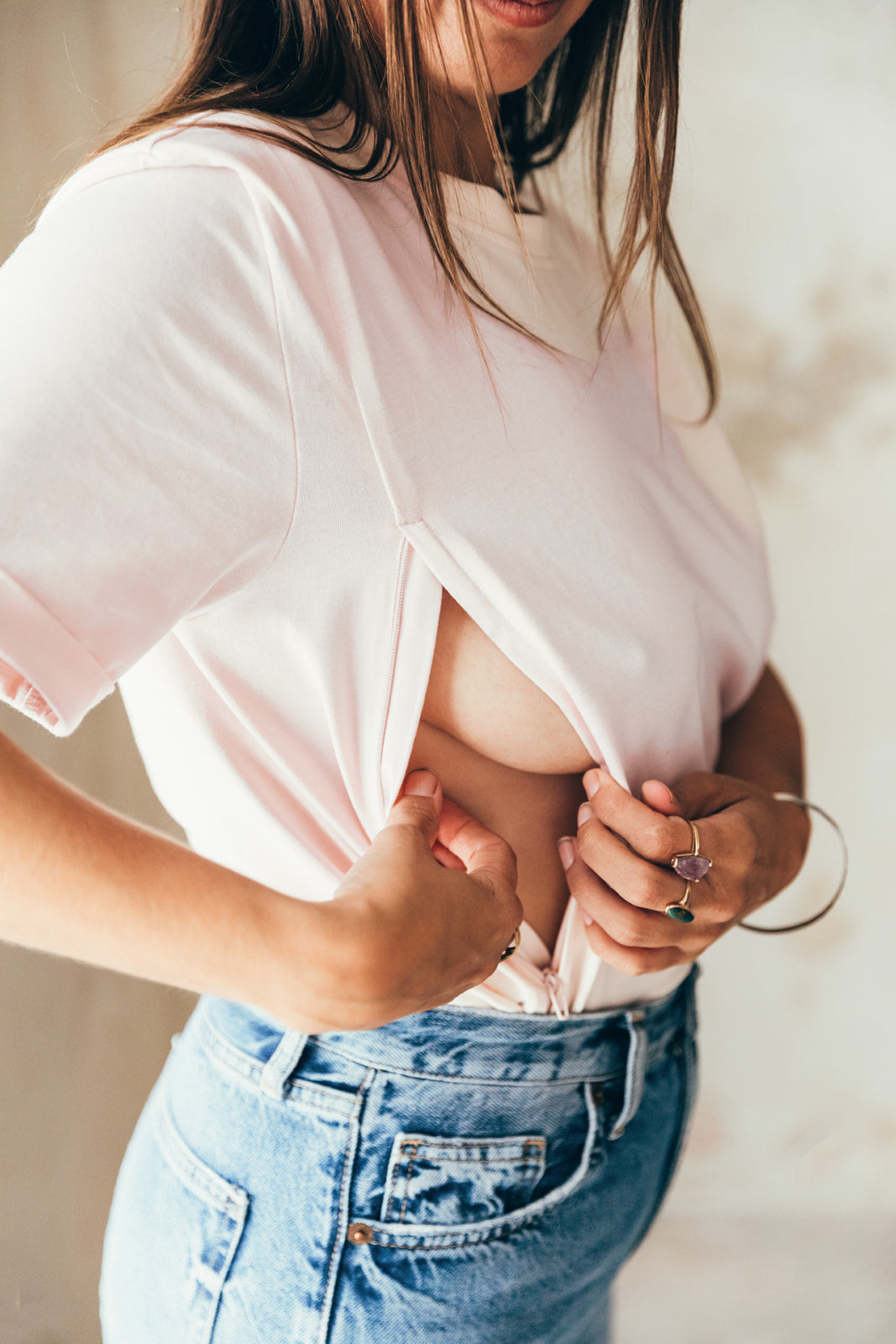
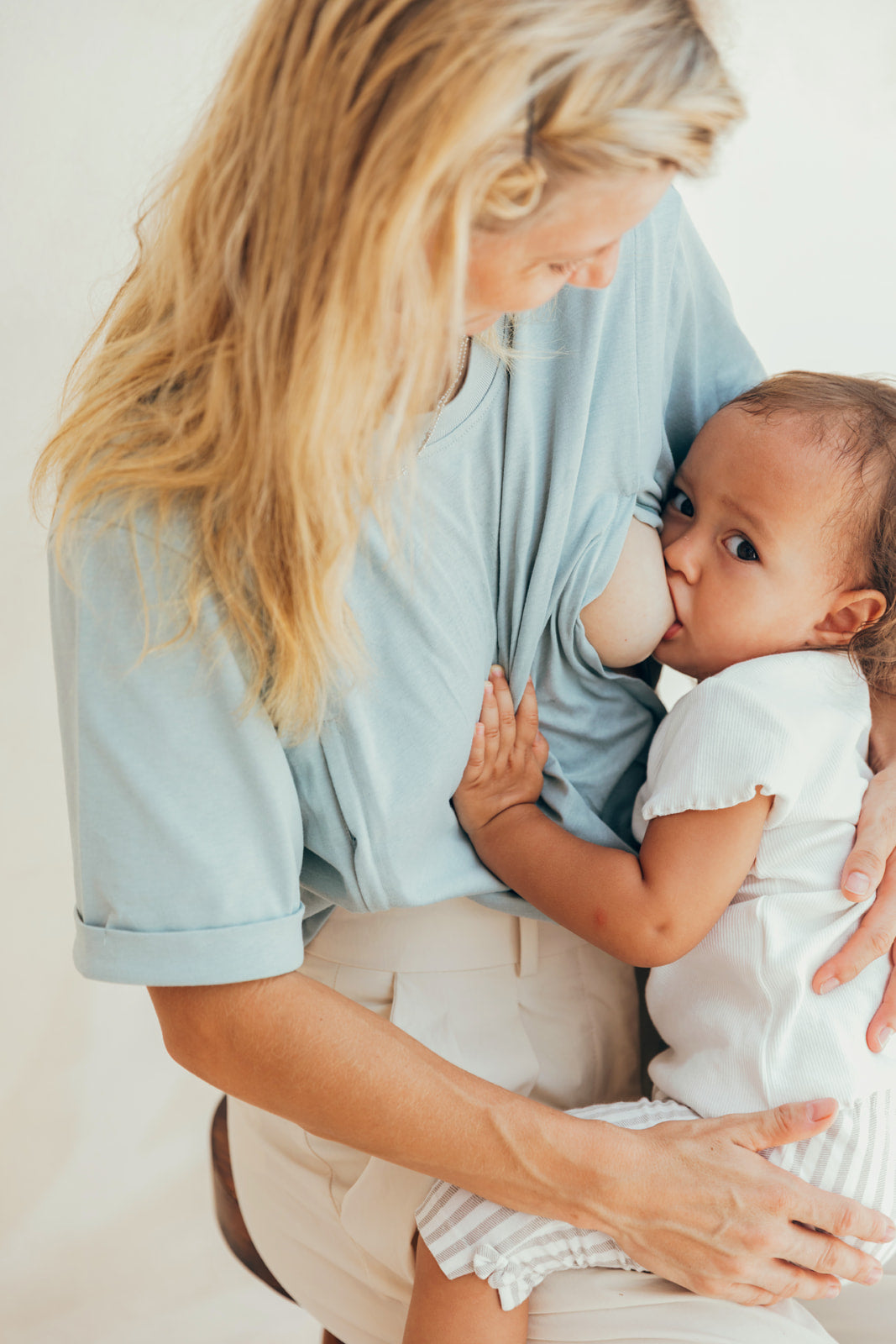
Breastfeeding easily, even during a moment of relaxation, is also a question of comfort, especially with nursing tops designed for quick access inside.

No need to say goodbye to caffeine during breastfeeding!
Good news: there's no reason to completely eliminate caffeine if you're breast-feeding! As long as you stick to moderate consumption (2 to 3 cups a day), your baby shouldn't suffer.
As always, the most important thing is to listen to your body and observe your baby's reactions. So relax and enjoy your coffee... guilt-free!
To support you in your daily life, discover our nursing collections designed to combine comfort, practicality, and elegance.
If you are breastfeeding, here are some of our nursing clothes that may interest you:
Breastfeeding t-shirts
Breastfeeding sweaters
Breastfeeding tank tops
Breastfeeding dresses
Breastfeeding pyjamas