Breastfeeding duration: investing in a versatile wardrobe
How long should you breastfeed? This question directly influences your clothing choices. According to the WHO, the duration of breastfeeding ranges from 6 months to 2 years, but every experience is unique.
This transformative time calls for a versatile wardrobe that can adapt to your body’s changes and the practical needs of each stage. At 23 Mai Paris, we support moms with clothing designed to last. This guide helps you make smart purchases based on your breastfeeding plans.
The 5 stages of breastfeeding and what to wear
Breastfeeding goes through several distinct phases, each with its own unique characteristics. Understanding these phases allows you to anticipate your needs and make the right investments at the right time.
Phase 1: The Learning Phase (0–6 weeks)
This is the busiest time. Everything is new, and feedings are very frequent.

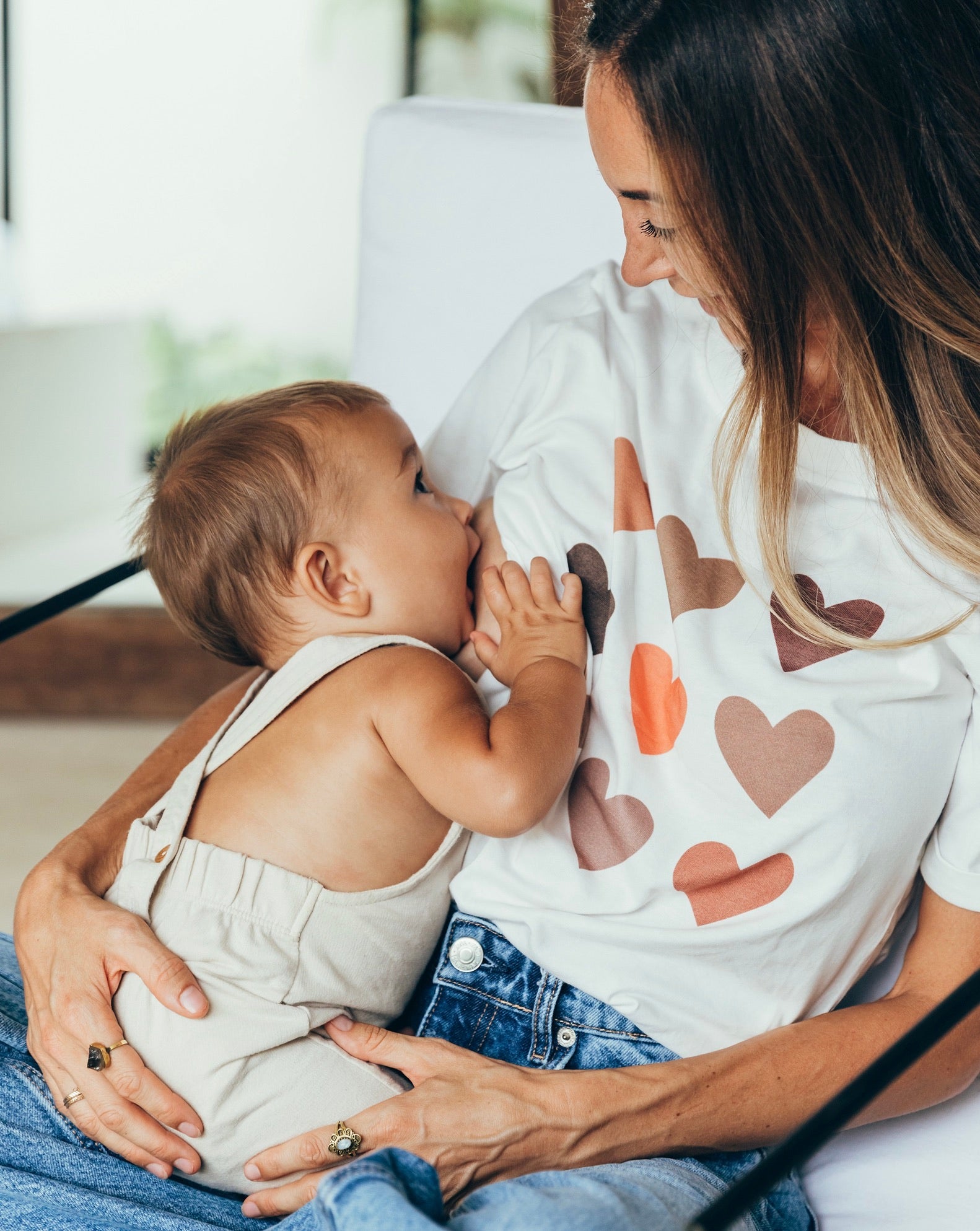
At this stage, feedings are very frequent: every 2 to 3 hours, day and night. Your breasts are often engorged, tender, and still changing a lot. Your main priority right now is to keep up the pace, rest, and adjust to this new routine.
Your clothing needs:
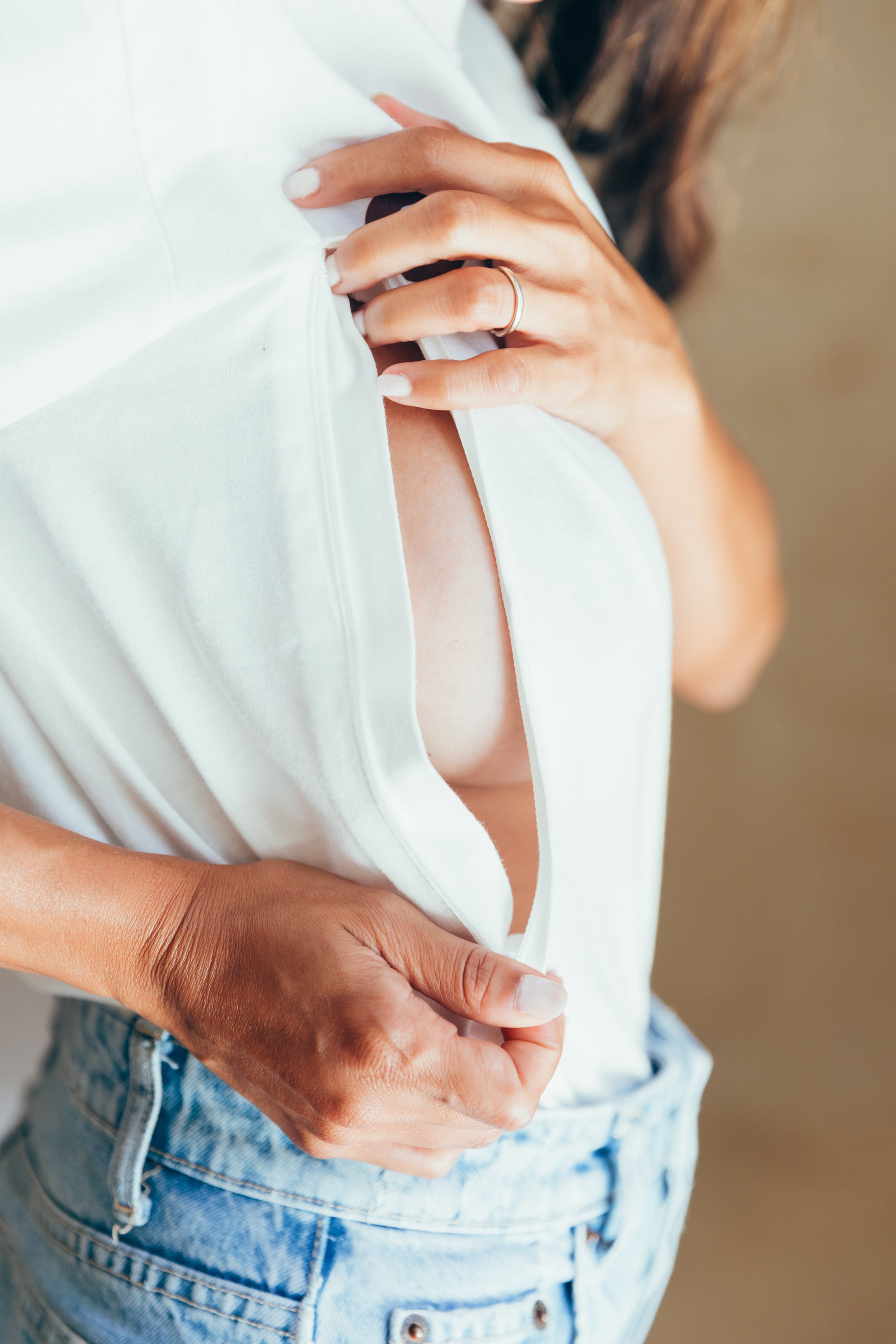
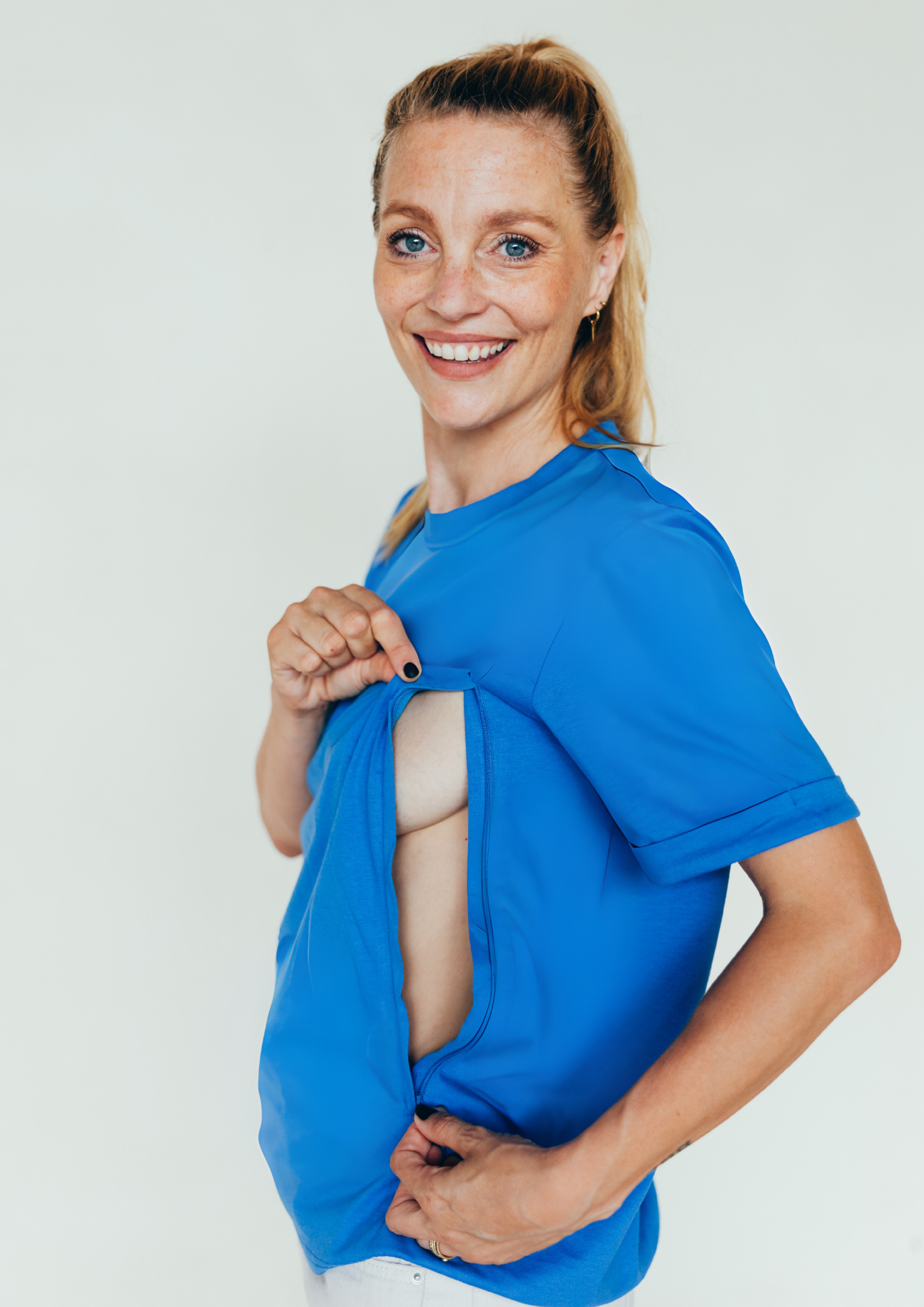
You need clothes that truly make everyday life easier. Access to the breast must be lightning-fast, since feedings are frequent and sometimes urgent. Fabrics should be soft to be gentle on sensitive skin and when in contact with your baby. Loose-fitting styles are also important, as breast size can vary throughout the day. Finally, the openings should be simple and intuitive, allowing for easy movement, even when you’re tired or a little clumsy.
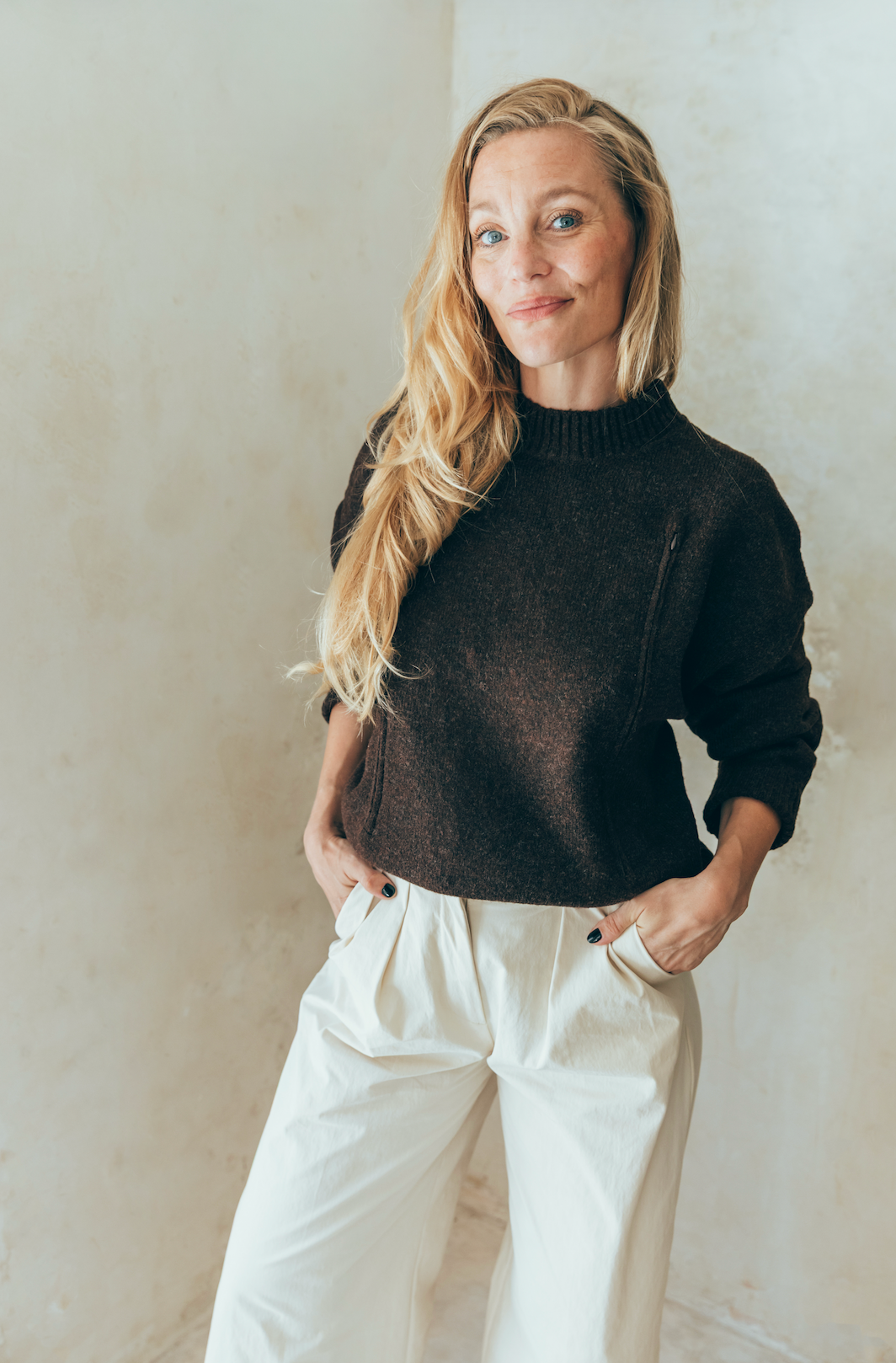
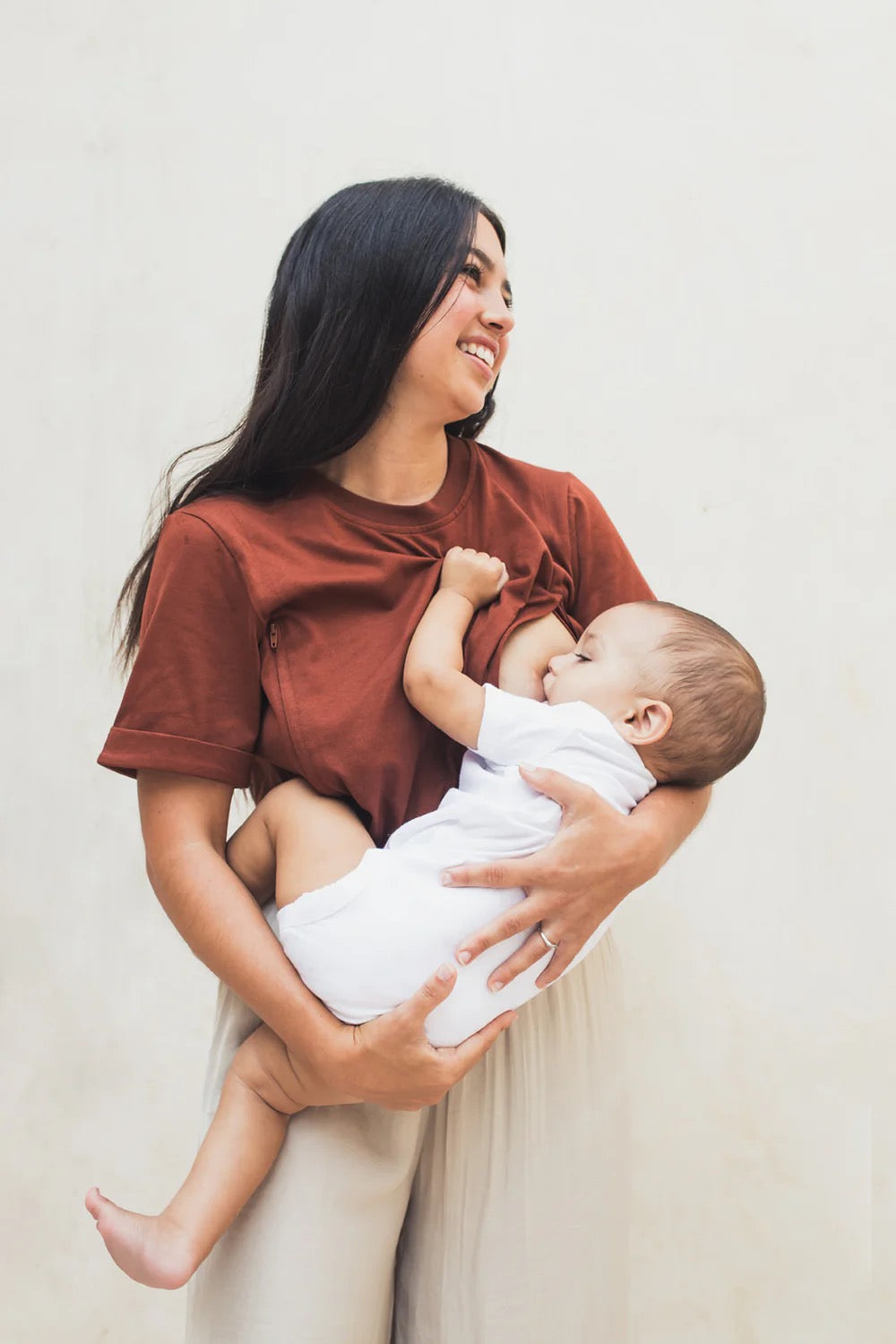
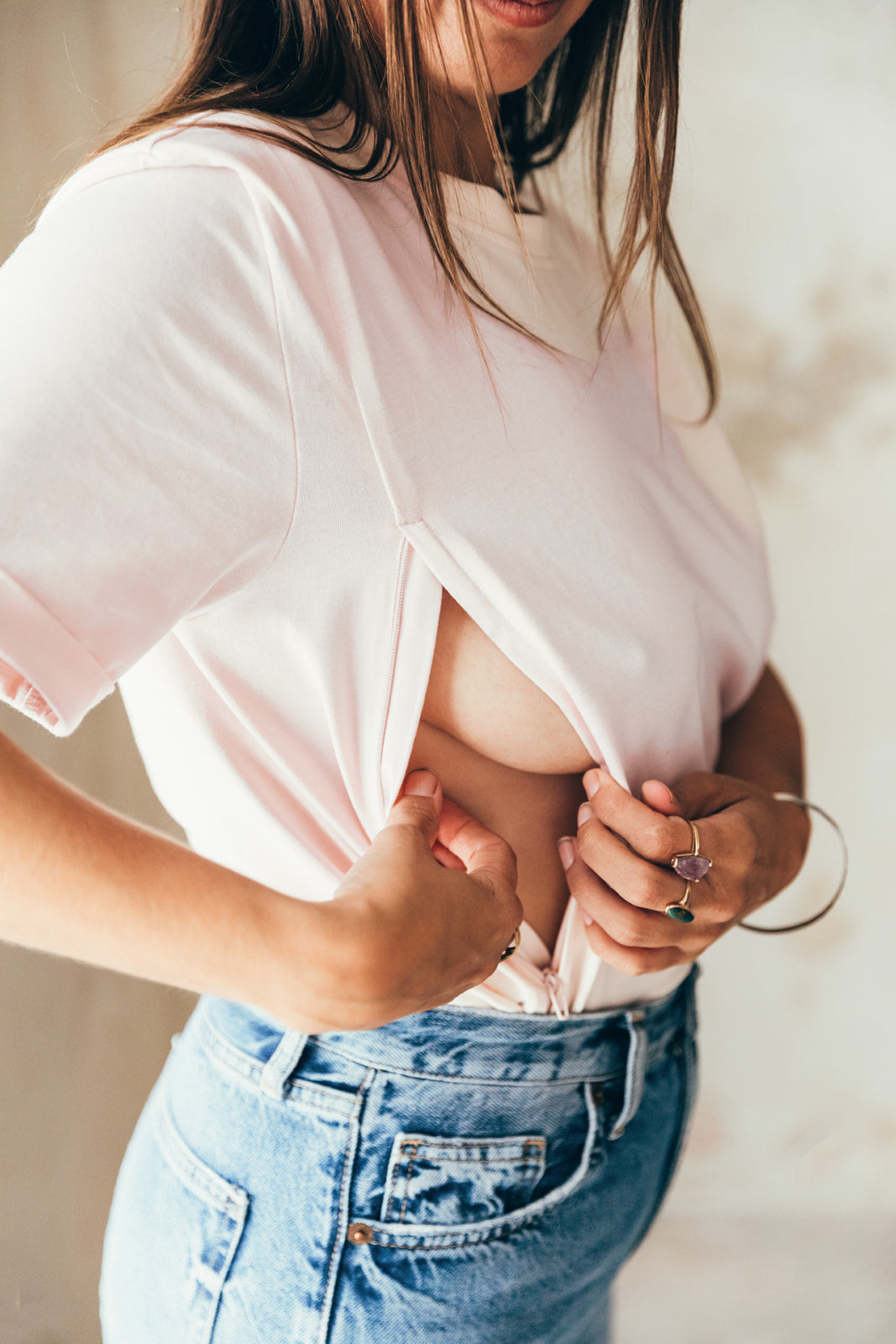
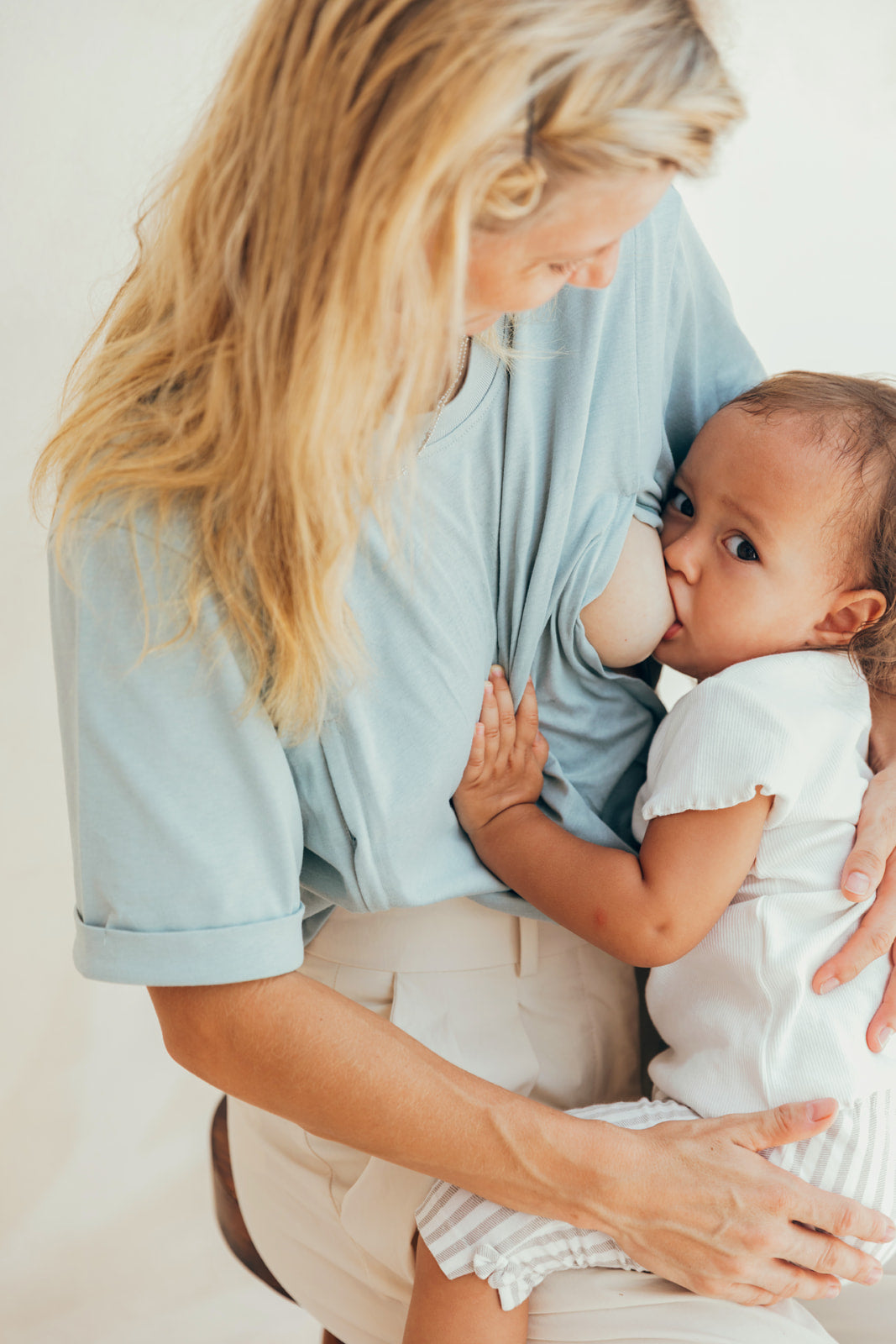
The best options are comfortable nursing T-shirts, nursing pajamas, and soft nursing bras.
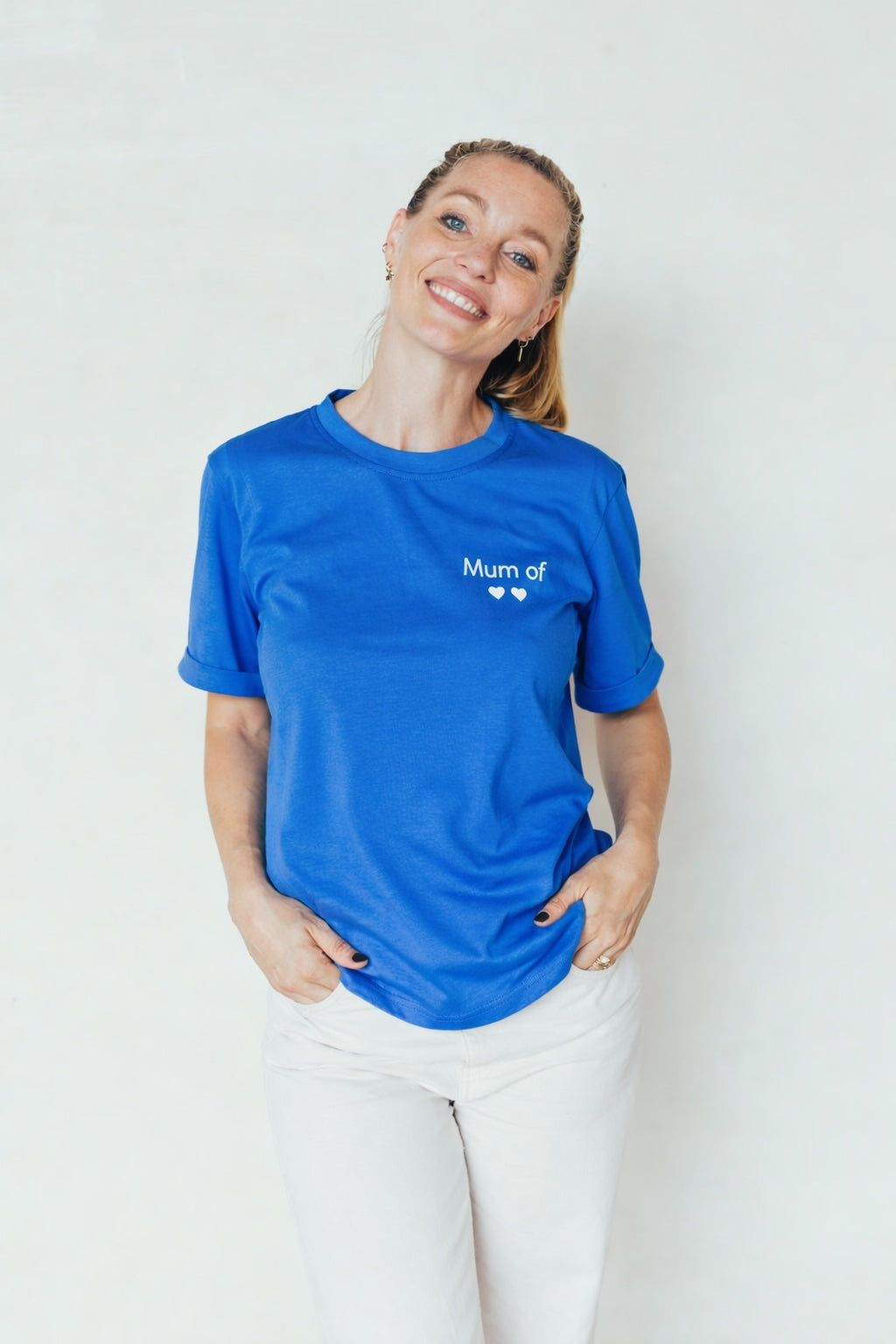
Discover our Breastfeeding t-shirts soft and practical for this busy time.
Phase 2: Installation (6 weeks – 6 months)
A routine is settling in. Feedings are becoming more predictable.

What you're going through:
At this stage, feedings are more regular, with about 6 to 8 feedings a day. This is also often a time when you’re returning to work or gradually resuming a more active lifestyle. Your priority then becomes balancing breastfeeding with your work schedule and daily routine.
Your clothing needs:
You need clothes that are practical, discreet, and easy to wear in a variety of settings. Discretion is essential for breastfeeding at work or in public with complete peace of mind. Versatility is also key: the pieces should work just as well at home, in the office, or when you’re out and about. Since you’ll be washing them often, the clothes need to be easy to care for. Finally, style matters, because you want to feel like yourself again—without sacrificing comfort.
The best choices are therefore discreet nursing tops for the office, elegant blouses, and versatile sweatshirts.
Discover our nursing tops stylish and understated for work.

Phase 3: Diversification (6–12 months)
The introduction of solid foods changes the relationship with breastfeeding.
What you're going through:
At this stage, feedings are less frequent, usually around 4 to 6 times a day, mainly in the morning, evening, or at night. They also become moments of comfort, connection, and transition throughout the day. Your priority now is to regain more flexibility and freedom, while still being able to breastfeed easily whenever the need arises.
Your clothing needs:
You need clothing that’s more versatile, capable of adapting to occasional breastfeeding rather than constant feeding. Flexibility is key, since feedings are less frequent but still need to be easy to manage. Style also becomes more important: you’re more eager to regain true freedom in your wardrobe, without having to wear only highly technical pieces. Versatility becomes essential, with clothes that also function as classic pieces, even when they’re not being used for breastfeeding.
The best choices are therefore stylish nursing dresses and tops that easily pass for everyday clothing.
Discover our Breastfeeding dresses versatile and feminine.

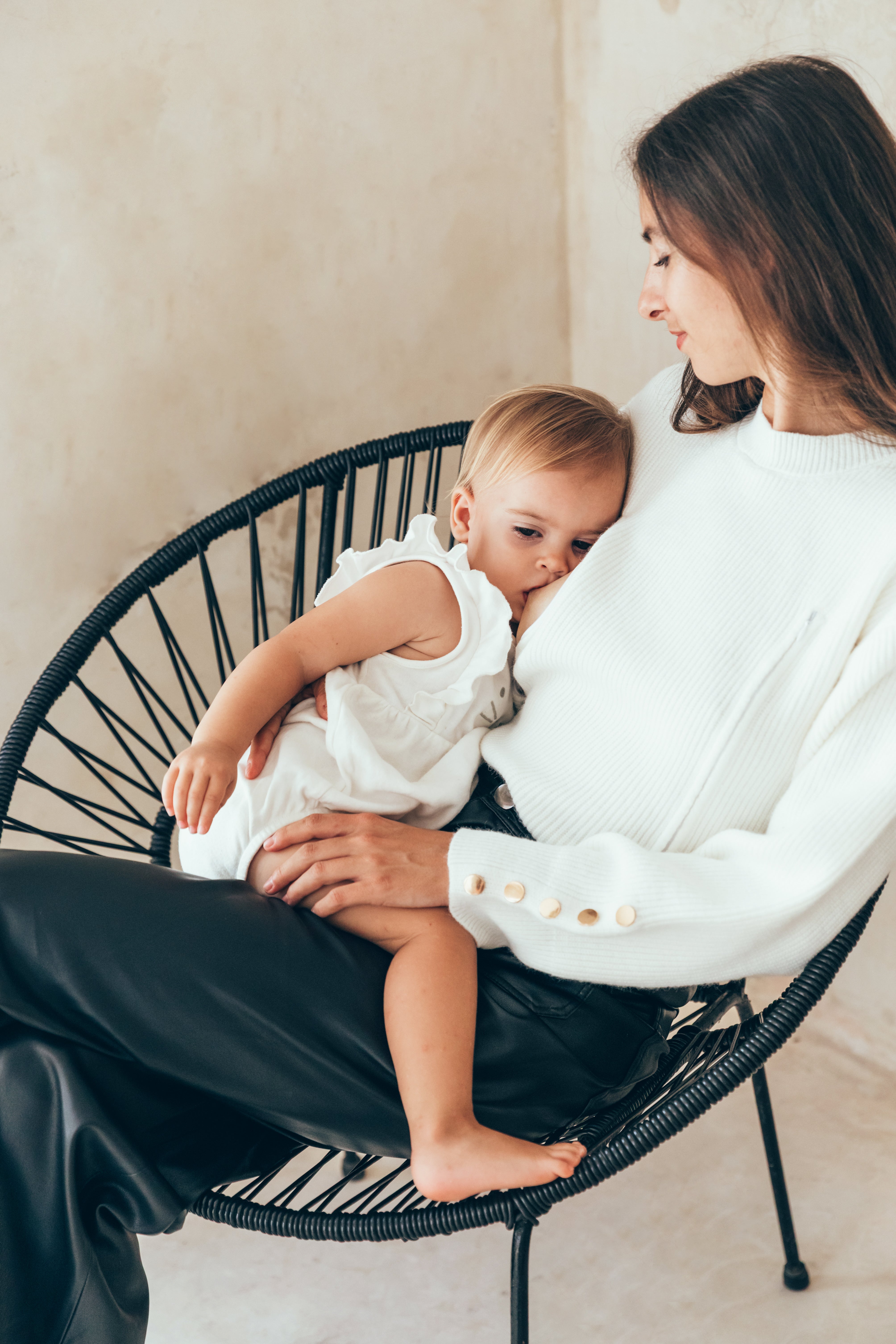
Phase 4: Extended breastfeeding (12–24 months)
Breastfeeding becomes a time for bonding rather than just a nutritional necessity.
What you're going through:
At this stage, feedings are less frequent, usually about 2 to 4 times a day. They often take place in the morning, in the evening, or during moments of comfort. Breastfeeding mainly takes place at home and fits more naturally into a more flexible routine that is less focused on the demands of daily life.
Your clothing needs:
You need clothes that don’t immediately look like they’re designed for breastfeeding. Complete discretion is essential: openings should be invisible or look very natural, so the pieces resemble regular clothing. Timeless style is also important, since these clothes should be wearable even after weaning. Finally, durable quality is important, since these are often pieces that have already seen a lot of use and that you want to keep for a long time.
The pieces to focus on are therefore wrap tops, wrap dresses, and timeless pieces.
Step 5: Gradual weaning
The transition to weaning.
What you're going through:
You’re slowly nearing the end of your breastfeeding journey. Feedings are becoming less frequent—sometimes just one or two a day—before gradually stopping altogether. Often, the last feedings are in the evening or at night, because they’re about comfort, routine, and bonding with your baby. At this stage, the focus is no longer on organizing your daily schedule around breastfeeding, but rather on making a gentle transition at your own pace.
Your clothing needs:
Your wardrobe evolves with you. You no longer need to stock up on nursing clothes, but it can be reassuring to keep one or two easy-to-wear pieces on hand, just in case you need to nurse again. The rest of the time, your clothes return to their regular use: they’re no longer designed just for nursing, but to accompany you in your everyday life.
The best items to have on hand are a few discreet and comfortable nursing outfits, as well as timeless pieces that you can continue to wear after weaning.
Summary: Requirements by Phase
Why the duration of breastfeeding affects your investment
The longer the breastfeeding period, the greater the return on the investment in quality
The simple calculation:
| Duration of breastfeeding | Investment: €300 | Monthly cost |
|---|---|---|
| 3 months | €300 ÷ 3 | €100/month |
| 6 months | €300 ÷ 6 | €50/month |
| 12 months | €300 ÷ 12 | €25/month |
| 18 months | 300€ ÷ 18 | €17/month |
| 24 months | €300 ÷ 24 | €12.50/month |
Conclusion: The longer you breastfeed, the more cost-effective it becomes to invest in quality.
Morphological changes support the theory of evolution
Your body changes throughout the breastfeeding period.
In the first few months, the breasts may feel engorged and more sensitive, and the postpartum belly is still present. Between 3 and 6 months, the body often begins to gradually stabilize. Between 6 and 12 months, body proportions continue to change, but a return to a more normal balance occurs little by little. After weaning, the body stabilizes further.
That’s why a versatile wardrobe is particularly useful. Adjustable, comfortable, and well-tailored pieces allow you to adapt to these changes without having to buy new clothes at every stage.
The Smart, Adaptable Wardrobe Strategy
Key multi-phase components
Some clothes have the advantage of working throughout all stages of breastfeeding, because they naturally adapt to your body’s changes and remain useful afterward.
The wrap top, for example, easily accommodates changes in bust size thanks to its adjustable fit. The wrap dress works on the same principle: it adapts to your body shape, remains elegant, and can still be worn after weaning. The open-front cardigan is also a very practical piece, as it layers easily over other clothes, no matter the season. Finally, the T-shirt with discreet openings makes breastfeeding simple while maintaining a classic look, even after breastfeeding is over.
Layering also makes your wardrobe much more versatile.
The idea is to put together a layered outfit. The first layer provides functionality—for example, a nursing T-shirt that makes it easy to access the breast. The middle layer offers adjustability, thanks to a cardigan or vest that adapts to changes in body shape. The outer layer, such as a jacket or blazer, gives the outfit its final style.
This means each layer can be adjusted independently of the others. This helps extend the life of the clothing, allows for more outfit combinations with fewer pieces, and prevents the need to buy a whole new wardrobe at every stage of breastfeeding.
Personalization: Building Lasting Connections
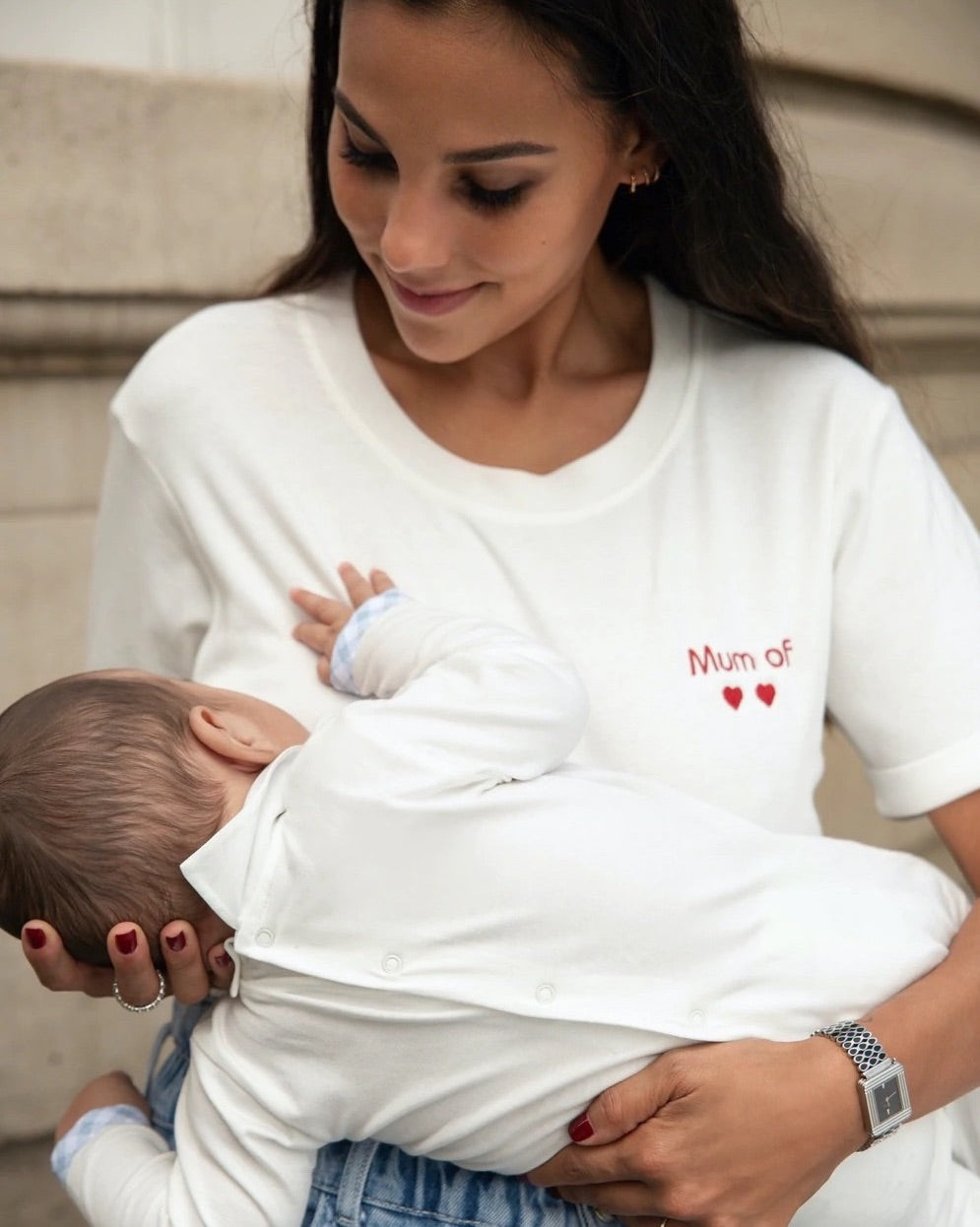
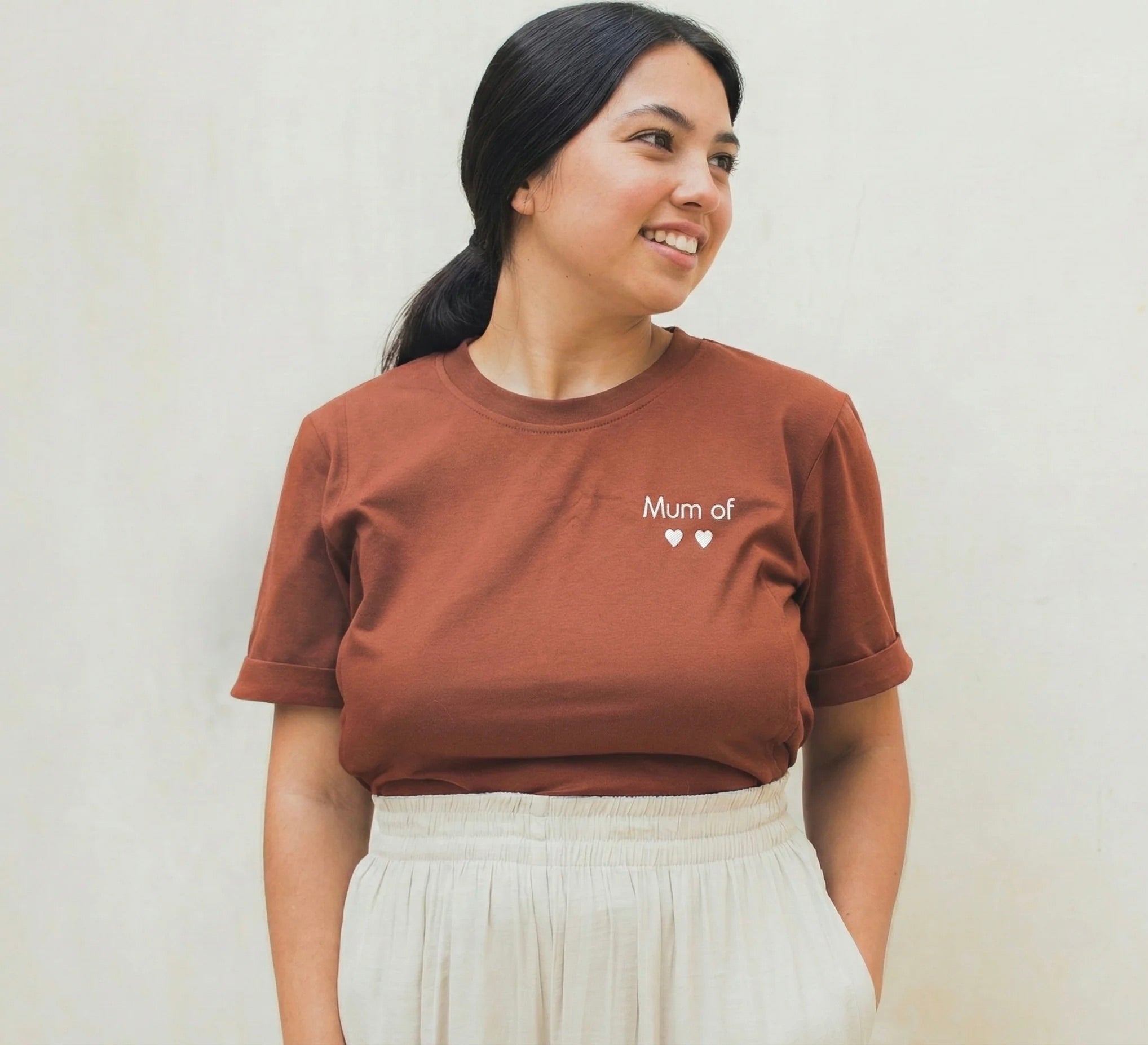
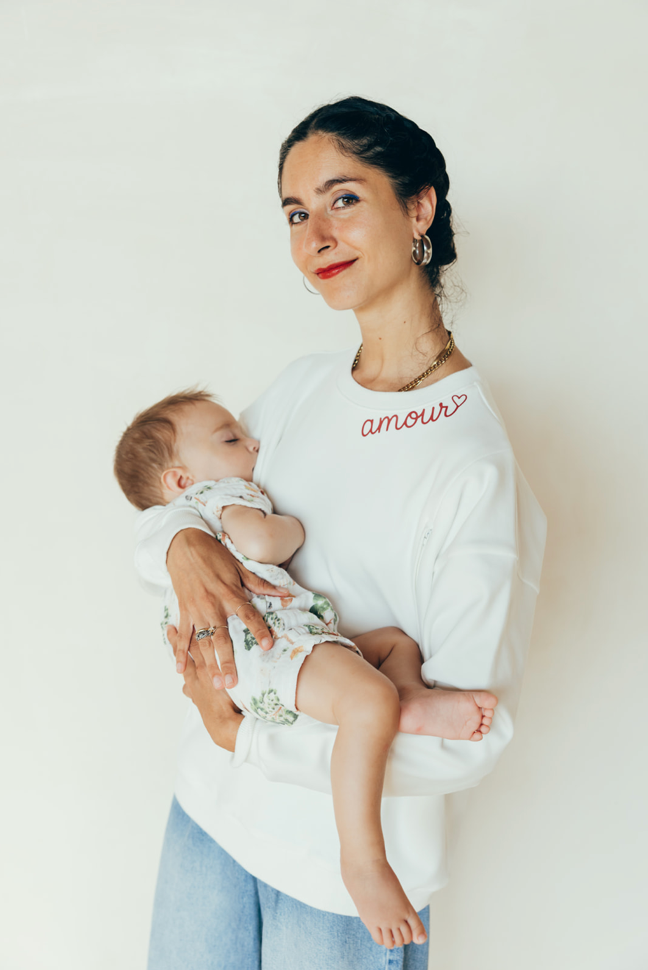
Personalization (embroidery, initials) transforms a functional garment into a cherished piece.
Why it's a smart move:
- Creates an emotional connection with the garment
- Justifies the long-term investment
- Encourages storage after breastfeeding
- Becomes a memory of that time
At 23 Mai Paris, we offer customization options for our pieces to help you create that special connection.

Calculate your investment based on your target time horizon
For a complete guide, check out our article How many nursing clothes do you really need?
Short-term breastfeeding plan (0–6 months)
The minimalist approach involves building a simple, practical, and sufficient wardrobe without buying too many items.
The idea is to focus on a few well-chosen pieces: two or three nursing T-shirts for everyday wear, pajamas designed for nighttime, one or two cardigans that are easy to layer, and a dress that grows with your baby for when you want a more put-together outfit.
In total, this amounts to about 5 to 7 items, with an estimated budget of between €220 and €360. This approach is particularly well-suited if you want to keep things simple, with clothes that are easy to wear, wash, and reuse.
An important tip: choose pieces that won’t be limited to the breastfeeding period. Wrap tops, classic cuts, wrap dresses, and timeless cardigans can still be worn after weaning.
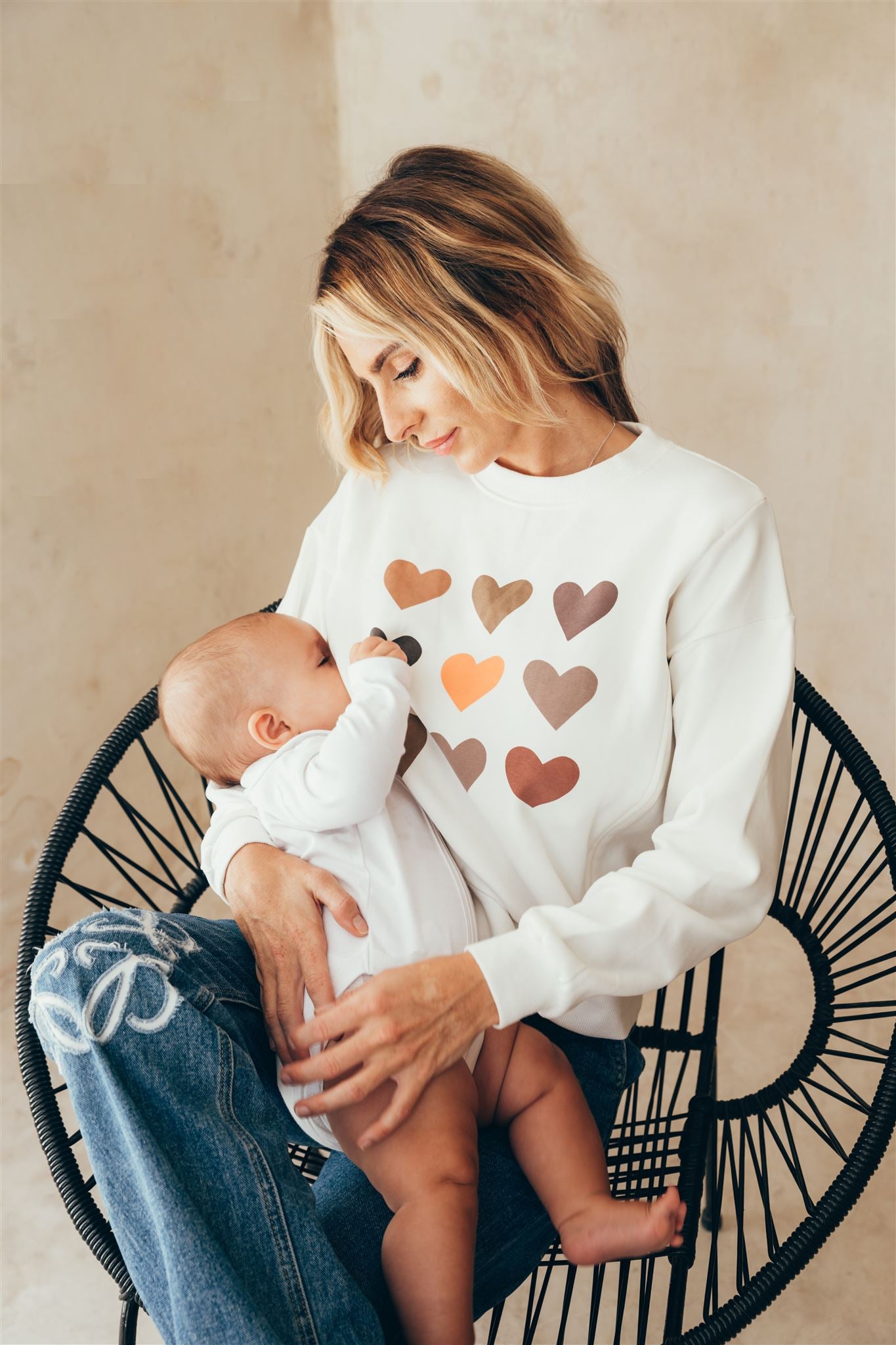
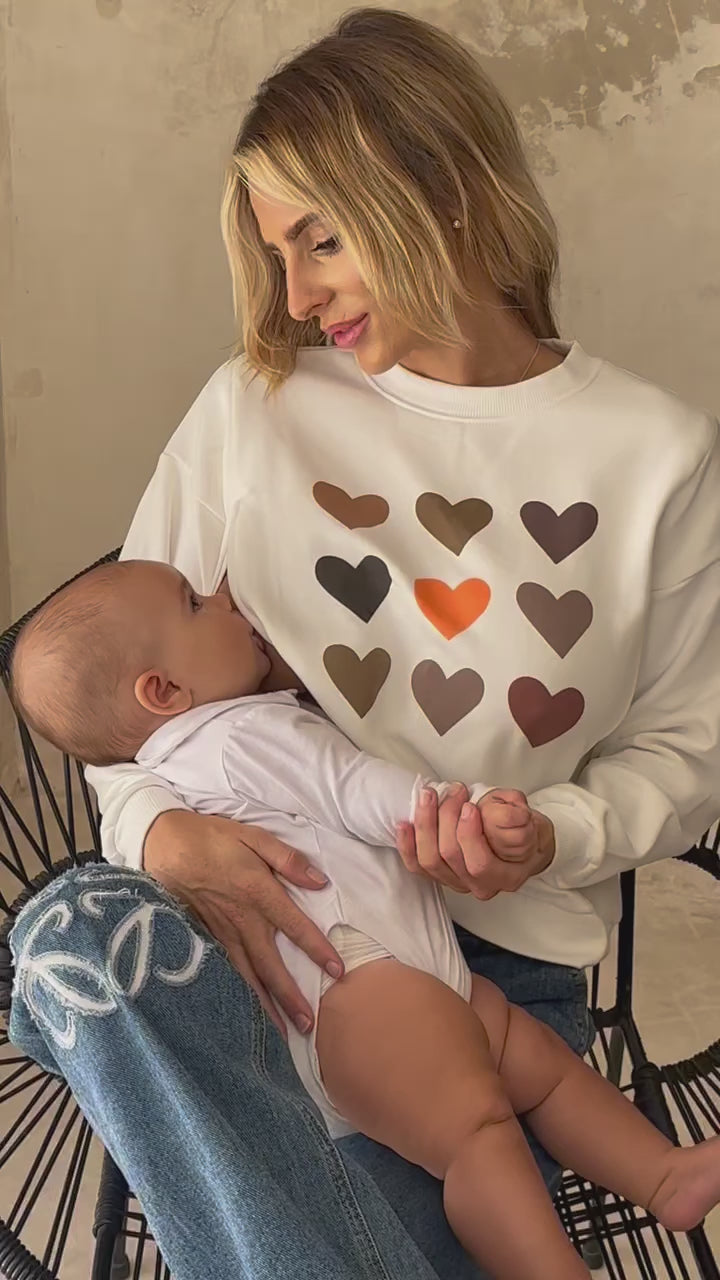
Discover also our nursing sweatshirts can be customized with embroidery.
Standard Breastfeeding Plan (6–18 months)
A balanced approach allows you to build a more comprehensive nursing wardrobe, featuring higher-quality pieces that are suitable for various moments throughout the day.
The idea is to put together a comfortable everyday wardrobe, including four to five nursing T-shirts, plus one or two blouses or shirts for more formal occasions. Two sweatshirts or sweaters provide easy-to-wear outfits for mid-season or at home, while two pairs of pajamas ensure extra comfort for nights and frequent laundry. A nursing dress rounds out the collection for outings, work, or times when you want to feel more elegant.
In total, this amounts to about 10 to 12 items, with an estimated budget of between €450 and €670. This approach is ideal if you want a practical wardrobe that’s also more durable and comfortable to wear every day.
An important tip: Invest in versatile pieces that can adapt to your body’s changes during breastfeeding and remain useful after weaning.
Long-term breastfeeding project (18+ months)
The sustainable investment approach involves building a more comprehensive nursing wardrobe that is designed to last, adapt to your body’s changes, and remain wearable after you’ve finished breastfeeding.
The idea is to focus on high-quality, well-tailored pieces that are comfortable to wear every day: five to six premium T-shirts to create a truly comfortable wardrobe foundation, two or three dressier blouses or shirts, two or three easy-to-wear sweatshirts or sweaters, two sets of pajamas for nighttime, as well as two nursing dresses for outings, work, or more elegant occasions. One or two custom pieces can also round out the wardrobe, adding a more personal touch and making it feel less like “technical clothing.”
In total, this amounts to about 14 to 19 items, with an estimated budget of between €740 and €1,120. This is a more ambitious approach, but it allows you to invest in clothing that is more durable, versatile, and flattering.
You can also look at it this way: over 24 months, a budget of €800 works out to about €33 per month, or €1.10 per day. That’s less than the cost of a daily coffee—and it lets you feel comfortable, free to breastfeed easily, and well-dressed for both special occasions and everyday life.
An uncertain project: the phased approach
If you're not sure how long you'll be breastfeeding, take a flexible approach.
Step 1 — Before/immediately after birth:
- 3 basic T-shirts
- 1 pair of pajamas
- Budget: ~€150
Step 2 — Around 2–3 months, if breastfeeding continues:
- 2 higher-quality T-shirts
- 1 smock for outings
- Budget: ~€120
Step 3 — Around 6 months, if you continue:
- Professional services if returning to work
- 1–2 rooms, as needed
- Budget: as needed
Advantage: You only invest what you actually need.
Looking Ahead: Giving Your Clothes a Second Life
The items left in your closet
Good nursing wear shouldn't just be useful for a few months. When designed well, it can continue to be worn after weaning and find a natural place in your wardrobe.
A wrap top easily becomes a classic and elegant top. A wrap dress remains a timeless piece that can be worn well beyond the breastfeeding period. A cardigan remains a versatile staple that can be layered depending on the season. A T-shirt with subtle cutouts can be worn like a regular T-shirt, without looking like a technical garment. A flowing blouse, meanwhile, remains perfect as an office top or a dressy everyday piece.
The key criterion is simple: are the openings truly invisible? If so, the garment isn’t limited to breastfeeding. It can be worn for a long time, naturally, without losing any of its style or practicality.
For more information, see our article Mom, but not just that: Finding Your Place as a Woman After Having a Baby.
Emotional memories
These clothes have been part of precious moments with your baby. Personalizing them (with the baby’s name or a date) strengthens your bond with them and encourages you to keep them rather than throw them away.
Conclusion
The duration of breastfeeding varies from mother to mother, depending on personal, professional, and physiological factors. By anticipating the different stages, you can make smart investments in a versatile wardrobe that truly adapts to your journey.
At 23 Mai Paris, we create nursing clothes designed to last and evolve with you. Adaptable, customizable, and timeless pieces that support your entire journey, from pregnancy through post-nursing. Because a thoughtful approach maximizes comfort, style, and value.
Browse our collection of nursing clothes and build your growing wardrobe.