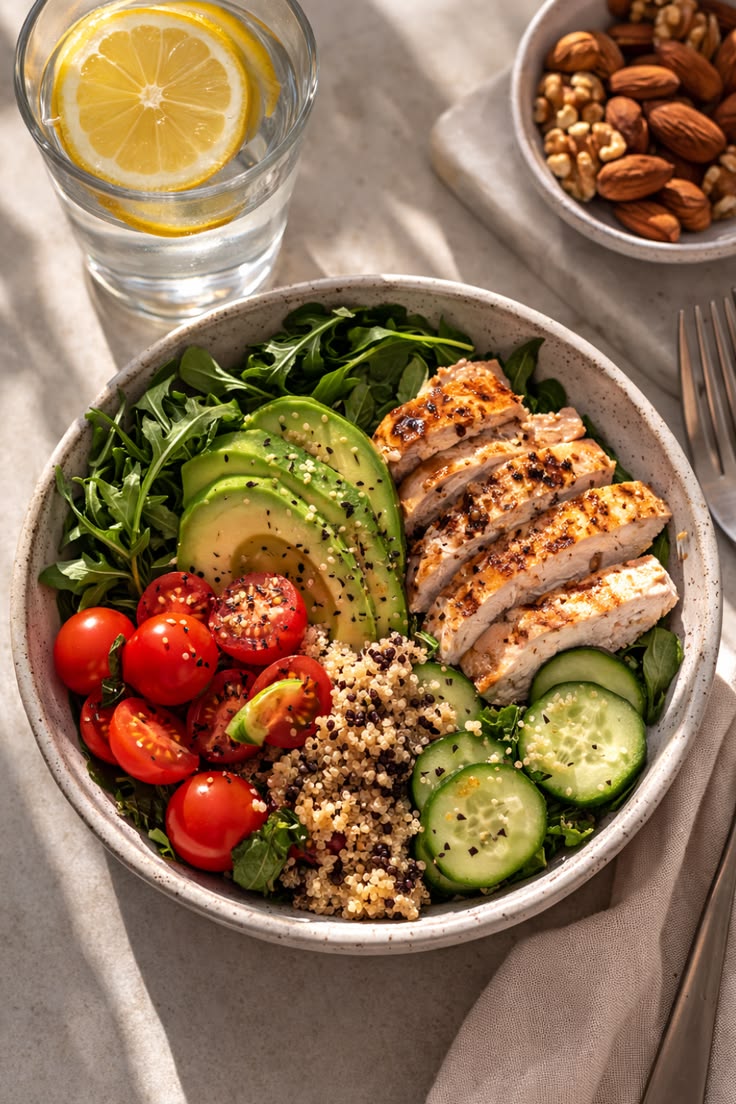
What to Eat While Breastfeeding (and What Should You Really Avoid?)
It’s one of the first questions people ask you after giving birth. Sometimes before you’ve even had a chance to catch your breath.
"Are you breastfeeding? Then watch what you eat."
And right away, a mental list starts to form. Coffee. Alcohol. Spices. Cabbage. Chocolate. Seafood. You hear everything and its opposite, often stated with great confidence and very little evidence. The result: you find yourself eating white rice and steamed carrots, wondering if your baby will tolerate the fact that you dared to add a little pepper.
The reality is much more nuanced—and much more reassuring—than what you've been told.
The Truth About Nutrition While Breastfeeding
Let's start with the facts: your body is an extraordinarily well-designed machine.
During pregnancy, your body prioritized delivering essential nutrients to your baby, sometimes at the expense of your own reserves. While breastfeeding, it does the same thing with your milk. The composition of your breast milk is remarkably stable—even if your diet isn’t perfect, even if you have a day when you haven’t eaten anything nutritious, your milk remains a complete and suitable source of nutrition for your baby.
What changes with your diet is you—your energy, your stamina, your recovery. Not the fundamental quality of your milk.
That doesn't mean that eating well is pointless. It just means that the pressure isn't nearly as great as you've been led to believe.

What Your Body Really Needs
Breastfeeding burns calories—about 400 to 500 extra calories a day. Now is not the time for restrictive diets or lists of forbidden foods. Now is the time to eat enough, eat a variety of foods, and listen to your body.
Here are the nutrients you should prioritize—not because your milk will be lacking in them, but because you might be the one who ends up lacking them if you’re not careful.
Iron levels are often depleted after childbirth, especially in cases of significant blood loss. Red meat, legumes, lentils, spinach, and tofu—be sure to pair them with vitamin C to improve absorption.
Calcium is essential for your bones, which prioritize supplying their reserves to milk. Dairy products, sardines with bones, almonds, broccoli, sesame seeds—make sure to vary your sources.
Omega-3s support your baby’s neurological development and your own emotional well-being. Eat fatty fish twice a week (sardines, mackerel, salmon), walnuts, and flaxseeds.
Vitamin D deficiency is common, especially in the winter or if you don’t get enough sunlight. Supplements are often recommended—talk to your doctor or midwife.
Finally, hydration: producing milk requires water. You don’t need to force yourself to drink gallons, but pay attention to your thirst—it’s often heightened during feedings. Always keep a glass of water within reach, even at night. Our Breastfeeding pyjamas have pockets for this very reason—little practical details really make a difference at night.

What you really need to avoid — without going overboard
This is where misconceptions are most common. Let’s take an honest look at them.
Alcohol: This is the only truly serious restriction. Alcohol passes into breast milk quickly and in amounts similar to your blood alcohol level. If you have a glass of wine, wait at least two hours before your next feeding to give your body time to process it. You can’t “flush” alcohol out of your milk by pumping—only time will do the trick.
Caffeine: It does pass into breast milk, but in much smaller amounts than you might think. One to two cups of coffee a day are generally well tolerated. Sensitive babies may be more fussy or have trouble sleeping—watch your baby and adjust accordingly. There’s no one-size-fits-all rule.
Certain fish high in mercury —such as bluefin tuna, swordfish, shark, and marlin—should be avoided or consumed in very limited quantities while breastfeeding, just as they should be during pregnancy. Opt instead for small, fatty fish (such as sardines and mackerel), which offer the same health benefits without the risks.
Unproven dietary supplements: certain herbal teas, supplements, or "lactation boosters" sold online are not harmless. Before consuming anything outside of your usual diet, consult a healthcare professional.
That's pretty much everything you really need to avoid. We'll explain the rest right after this.
What You're Unfairly Prohibited From Doing
This is the part of the article we wish we’d read from the start.
Coffee: One to two cups a day is safe for breastfeeding for the vast majority of mothers. If your baby seems particularly fussy, cut back and see how things go—but there’s no reason to avoid it just on principle.
Chocolate: The theobromine it contains is present in very small amounts in breast milk. Unless your baby has a known sensitivity to it, chocolate is perfectly safe while breastfeeding. Enjoy it without guilt.
Spices and herbs —such as garlic, curry, cumin, and basil—can slightly alter the taste of your milk. But that’s a good thing: it helps your baby get used to a variety of flavors and makes it easier to introduce solid foods later on. There’s no reason to eat bland food.
Cabbage, legumes, onions: the big fear of gas. Except in very rare cases, the fermentable carbohydrates that cause gas in you don’t pass into your breast milk—and therefore don’t cause gas in your baby. Go ahead and enjoy your lentils.
Gluten and dairy products: Unless your baby has been diagnosed with an allergy or intolerance, there is no reason to avoid them as a preventive measure. These exclusion diets without a diagnosis can deprive you of important nutrients.
Foods that support lactation
Certain foods are traditionally believed to help boost milk production. While the science on this topic is still inconclusive, many of these foods have recognized benefits.
| Food | Why it can help |
|---|---|
| Oatmeal | Rich in iron and beta-glucans, which have been linked to improved milk production in many crops |
| Fenugreek seeds | Traditional galactagogue — but use with caution and in small amounts |
| Fennel | Mild galactagogue properties; pleasant as a herbal tea |
| Brewer's yeast | Rich in B vitamins, iron, and protein, it is often recommended after childbirth |
| Almonds | A source of calcium, magnesium, and healthy fats—just a handful a day is enough |
| Dates | A quick and natural source of energy, rich in iron—perfect for a snack during nighttime feedings |
These foods are not miracle cures. Staying well-hydrated, breastfeeding frequently, and getting enough rest remain the most important factors for maintaining a healthy milk supply.

Planning meals when you have a baby: the real challenge
The real challenge of eating while breastfeeding isn't knowing what to eat. It's finding the time and energy to eat at all.
We forget. We put things off. We eat standing up, with one hand, and cold. We skip meals without even realizing it, and then at 5 p.m. we realize we’ve had nothing but two cookies since this morning.
Here are a few strategies that really work:
Prepare on-the-go snacks you can eat with one hand: fruit, nuts, portioned cheese, and energy balls that you can grab during feedings without getting up. Cook in large batches when you have the energy and freeze individual portions for those days when you don’t. Accept any help offered—and redirect it toward the kitchen rather than the baby. Explicitly ask your friends and family to bring you food instead of gifts for the baby.
To help you during feedings, our nursing tank tops and our Breastfeeding t-shirts are designed so you can breastfeed with one hand and eat with the other—because that’s what everyday practicality is all about.
What if my baby has a reaction to something I ate?
It happens, but it's less common than you might think.
If you suspect a reaction—such as your baby being more fussy than usual, changes in their stools, or signs of discomfort—make a note of what you’ve eaten in the previous four to six hours and keep an eye on things over the next few days. A one-time reaction isn’t necessarily related to your diet—growth spurts, teething, and changes in routine can all cause fussiness.
If you consistently experience the same reaction after eating a specific food, cut it out of your diet for two weeks and see what happens. If the situation improves significantly, you’ve probably found the culprit.
If you still have concerns, consult your pediatrician or a lactation consultant—do not follow broad elimination diets without professional guidance.
Eating well is also about taking care of yourself
Eating while breastfeeding isn't a list of restrictions. It's an invitation to take care of yourself—to eat well during a time when your body is giving so much.
A well-nourished mom has more energy, recovers better, and handles difficult nights and busy days with greater ease. It’s not selfish—it’s exactly the same principle as the oxygen mask on an airplane.
At 23 Mai Paris, we prioritize your comfort with every feed—from the fit of our printed T-shirts to the softness of our nursing sweatshirts. Because breastfeeding moms deserve clothes that are just as thoughtfully designed as their meals.

Discover our complete collection of nursing wear, designed to make every feeding easy—anytime, any season.