Exercise and Pregnancy: What's Recommended by Trimester
You may have been told that pregnancy is a time to rest. That you need to be careful, not overdo it, and listen to your body. And that’s partly true.
But you may not have been told the other side of the story: staying active during pregnancy is not only possible for the vast majority of women—it’s also incredibly beneficial. For you. For your body as it prepares for childbirth. For your mood, which is going through its own roller coaster ride. And even for your baby.
The question isn't really "Can I exercise while pregnant?"—unless there are medical contraindications, the answer is yes. The real question is: what should you do, when, and how should you adapt your exercise routine to each stage of pregnancy?
That’s exactly what we explain here, quarter by quarter.

What Science Says About Exercise During Pregnancy
Let's start by laying the groundwork, because there are still a lot of misconceptions out there.
Moderate physical activity during pregnancy is recommended by most major health organizations, including the WHO, the HAS in France, and the ACOG in the United States. The documented benefits are numerous: reduced lower back pain, better weight management, lower risk of gestational diabetes, improved sleep quality, reduced anxiety and prenatal depression, and better recovery after childbirth.
Studies also show that it has positive effects on the baby’s cardiovascular development and stress management in utero.
What changes during pregnancy is the intensity, the types of exercises, and the need to adapt as your body changes. Not physical activity itself.
A few rules that apply to all trimesters: Never exercise to the point where you can no longer hold a conversation. Avoid overheating—no exercise in the heat, and no hot baths right afterward. Drink plenty of fluids before, during, and after. Stop immediately if you experience pain, bleeding, abnormal shortness of breath, or contractions. And always talk to your doctor or midwife before starting or changing any activity.
Exercise during the first trimester of pregnancy: take it easy and adapt
The first trimester is often the hardest in terms of how you feel. Fatigue can be overwhelming. Nausea often strikes without warning. And yet, this is rarely a medical reason to stop exercising—it’s a reason to adjust.
What you can do:
Walking is the best exercise for the first trimester. Accessible to everyone, requiring no equipment, and low-impact, it helps maintain your cardiovascular fitness while accommodating your fluctuating energy levels. Just 30 minutes a day—even broken up into two or three sessions—is enough to reap the benefits.
Prenatal yoga is ideal from the very beginning of pregnancy. It combines gentle stretching, light muscle strengthening, breathing exercises, and mental preparation for childbirth. Be sure to choose a class specifically designed for pregnancy, as some traditional yoga poses are not suitable for pregnant women.
Swimming and water aerobics are particularly popular throughout pregnancy and as early as the first trimester for women who experience nausea, as water often has a soothing effect. The relative weightlessness of water immediately relieves tension and the weight of the belly.
You can use the elliptical machine if you used to do so at a moderate intensity, in an air-conditioned or temperate environment.
Things to avoid during the first trimester:
Contact sports and activities with a risk of falling, such as horseback riding, skiing, rock climbing, and contact team sports. Traditional abdominal exercises like crunches and sit-ups, which can put undue strain on the linea alba. Exercises performed while lying on your back for extended periods, especially after the 10th week. High-intensity activities: if you weren’t doing them before pregnancy, now is not the time to start HIIT.
What yourbody is going through:
The hormonal changes during the first trimester cause the ligaments and tendons to loosen—a phenomenon known as the relaxin effect. Your joints are more flexible but also more vulnerable. This is yet another reason to focus on low-impact activities and to pay close attention to your body’s signals.

Exercise during the second trimester of pregnancy: the golden window
For many women, the second trimester is the most enjoyable part of pregnancy. Morning sickness subsides, fatigue lifts, the belly is still manageable, and energy returns. It’s also often the best time to engage in regular physical activity.
What you can do:
Walking remains a great option; you can slightly increase the duration or the elevation gain if you feel up to it. Swimming becomes more and more comfortable as your belly grows—the water supports your body and takes away that feeling of heaviness. Prenatal water aerobics is highly recommended.
In the second trimester, prenatal yoga incorporates gentle exercises to strengthen the pelvic floor and back—two areas that will be under increasing strain. Gentle dance is an excellent option for women looking for a more playful, music-based activity.
Prenatal Pilates becomes particularly beneficial at this stage, as it deeply engages the transverse abdominal muscles, strengthens the pelvic floor, and improves posture. Be sure to choose an instructor who is specifically trained in prenatal Pilates.
Nordic walking offers an excellent balance between moderate cardio and strength training, as the poles help relieve pressure on the joints and compensate for shifts in the center of gravity.
Things to avoid:
Abdominal exercises that put excessive pressure on the pelvic floor—any exercise that causes the pelvic floor to "push downward." High-impact sports such as intense jogging or repeated jumping, especially if you haven’t done them before. Prolonged periods of lying on your back, starting in the fourth month, which can compress the inferior vena cava. Sports that carry a risk of falls or abdominal injury.
Tip of the quarter:
Now is the perfect time to join a group class in prenatal yoga, aqua aerobics, or Pilates. Beyond the physical benefits, these classes foster a community of expectant mothers who are going through the same experience. These connections can be invaluable long after pregnancy.
Exercise during the third trimester of pregnancy: Listen to your body above all else
The third trimester is all about constant adjustment. Your belly is getting bigger, your center of gravity is shifting, your sleep is becoming more fragmented, and some days you just don’t have the energy.
The motto for this quarter: keep moving, but don't push yourself too hard. At this stage, physical activity isn't about performance—it's a tool for well-being.
What you can do:
Walking remains your best ally right up until the end—even if it’s just a short walk, even if it’s slow. Twenty minutes a day is enough to maintain good blood circulation and prepare the pelvic floor for the strain of childbirth. Swimming is often described by women in the late stages of pregnancy as the only activity where they can forget the weight of their belly—it’s irreplaceable.
Prenatal yoga increasingly focuses on breathing, relaxation, and poses that prepare you for childbirth, such as the squatting position and pelvic opening. Sophrology and movement-based childbirth preparation (the Bonapace method, haptonomy) can be useful additions to your practice.
Kegel exercises—which involve contracting and relaxing the pelvic floor muscles—should be done throughout pregnancy, but especially during the third trimester. They can be done anywhere, anytime, and have a significant impact on postpartum recovery.
What you really need to stop doing:
Any sport that carries a risk of falling or abdominal impact. Exercises that place significant strain on the abdominal muscles. Activities performed while lying on your back. Any activity that causes contractions, pelvic pain, or uncomfortable downward pressure.
The sign that you need to stop immediately:
Bleeding, regular contractions, leakage of amniotic fluid, chest pain, extreme shortness of breath, severe headaches, or sudden swelling of the face or hands. These are warning signs—stop what you’re doing and contact your doctor or midwife immediately.
What to Wear for Exercise During Pregnancy
The importance of proper clothing is often underestimated when exercising during pregnancy, yet it really does matter.
The wrong type of workout clothing can constrict your stomach, irritate your skin, cause chafing, or simply make you feel uncomfortable. During pregnancy, look for breathable, stretchy fabrics, styles that give your belly room to grow without sagging, and support that adapts to your changing body shape.
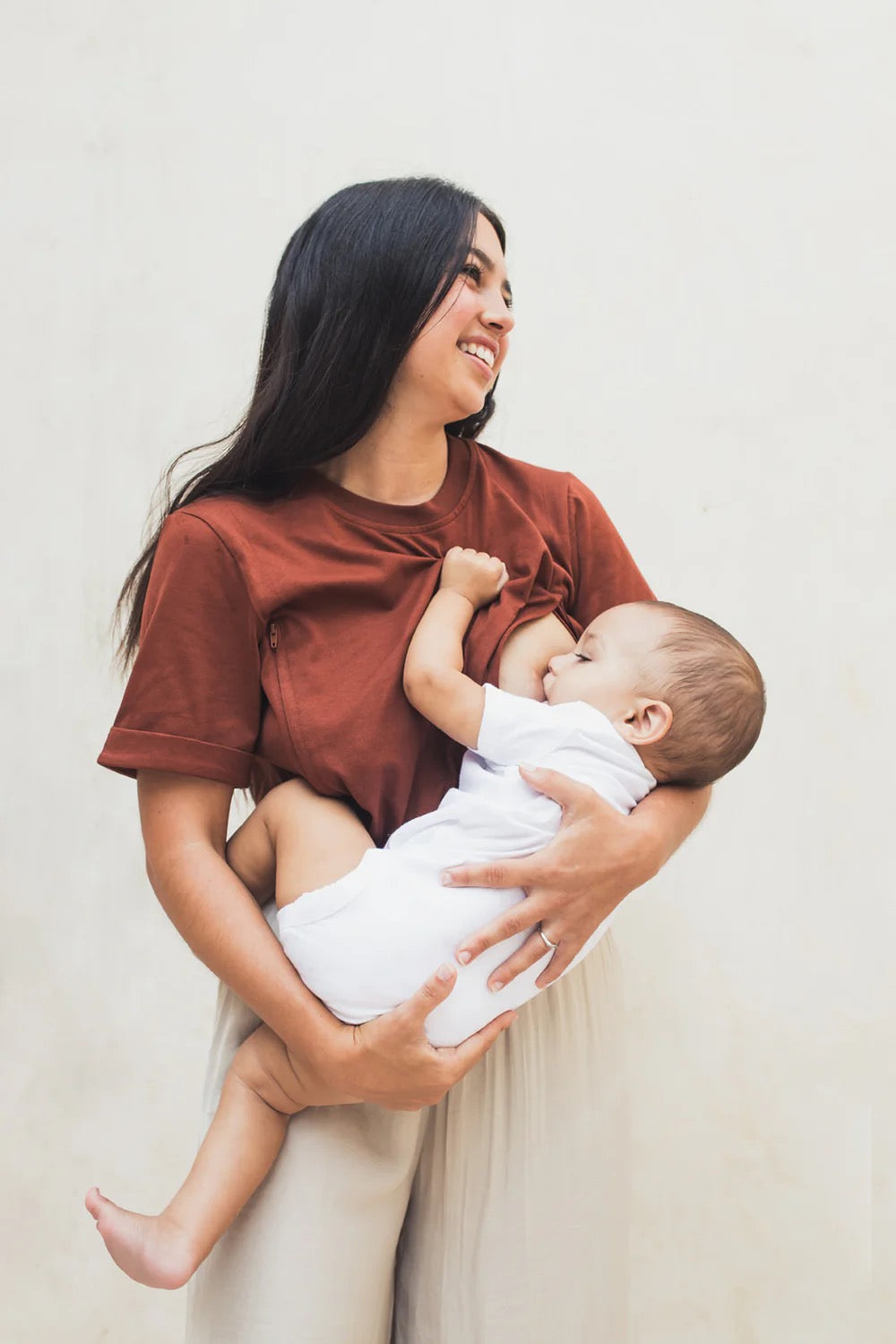
For postpartum activities as you gradually return to exercise while breastfeeding, ournursing tank tops and our Breastfeeding t-shirts are designed to support this transition with comfort and convenience. Lightweight, breathable, and easy to access for a feeding before or after your workout, they bridge the gap between your life as an athlete and your life as a breastfeeding mom.

Getting Back into Exercise After Pregnancy: The Basics
This topic deserves an entire article, and it will get one. But a few words are in order here, because pregnancy and the postpartum period form a continuum.
The golden rule: Don’t resume exercise without your midwife’s or doctor’s approval, and not before your postnatal checkup at six to eight weeks. Your pelvic floor and abdominal muscles need time to recover, regardless of how you gave birth.
Pelvic floor rehabilitation isn’t optional. It’s the foundation for any return to sports after childbirth. In France, it’s covered by insurance—so take advantage of it. You should have ten sessions with a midwife or a specialized physical therapist before resuming any high-intensity activities.
Walking remains your best friend during the first few weeks after childbirth. Gentle, gradual, and low-impact, it allows you to resume physical activity without putting premature strain on your body’s still-fragile tissues.
And if you're breastfeeding, check out our comprehensive guide to nighttime breastfeeding to help you through those first few weeks, when your energy is split between physical recovery and nights with your baby.

Exercise: A Way to Stay in Touch with Your Body During and After Pregnancy
Pregnancy transforms the body in dramatic ways. Sometimes it’s hard to get used to. Sometimes it’s hard to recognize yourself in the mirror.
Staying active during pregnancy is also a way to stay connected to your body rather than just enduring it. It’s about continuing to inhabit it with intention. It’s about trusting it as it carries out this immense task.
This isn’t a performance requirement. It isn’t a goal to achieve. It’s simply a gentle, tailored invitation—at your own pace—to take care of yourself during these extraordinary nine months.

At 23 Mai Paris, we support moms long before their first feedings. Our maternity clothes are designed to accompany you through this daily transformation—and why not during your yoga or walking sessions, too?
Discover our new collection and our pieces designed to accompany you through every stage of your pregnancy.