How to Dress Your Baby in Winter: The Layering Rule Explained Simply
How to Dress Your Baby in Winter: The Layering Rule Explained Simply
This is one of the questions new parents ask themselves most often as soon as the temperature drops: Is the baby warm enough? Have I dressed him or her too warmly? How can I tell if I'm doing it right?
The good news is that there’s a simple, universal rule—endorsed by pediatricians—that answers all these questions. It’s called the “diaper rule,” and once you understand it, dressing your baby in the winter becomes much more intuitive.

Why Babies Can't Regulate Their Body Temperature Like We Do
Before getting to the heart of the matter, there’s one important point to understand: babies—especially newborns and infants—are unable to regulate their body temperature on their own. Unlike adults, who sweat to cool down and shiver to warm up, babies rely entirely on their environment and clothing to maintain a stable body temperature.
A baby who is overdressed can't cool off. A baby who is cold can't warm up on their own. So it's up to you to find the right balance, and that's why the "layers" rule exists.
The Layering Rule: The Basic Principle
The diaper rule is simple: Your baby should always be wearing one more layer of clothing than you are.
If you're wearing a T-shirt, your baby should wear a onesie. If you're wearing a sweater, your baby should wear a onesie and a warm diaper over it. If you're going out in a down jacket, your baby should wear a onesie, a warm diaper, and a snowsuit.
That's the starting point. But in practice, you'll need to adjust based on the actual temperature inside or outside and the baby's age.
How to Tell If Your Baby Is Too Hot or Too Cold
Before we go any further, let's talk about the signs to watch for in the baby itself, because the diaper rule is a guideline, not an exact science.
Areas to Check
The back of the neck is the best way to check a baby's temperature. Place your hand on the back of the baby's neck, under the hair; it should feel soft and warm, neither sweaty nor cold.
The extremities (hands, feet) are often cool, even in a well-covered baby; this is normal and doesn't necessarily mean the baby is cold. Don't rely solely on the hands and feet to judge.
The face should be rosy and relaxed. A very red face and a fussy or sweaty baby are signs of overheating. A pale face and bluish lips are signs of being too cold.
Signs of Overheating You Should Know
Overheating is just as dangerous as the cold for infants, and it is often underestimated by parents who are worried that their baby might be cold. Warning signs: a sweaty or warm neck, a fussy and inconsolable baby, a very red face, and rapid breathing.
Overheating is a risk factor for sudden infant death syndrome (SIDS), which is why pediatric guidelines place such strong emphasis on not covering babies too much, especially at night.

Dressing Your Baby at Home in Winter
The temperature is regulated indoors. The ideal temperature for a baby's room is 18 to 20°C—this is the official recommendation from pediatricians to reduce the risk of sudden infant death syndrome.
Between 18 and 20°C (ideal temperature)
A long-sleeved onesie and a cotton onesie are all you need. If the room temperature is 18°C, you can add a TOG 2 to 2.5 sleep sack for the night.
Between 20 and 22°C (well-heated home)
A long-sleeved onesie is often enough during the day. For nighttime, a lightweight sleep sack with a TOG rating of 1 to 1.5.
Below 18°C (cool house)
A long-sleeved onesie and warm pajamas, plus a TOG 2.5 to 3.5 sleep sack for nighttime. Avoid loose blankets in the crib—they pose a suffocation risk. A sleep sack is always the safest option.
Dressing Your Baby for the Outdoors in Winter
That's where things get complicated because temperatures vary, outings last for different lengths of time, and the baby goes from the cold outside to the warmth of stores or public transportation.
The key is layering elements that are easy to remove or add depending on the environment.
Between 5 and 10°C
A long-sleeved onesie, pajamas, or pants and a warm sweater, with a onesie or baby coat over them. A hat and mittens to protect their hands and feet. If your baby is in a baby carrier against you, remove a layer—your body heat counts as an extra layer.
Between 0 and 5°C
Long-sleeved onesie, fleece pajamas, or warm onesie; a thick baby coat or snowsuit. A hat, mittens, and warm booties. In the stroller, add a sleeping bag or a blanket secured to the stroller—never a loose blanket that could slip over the baby’s face.
Below 0°C
Limit long outings in extremely cold weather with an infant. If you must go out, layer a long-sleeved onesie, a fleece jumpsuit, and a snowsuit. Protect the baby’s face from the wind with the stroller’s hood or a suitable windbreaker. The layering rule applies even more in this case, but never cover the baby’s face.
Dressing Your Baby in a Stroller in Winter
The stroller is a special case that deserves its own paragraph. Since the baby isn't moving, he or she isn't generating heat through movement, so he or she needs an extra layer compared to what he or she would wear if held in your arms.
Use a season-appropriate stroller sleeping bag instead of loose blankets—it's safer and more effective. These sleeping bags come in different thicknesses (TOG) depending on the outside temperature.
Make sure the stroller's hood protects against wind and rain without blocking airflow. Check your baby's neck regularly during your outing to make sure they're at a comfortable temperature.
If you go into a store or a heated place, open or remove the sleeping bag as soon as you're inside—babies warm up very quickly and can overheat fast.

Dressing Your Baby in a Baby Carrier in Winter
A baby carrier is a different situation altogether. Your body heat is transferred directly to your baby, who benefits from your coat, your warmth, and your movements. The rule of thumb is simple: dress your baby as you normally would for indoors, then cover both of you with a baby carrier cover or a suitable baby wrap.
Don't put a thick coat on your baby under the baby carrier—it can restrict your baby's position and prevent them from being properly supported. Instead, dress your baby in light layers and wear a baby-wearing coat or a roomy jacket over both of you.
Dressing Your Baby for Bed in Winter
Nighttime is the period most strictly governed by pediatric guidelines, and for good reason: it is during sleep that the risk of sudden infant death syndrome is highest.
The basic rules are as follows. The room temperature should be between 18 and 20°C—use a room thermometer to check. No loose blankets, no pillows, and no crib bumpers—only a sleep sack appropriate for the temperature. Do not put a hat on the baby while sleeping indoors; the baby regulates part of its body temperature through its head, and wearing a hat at night can cause overheating.
The Most Common Mistakes to Avoid in Winter
The most common mistake is to dress a baby too warmly out of fear of the cold. Overheating is just as dangerous as the cold—and often harder to spot right away.
Relying solely on a baby's hands to gauge their temperature can be misleading. Hands are often cool, even in a well-covered baby; it's the back of the neck that matters.
Pediatricians advise against letting babies sleep indoors while wearing a hat, even in winter when the temperature is 18°C.
Using loose blankets in bed instead of a sleep sack poses a risk of suffocation or overheating.
Not removing layers when entering a heated room can cause you to overheat quickly, even in winter.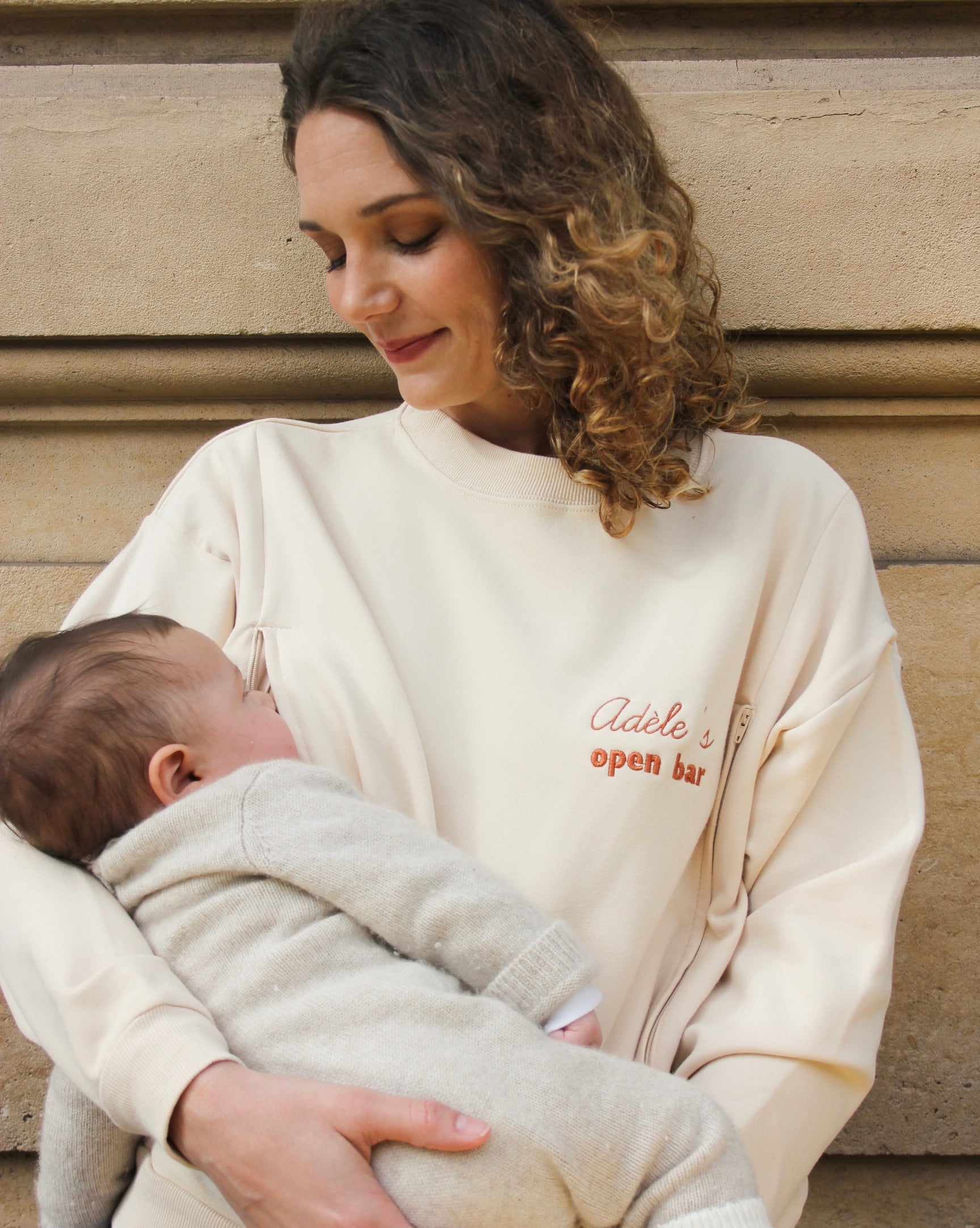
The Complete Summary Table
| Situation | Temperature | Recommended attire |
|---|---|---|
| Home | 18 to 20°C | ML Bodysuit + Cotton Pajamas |
| Home | 20 to 22°C | ML bodysuit worn on its own during the day |
| Outside | 5 to 10°C | Bodysuit + sweater + jumpsuit + hat |
| Outside | 0 to 5°C | Bodysuit + fleece onesie + coat + hat + mittens |
| Stroller | All temperatures | +1 layer compared to the usual outfit |
| Baby carrier | All temperatures | Underwear + babywearing coat |
| Nighttime temperature: 18–20°C | — | ML onesie + TOG 2–2.5 sleep sack |
ML = long sleeves
Dressing your baby in the winter isn't an exact science—it's a matter of daily observation. The layering rule gives you a framework, and the indicators (the back of the neck, complexion, and behavior) provide real-time feedback. With a little practice, you'll develop that "sixth sense" that moms have—knowing at a glance whether your baby is at the right temperature.
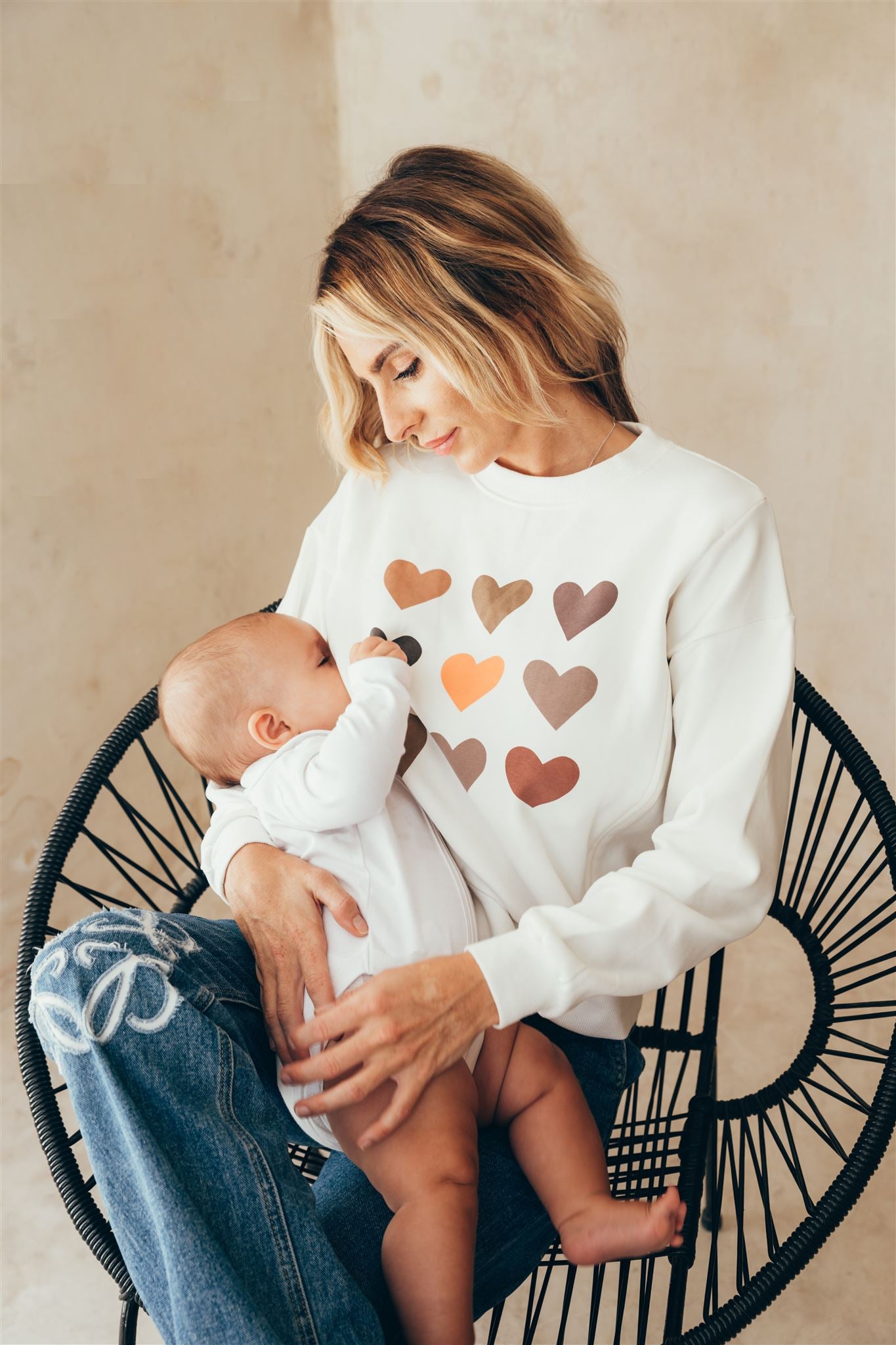
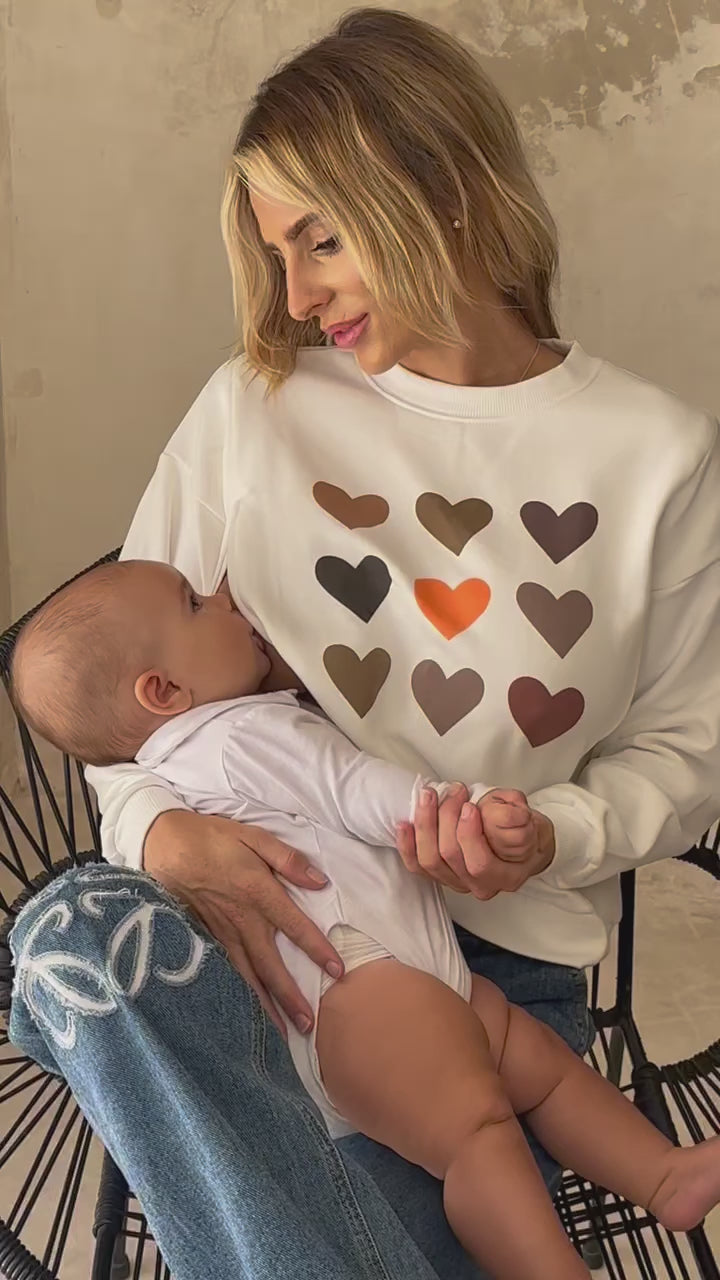
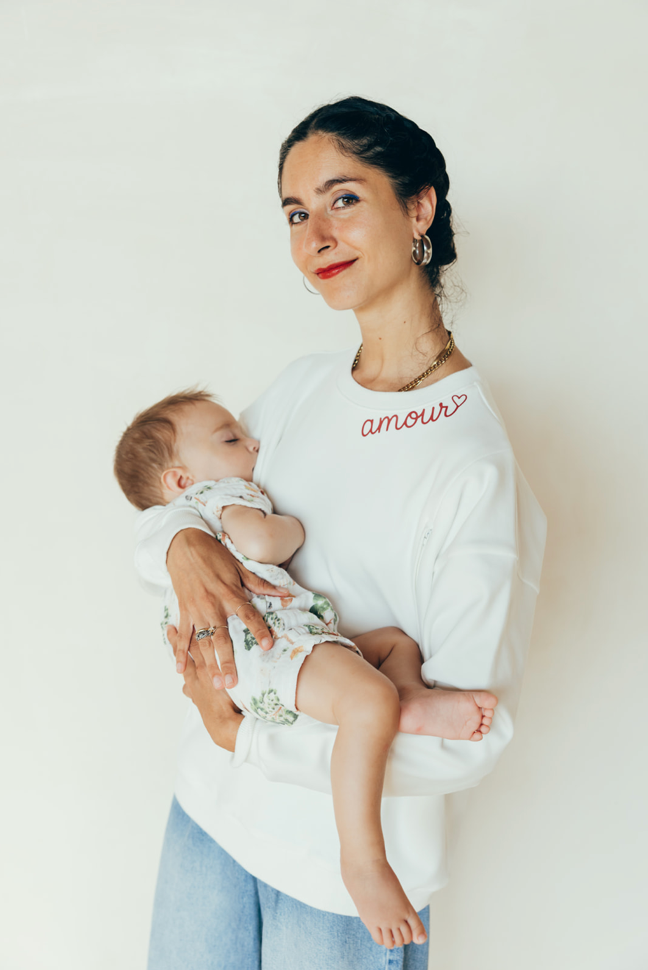
And for you, after spending all winter dressing, undressing, and re-dressing your baby, check out our Breastfeeding sweaters at knit and our nursing sweatshirts to stay warm and nurse easily, no matter what the temperature is outside.