Pregnancy and the Holidays: Alcohol, Foie Gras, Cheese—What You Can Eat
There’s a moment at every holiday dinner table that pregnant women know all too well.
The moment someone sets down the terrine of foie gras. When the cheese platter arrives. When the champagne is uncorked. And when almost everyone’s eyes turn to you, with that mix of concern and curiosity: “Can you eat that?”
Sometimes with kindness. Sometimes with a touch of unintentional scrutiny that makes New Year's Eve a little uncomfortable.
This guide is here to help you sit down at the table with clear answers—not for others, but for yourself. Because knowing the dietary guidelines for pregnancy doesn’t mean you have to miss out on celebrations. It means making informed choices by understanding why, rather than blindly following a list of restrictions.

The reasoning behind dietary restrictions during pregnancy
Before getting into the details about foods, understanding the logic behind it helps you avoid getting lost in the conflicting restrictions you hear everywhere.
Dietary restrictions during pregnancy are primarily intended to prevent three types of risks: listeriosis (caused by the bacterium Listeria monocytogenes), toxoplasmosis (caused by the parasite Toxoplasma gondii), and salmonellosis (caused by the bacterium Salmonella). These infections, which are mild or asymptomatic in non-pregnant adults, can have serious consequences for the baby, including miscarriage, preterm birth, and neonatal infection.
There is a fourth risk: foods high in mercury, which can affect fish, and alcohol, whose effects on fetal development have been well documented.
The good news is that most holiday foods aren't a problem. The number of foods that actually pose a risk is smaller than you might think.
Alcohol: The Only Ban Without Exceptions
Let's start with this because it's the only restriction that allows for no exceptions—no "it's okay just a little bit."
Alcohol passes directly into the fetal bloodstream through the placenta. There is no known threshold below which alcohol consumption during pregnancy would be considered safe. The effects of alcohol on the development of the fetal nervous system are well documented; fetal alcohol syndrome (FAS) is the most severe manifestation, but more subtle effects on cognitive development can occur even with moderate alcohol consumption.
The official message is clear: no alcohol at all during pregnancy.
What You Can Drink at Parties Instead
There are plenty of delicious options to choose from. Sparkling water with a few slices of lemon or cucumber. High-quality fruit juices—pomegranate juice, pear juice, peach nectar. Elaborate mocktails—ginger, lemon, and sparkling water; cranberry juice, lime, and mint. Unfermented grape juice, which has an elegance similar to wine without the risks. And non-alcoholic champagne—the non-alcoholic versions have improved considerably in recent years.
Cheeses: Which Ones and Why
This is the restriction that causes the most confusion because it doesn't apply to all cheeses, and the rules aren't always explained clearly.
The Basic Rule
The risk stems mainly from Listeria, a bacterium that can grow in raw-milk cheeses and in soft cheeses with a bloomy or washed rind. Listeria can grow even in the refrigerator, which makes it particularly concerning.
Cheeses to Avoid
Raw-milk cheeses, whether soft, uncooked pressed, or blue-veined. On a holiday cheese platter, this typically includes: raw-milk Brie and Camembert (the rind is particularly high-risk), Roquefort and other blue-veined cheeses (Fourme d’Ambert, Bleu d’Auvergne), Mont-d’Or, Époisses, and Munster.
Cheeses with a bloomy or washed rind—even those made with pasteurized milk—should also be consumed with caution, as the rind may have been contaminated after pasteurization.
Cheeses You Can Enjoy Without Worry
Hard cheeses such as Comté, Beaufort, Emmental, and Gruyère are safe to eat, even if made from raw milk, because the heating process destroys Listeria. Processed cheeses (such as cheese slices and Gruyère cream cheese) are also safe. Parmesan, Pecorino, and Grana Padano are safe as well.
The trick to enjoying a cheese platter
Hard, cooked cheeses are often the most flavorful on a cheese platter. A beautifully aged Comté, an Alpine Beaufort, or a high-quality Parmesan—you can help yourself generously to any of these without a second thought.
If you're tempted by a cheese but aren't sure whether it's made from raw or pasteurized milk, ask, or avoid eating the rind. The rind is the part that poses the greatest risk.
Foie gras: Yes, but which one?
The good news for foie gras lovers: it’s generally safe to eat during pregnancy, with a few important caveats.
Cooked foie gras: no problem
Canned foie gras, semi-cooked foie gras, and foie gras in a terrine—provided they have been cooked sufficiently—pose no risk of listeriosis or salmonellosis. Canned products that have undergone the Appert process have been sterilized to eliminate bacteria. Semi-cooked foie gras has been heated to a sufficiently high temperature.
Raw or lightly pan-seared foie gras: best avoided
Raw or undercooked foie gras may pose a risk of listeriosis. If you’re offered foie gras that’s just seared or barely cooked, it’s best to avoid it or make sure it’s been thoroughly cooked through.
The Issue of Vitamin A
Liver, in any form, is extremely rich in vitamin A in the form of retinol. Very high doses of retinol during pregnancy are potentially teratogenic. The recommendation is to consume liver no more than once a week during pregnancy.
On New Year's Eve, a reasonable portion of cooked foie gras is fine. But if you've eaten liver or liver-based dishes during the week, go easy on it.
Smoked salmon, oysters, and seafood
Smoked salmon: with caution
Cold-smoked salmon is an uncooked product; cold smoking does not kill Listeria. It is officially not recommended during pregnancy.
Hot-smoked salmon is cooked and therefore safe to eat, but it's less common on holiday platters.
If you really miss smoked salmon during the holidays—it’s served at practically every New Year’s Eve dinner table—the actual risk remains moderate. A small amount of high-quality salmon is not the same as eating it regularly. But officially, the recommendation is still to avoid it.
Oysters: Avoid them
Oysters are a raw, filter-feeding food that can potentially concentrate bacteria and viruses present in the water (such as norovirus and salmonella). They are officially not recommended during pregnancy.
Cooked shrimp and seafood: no problem
Cooked shrimp, cooked langoustines, lobster, and pan-seared scallops—as long as the seafood is thoroughly cooked, it poses no particular risk. Cooking destroys any potential bacteria and parasites.
Caviar and Fish Roe
Caviar and raw fish roe should be avoided due to the risk of listeriosis. Pasteurized or heat-treated fish roe, however, is safe to eat.
Cold cuts and sausage products
This is an important category of festive tables and one where confusion is most common.
Raw deli meats: best avoided
Raw ham (Serrano, Parma, Bayonne), dry-cured sausage, raw chorizo, bresaola—all uncooked deli meats—are officially not recommended during pregnancy due to the risk of listeriosis and toxoplasmosis.
Cooked deli meats: no problem
Cooked ham (white ham), cooked sausages, rillettes, pâté, and other cooked deli meats do not pose a risk of toxoplasmosis (heat destroys the parasite). As for listeriosis, the risk is low but not zero for pre-packaged sliced products; opt for products sliced to order instead.
Other holiday foods you can enjoy without restriction
The list of foods that are safe to eat during pregnancy is much longer than people generally think. Here's what you can eat without restriction on New Year's Eve.
All well-cooked meats: poultry, beef, lamb, veal. Vegetables as appetizers, side dishes, or in salads—without restriction, whether raw or cooked. Eggs, as long as they are well-cooked (hard-boiled eggs, baked eggs, omelets). Store-bought mayonnaise, which is pasteurized and therefore safe. Holiday desserts such as Yule logs, chocolates, baked crème brûlée, and fruit tarts.
Celebrating the Holidays While Pregnant: More Than Just What's on Your Plate
There's one aspect of eating during pregnancy that's never mentioned in dietary guides, yet it's very important.
Fatigue. The first trimester of pregnancy is often the most exhausting, and it sometimes coincides with the holiday season. You may feel like you can’t make it through an entire evening, or want to leave at 10 p.m. even though everyone else is still full of energy. That’s normal. Listen to your body.
Temperature. Large holiday gatherings are often hot and stuffy, which can make nausea or discomfort worse. Plan to sit near a window you can open, step outside for some fresh air if needed, and don’t feel obligated to stay at the table for the entire meal.
How others look at you. Questions about your pregnancy, comments on what’s on your plate, unsolicited advice on what you should or shouldn’t eat—all of this is part of the holiday season when you’re pregnant, and it can be exhausting. You have every right to have a few short, cheerful responses ready to cut the conversations short: “My doctor said this is fine” or simply “Thanks, I’m handling this just fine.”
What to Wear for the Holidays When You're Pregnant
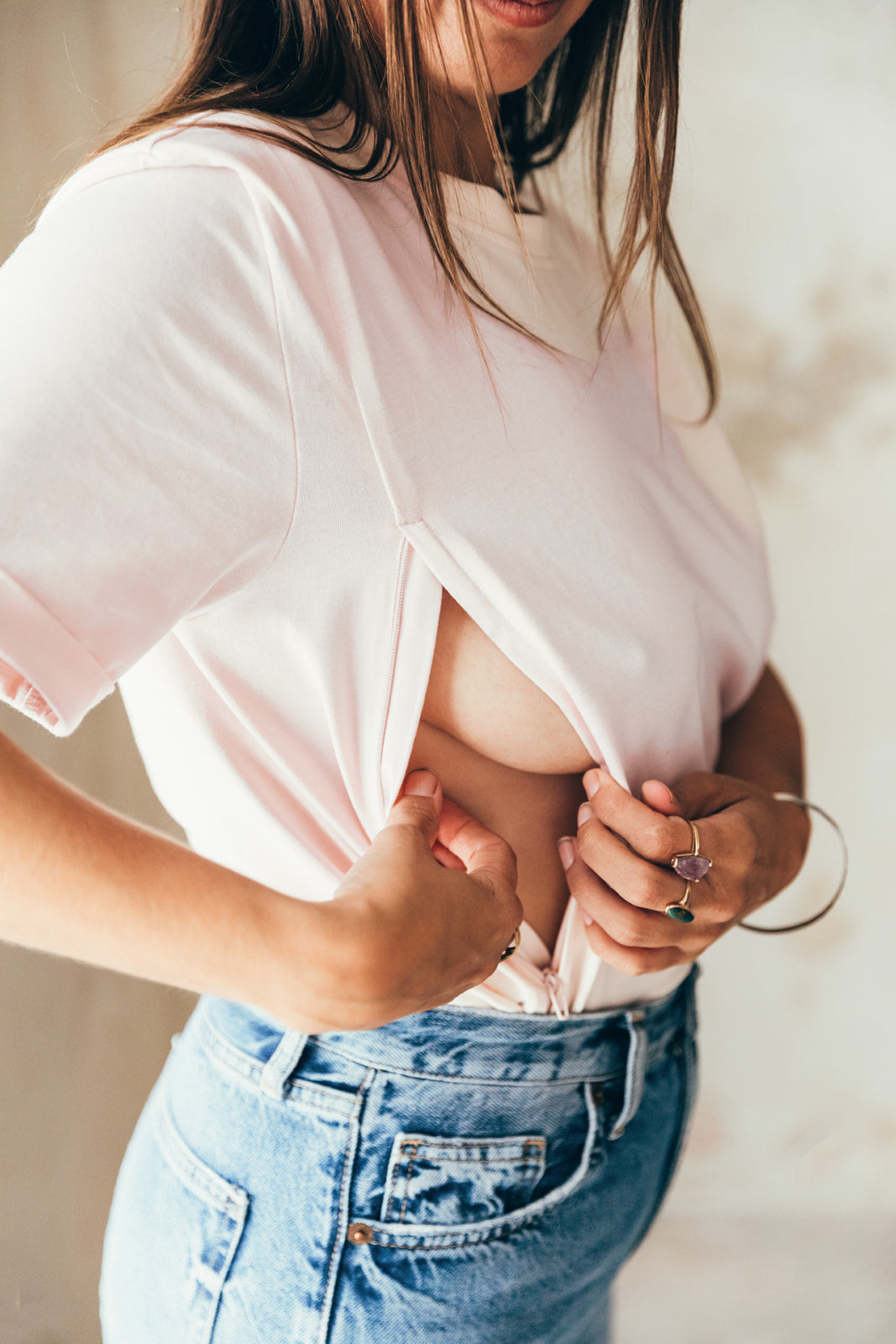
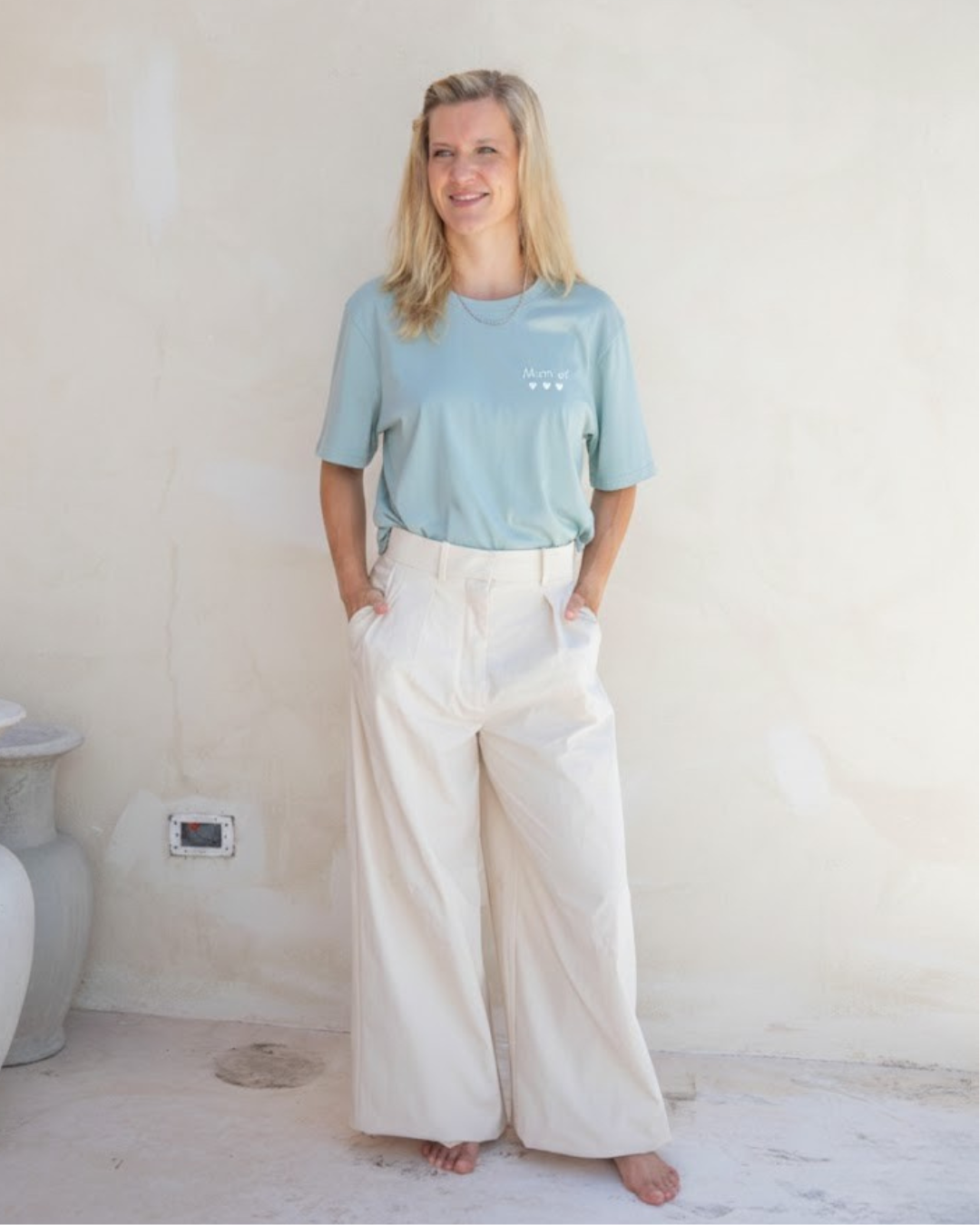
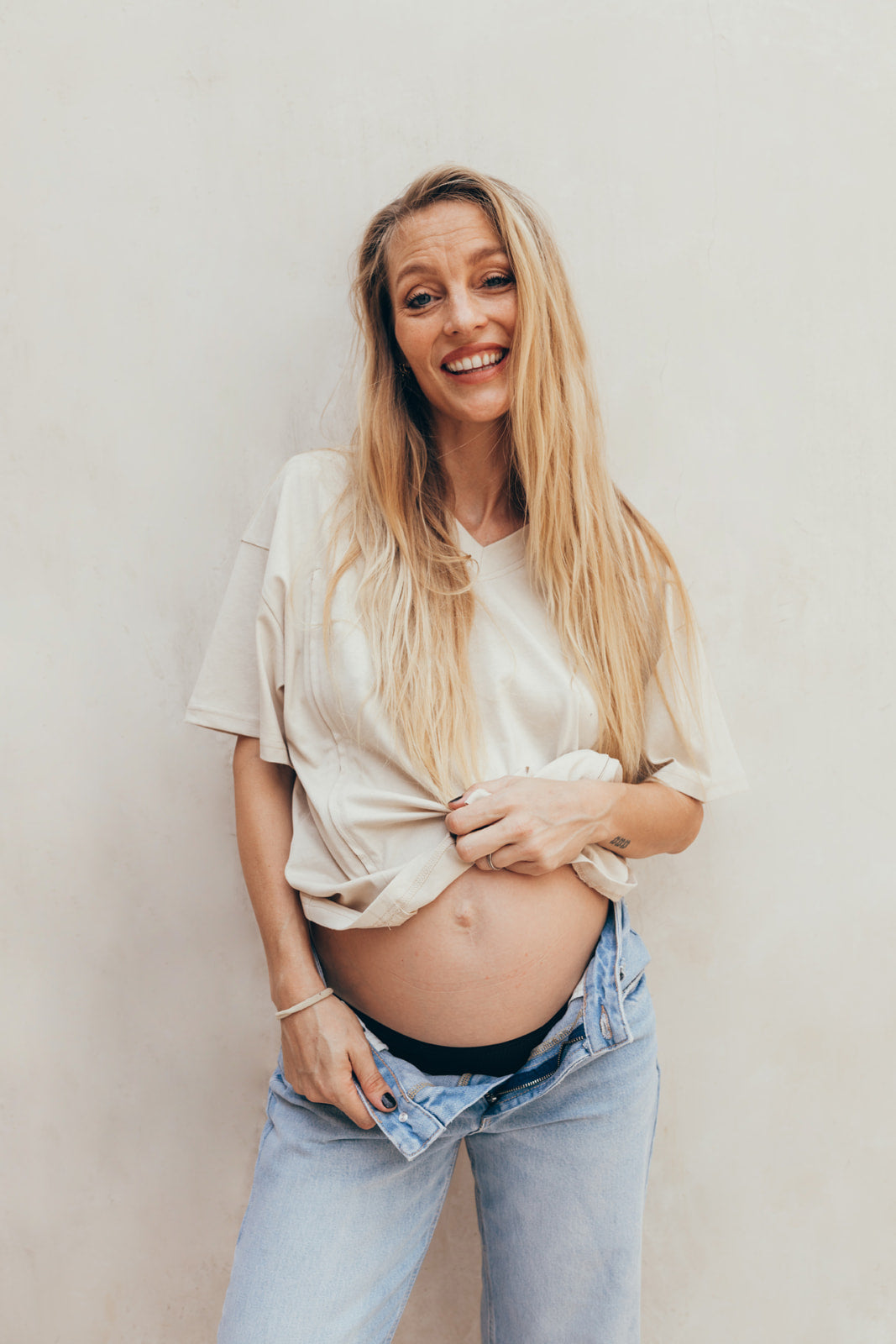
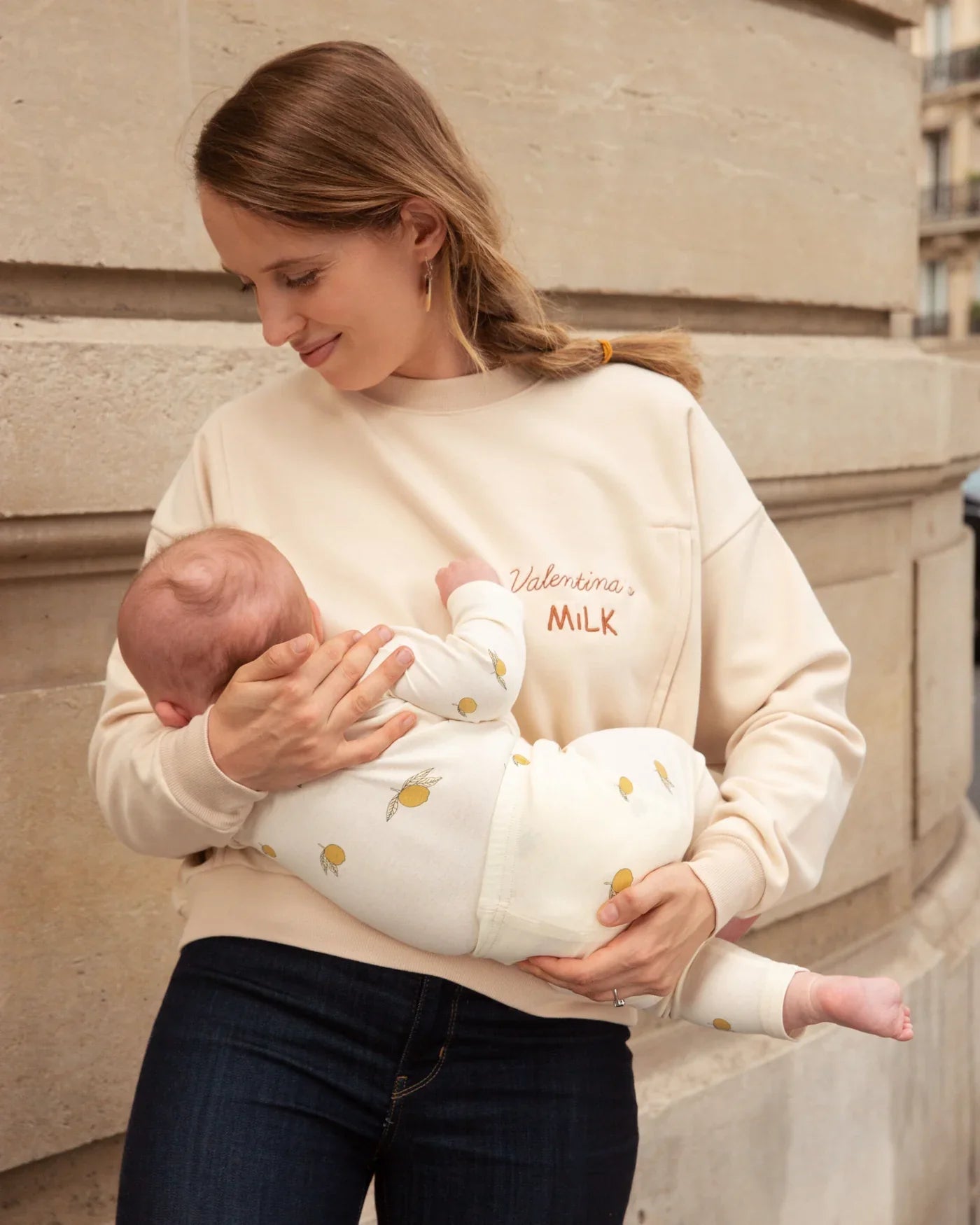
This is a topic in its own right, and the January sales are often a great opportunity to get ready for the upcoming holidays. Ourmaternity collection features pieces that let you enjoy the holidays in style without sacrificing the comfort of flowing silhouettes that adapt to your growing belly, all made from elegant yet breathable fabrics perfect for long evenings at the dinner table.

The Wonderful Things the Holidays Have in Store for You While You're Pregnant
There's something no one tells you before you experience your first New Year's Eve while pregnant.
It’s intense. Not in a negative way, exactly. You’re sitting at that table, with your glass of sparkling water and your plate of Comté cheese and cooked ham, while everyone else is drinking champagne. And inside you, something is happening—a keen awareness of what you’re carrying, of what’s quietly taking shape as the lights shine and the music plays.
You’ll never forget that New Year’s Eve. Not because of the menu. But because of what you felt—that unique sense of being both there and elsewhere, present at the celebration yet filled with something greater.
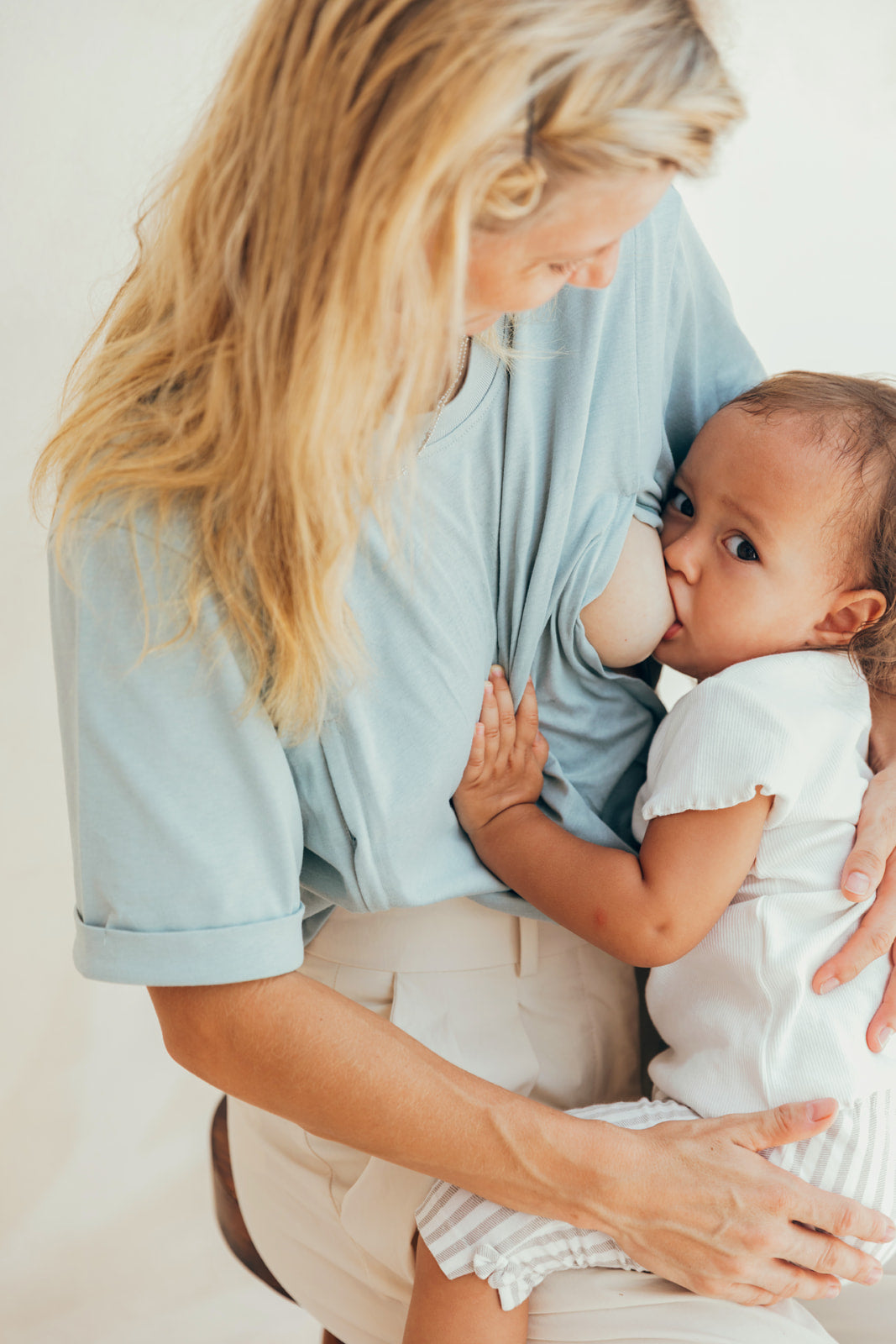
At 23 Mai Paris, we support expectant mothers through every moment—from large gatherings to cozy evenings at home. Our new collection and maternity wear are designed to help you navigate every stage of motherhood with comfort and style, including the holidays.
Check out our affordable basics and nursing clothes, too, so you can start preparing now for the next chapter of your journey.