Pajamas and " Breastfeeding nightdress ": How to Choose for Nights of Breastfeeding
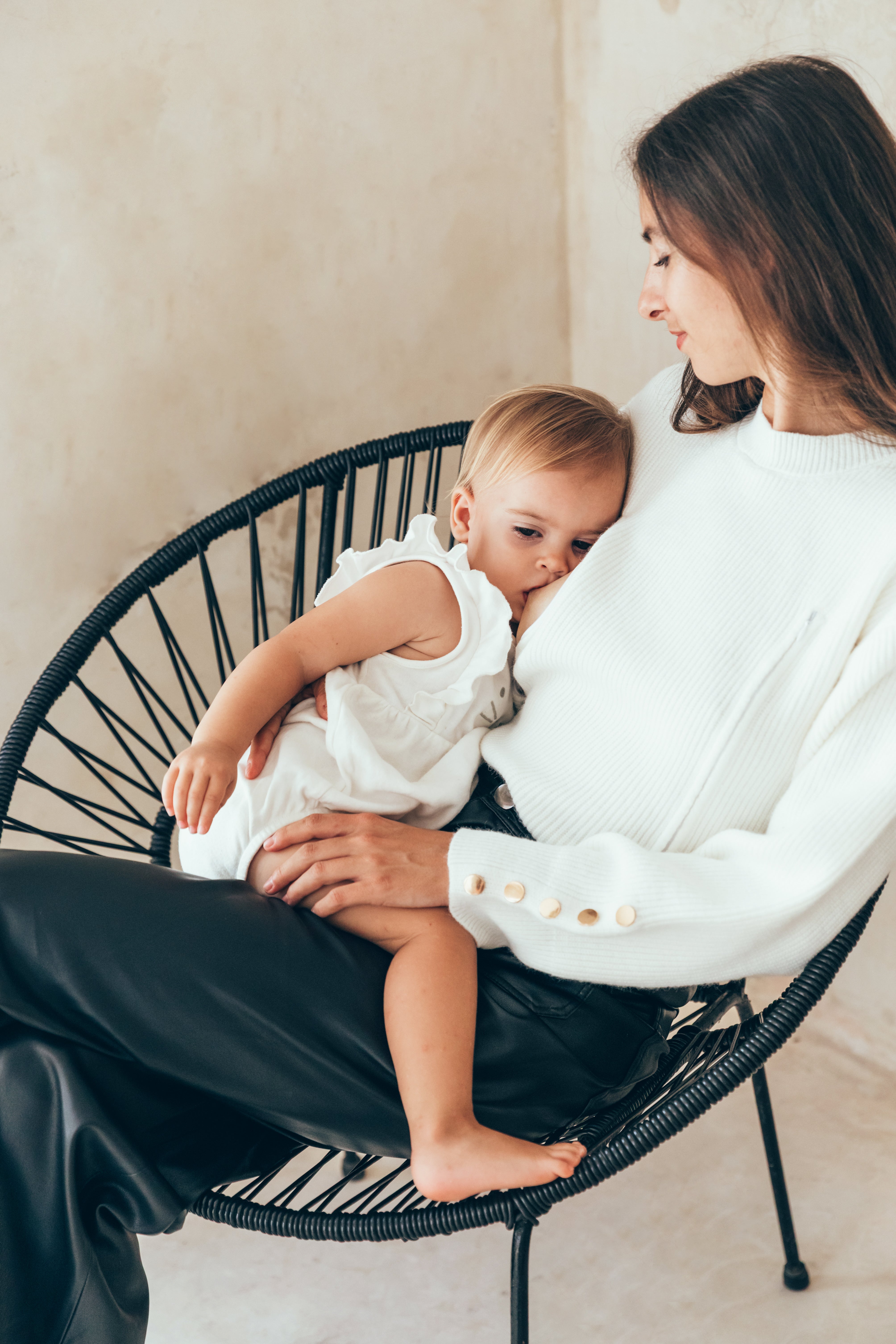
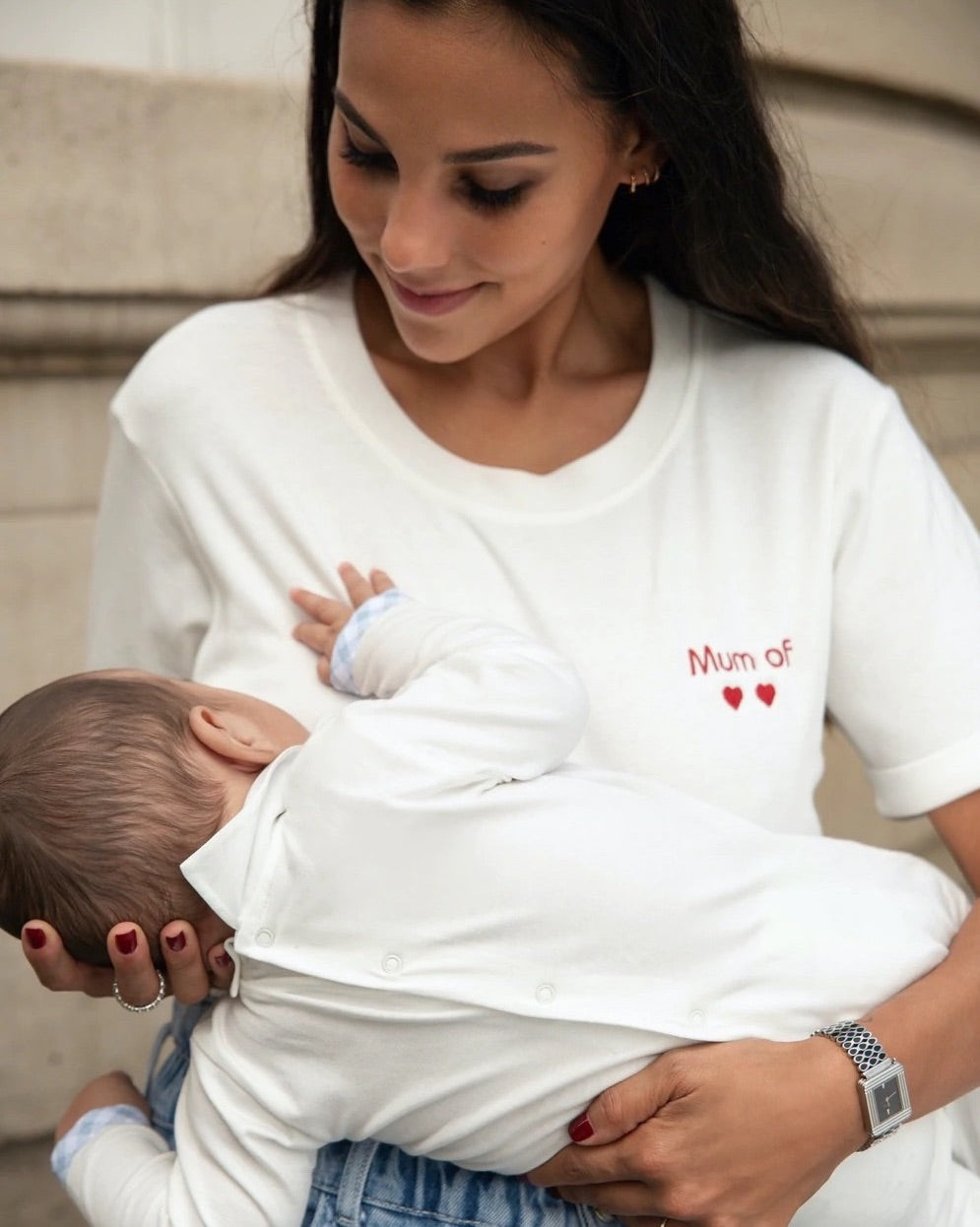
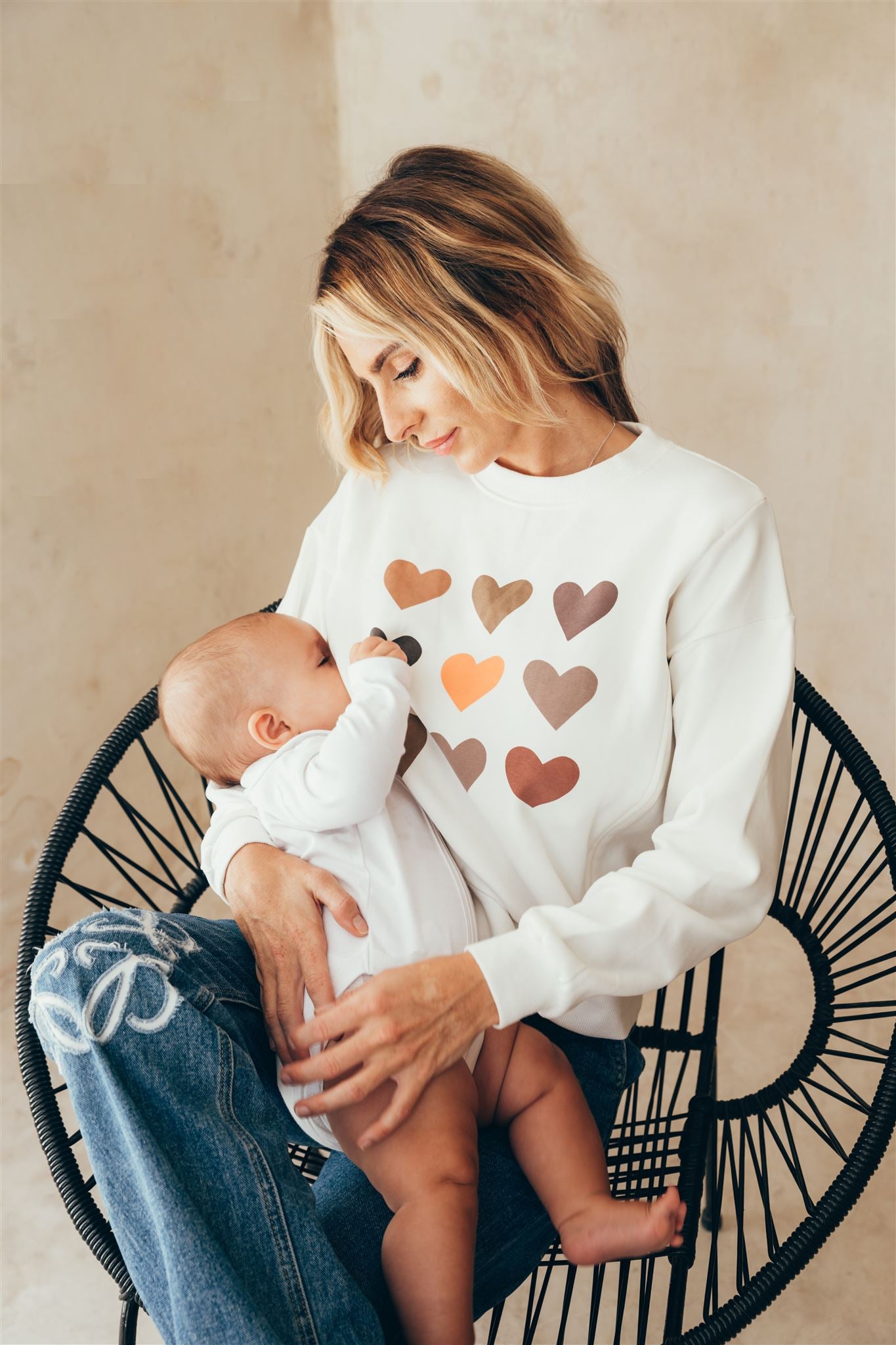
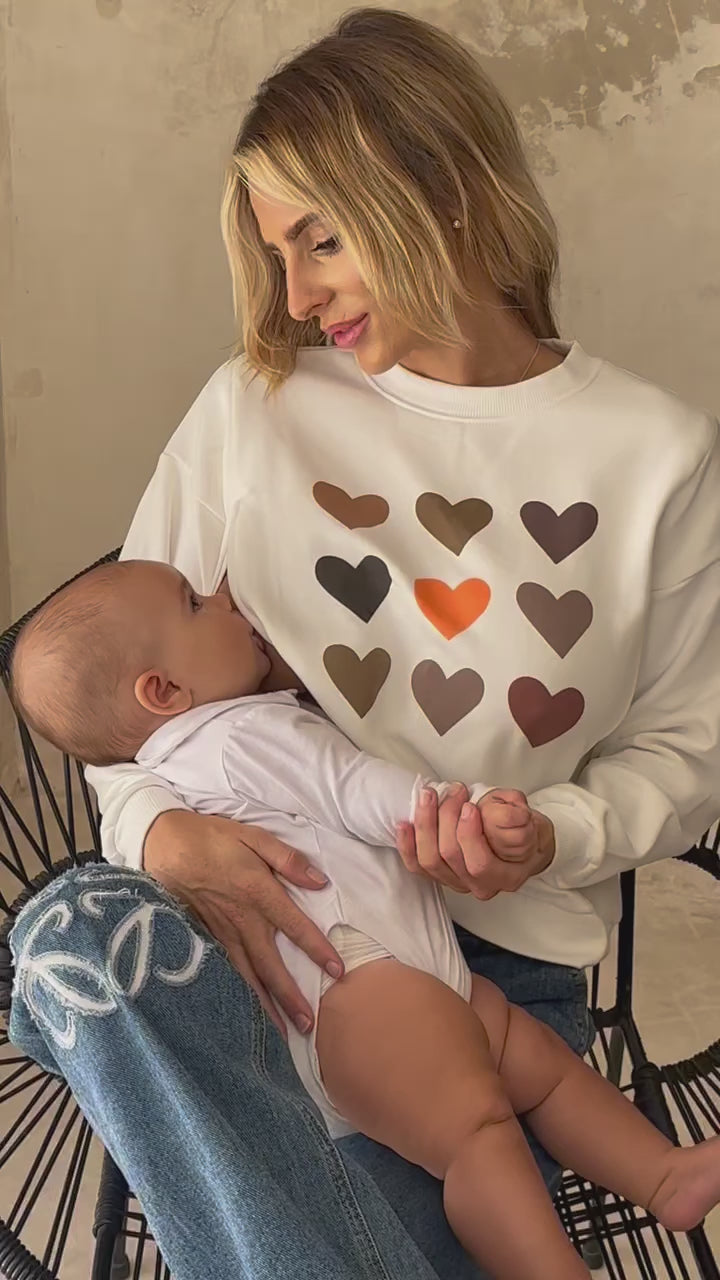
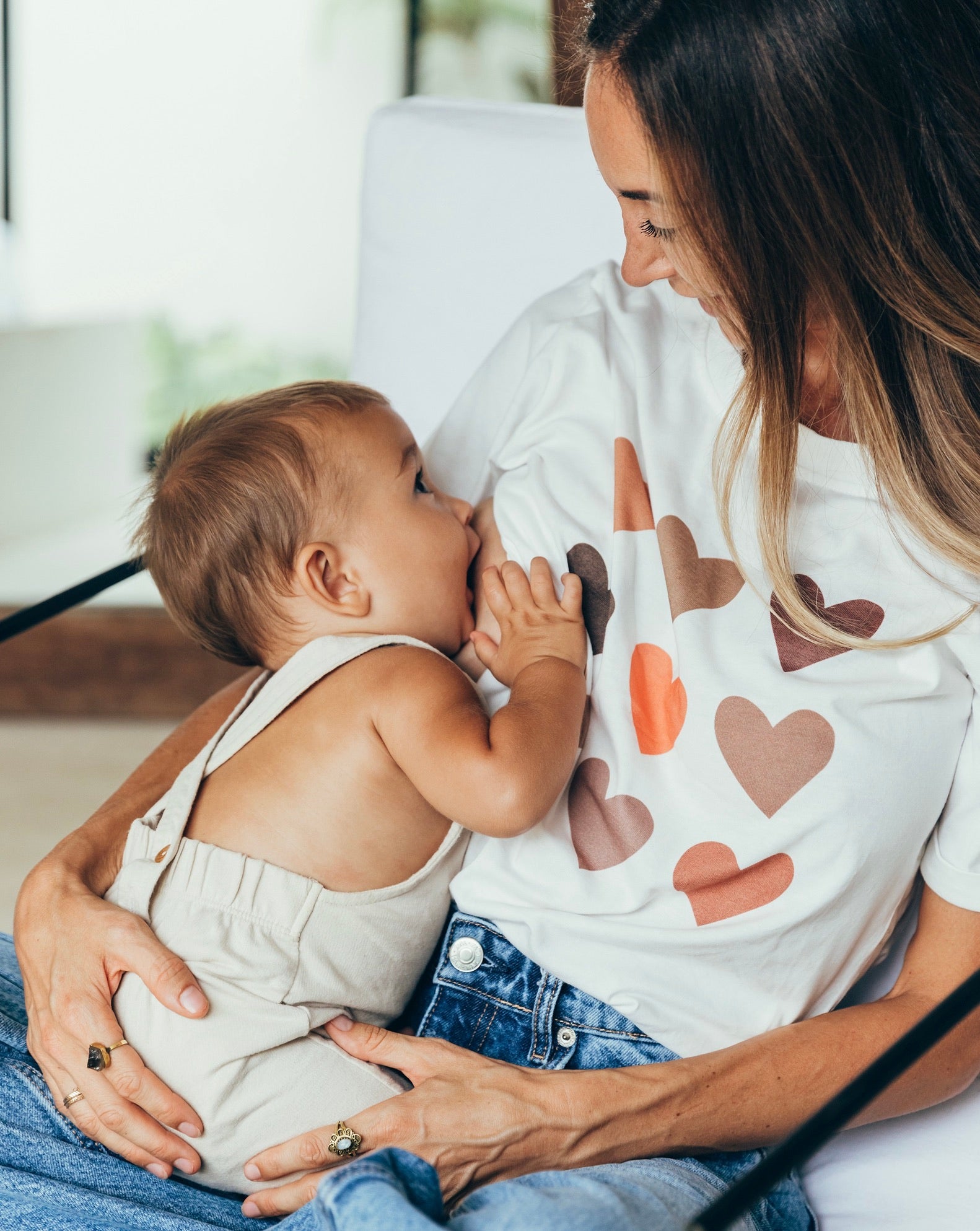
Nursing pajamas are the item of clothing we’re least likely to choose—and yet the one we regret not having the most. During the first few months, a new mom wakes up two to four times a night to breastfeed, in the dark, half-asleep. Nightwear that requires rolling up, unbuttoning, or taking off turns every feeding into a full-blown wake-up call. Clothing designed for breastfeeding lets you nurse without turning on the light or getting out from under the covers. Here’s how to choose the right option—whether it’s a nightgown or a two-piece pajama set—depending on the season.
A nightgown or a two-piece pajama set?
The Breastfeeding nightdress
A one-piece garment, often with straps or short sleeves, featuring an opening at the chest. Advantages: no waistband, which is important during the first few weeks after childbirth, especially after a C-section; can be slipped on in three seconds; convenient in the maternity ward for medical exams. The “ Breastfeeding night dresses ” collection features these styles. Disadvantage: bare legs in winter, and a design that’s less practical for getting up and moving around the house.
Two-piece pajamas
A top that can be unbuttoned and pants or shorts with an elastic waistband. Warmer and more dressy if someone drops by, and the top can be worn on its own in the morning. Two-piece sets Breastfeeding pyjamas are the most versatile option year-round. Downside: a waistband—even an elastic one—can be uncomfortable on a sensitive postpartum belly during the first few days.
The right balance for many moms: a nightgown for the hospital and the first two weeks, then one or two two-piece pajama sets for the rest of the time. The hospital bag checklist includes this breakdown.
Openness: The Factor That Makes All the Difference at 3 a.m.
There are four systems, just like on T-shirts, but nighttime changes the hierarchy.
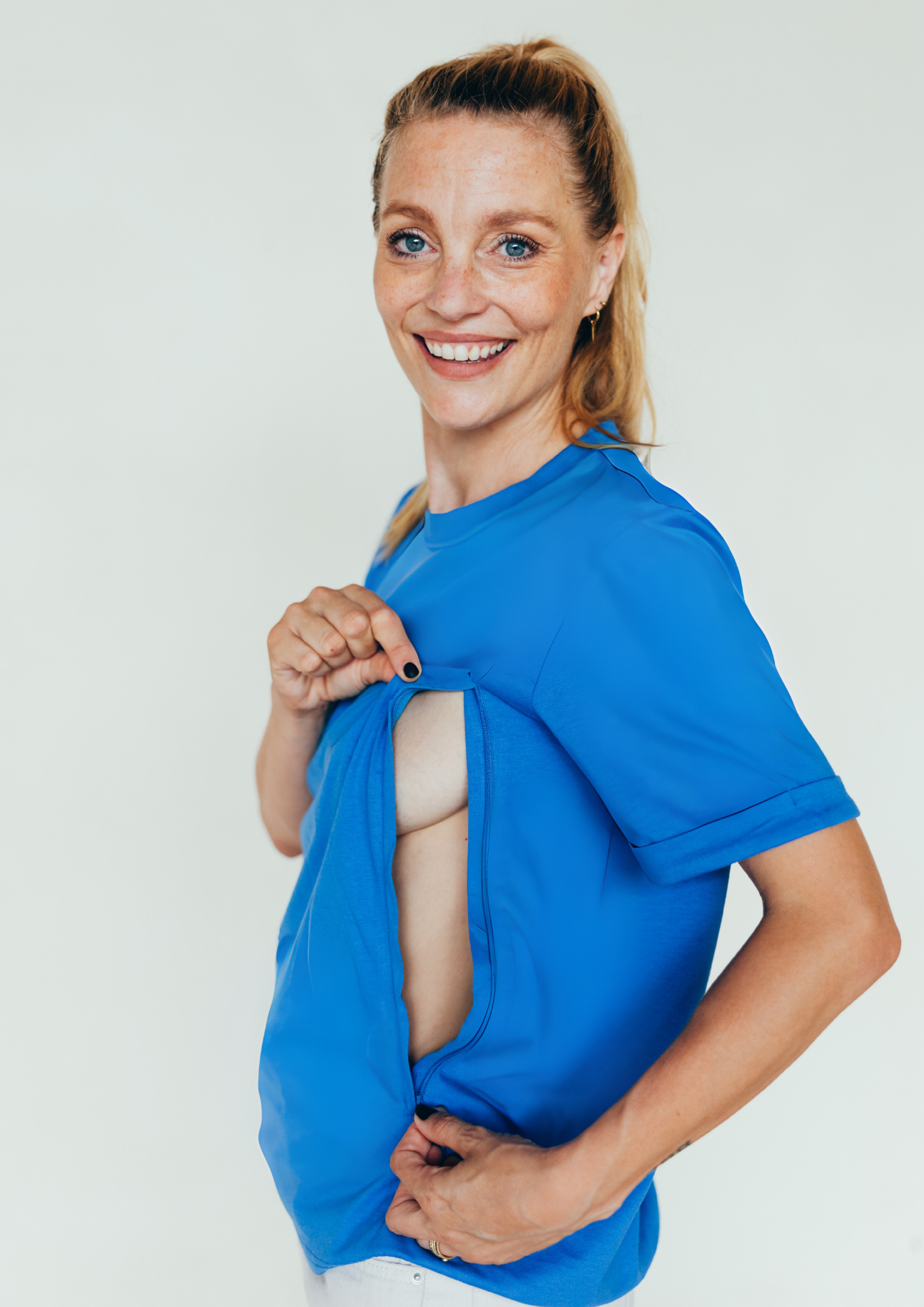
Double-layered, lift-up design: discreet during the day, but at night you have to feel around for the insert. It works, but it's not ideal.
Wrap-around: Just pull one side aside. It's very quick to put on, but it sometimes comes undone on its own while you're sleeping.
Straps with clips or snaps: one quick motion, one hand. Very effective, as long as the clip is sturdy.
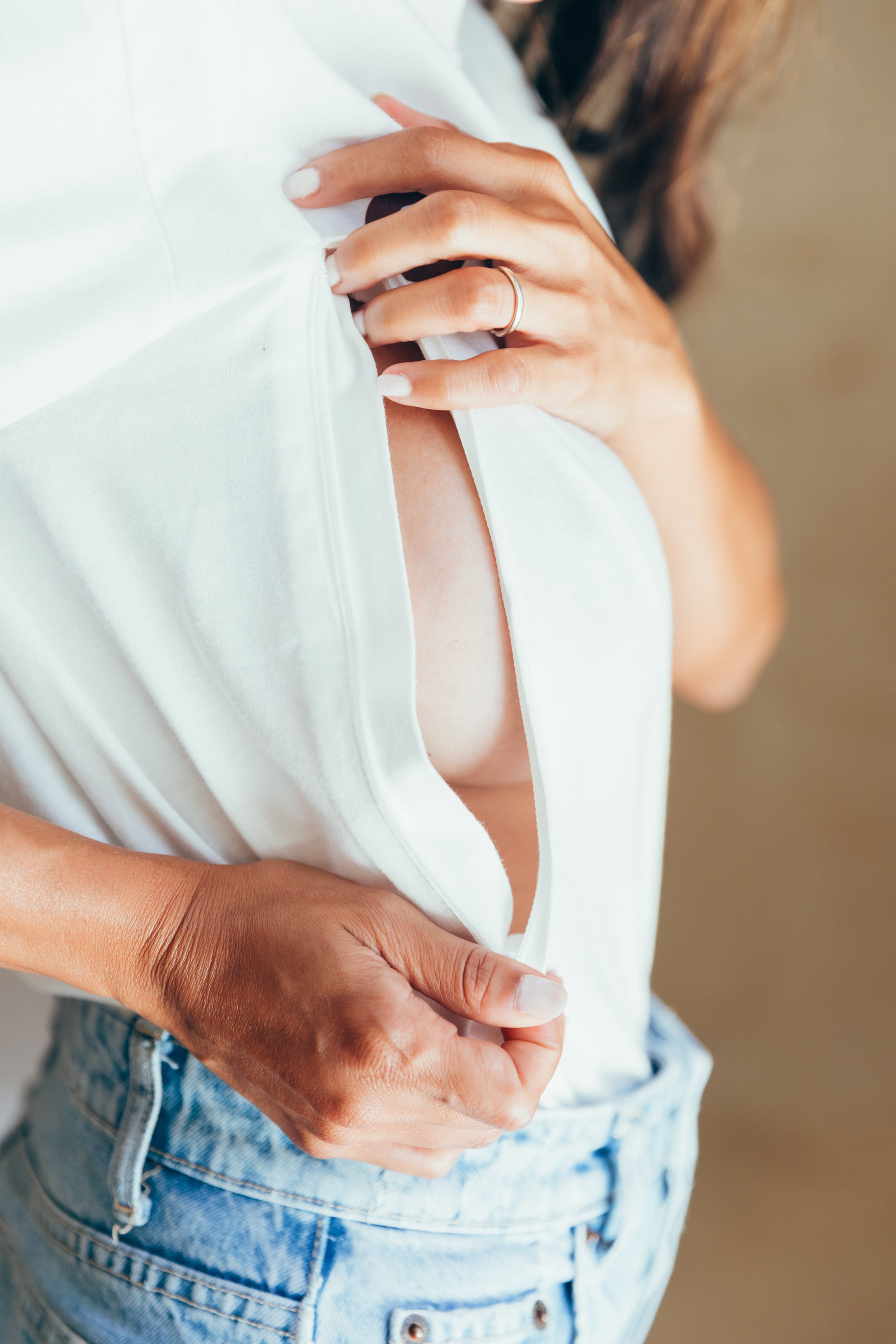
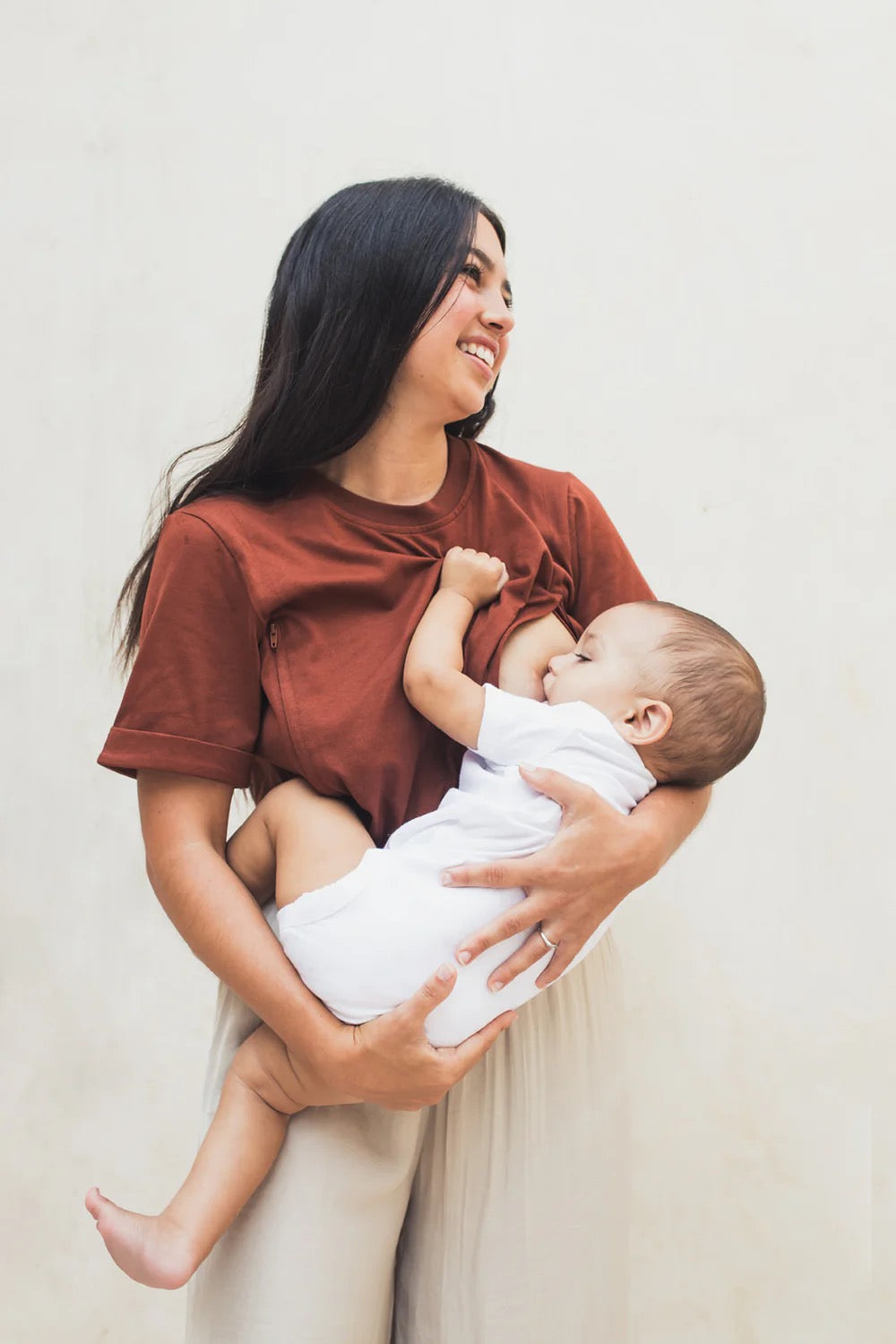
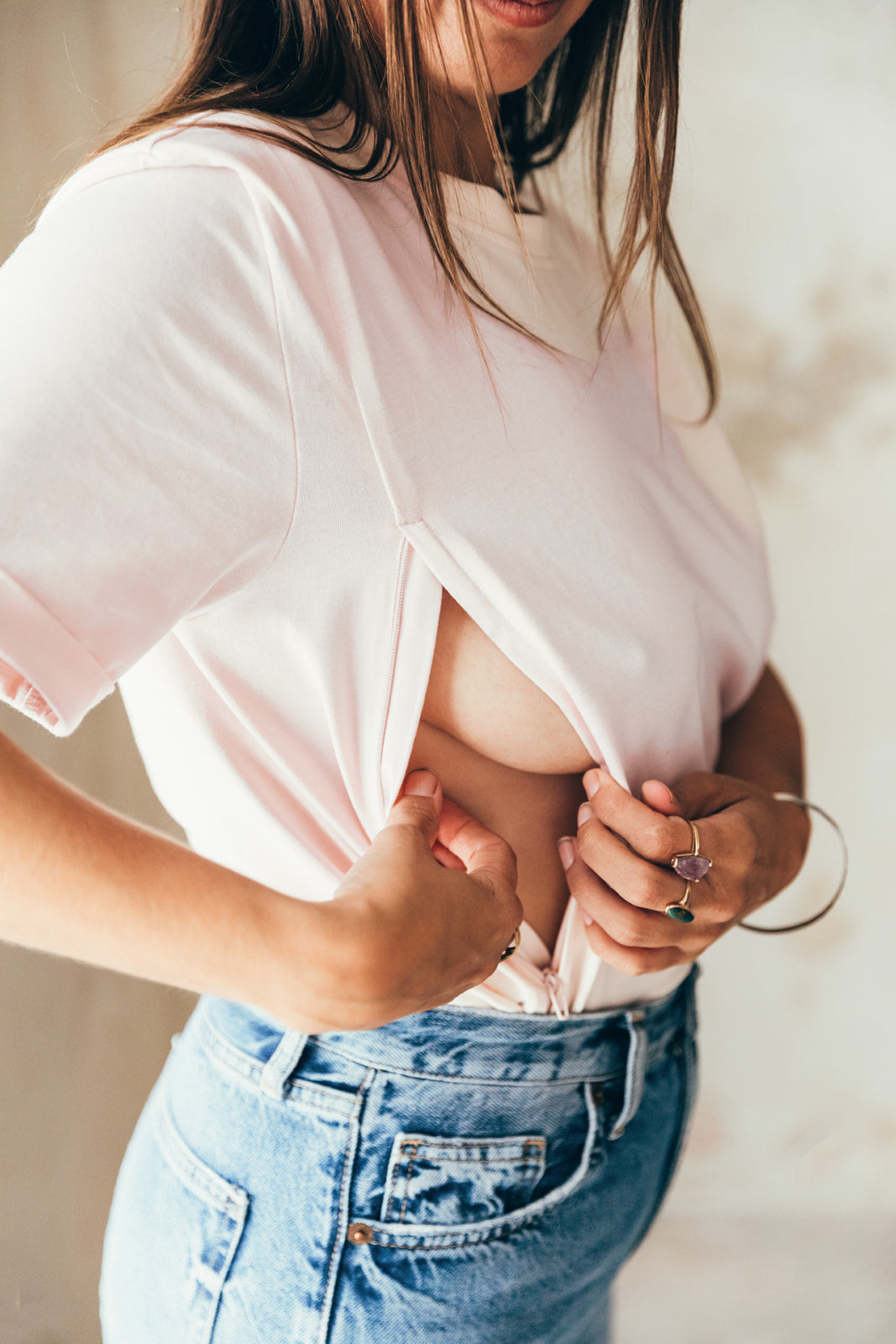
Zipper or vertical snaps: the most secure option, and also comfortable for pumping. Slightly more noticeable and feels a little cooler against the skin.
Try this test: With your eyes closed, open and close them using one hand. If the movement requires you to think, it will wake you up. The guide on how to choose a comfortable Breastfeeding nightdress compares the systems in detail.
The fabric: soft, absorbent, and can be washed frequently
At night, milk leaks from the breast that isn't being nursed; postpartum sweating is heavy during the first few weeks; and the baby spits up on your shoulder. Nursing pajamas are washed several times a week.
Cotton jersey: the go-to choice. Breathable, absorbent, and washable at 40 °C. A slightly thicker cotton remains opaque when wet.
Modal or bamboo viscose: very soft, cool in the summer, and effective at regulating moisture. Wash in cold water and air-dry to ensure longevity.
knit and fleece: for winter, on pants and tops. Keep in mind the opening, which needs to remain flexible despite the thickness.
Polyester satin: It's pretty, but slippery; it retains the smell of milk and isn't breathable. Best to avoid it during the first few months.
Our soft nursing clothes are made from fabrics that feel gentle on sensitive skin. The care instructions page lists the temperatures that will help preserve the elasticity of the openings.
Summer, Winter: Choosing the Right Nightwear for the Season
In the summer
A lightweight nightgown with straps or a nursing tank top paired with loose-fitting shorts. Nighttime hot flashes are common during the first few weeks, so a lightweight, light-colored fabric can help. The article “Breastfeeding During a Heat Wave” offers additional tips.
In winter
A two-piece pajama set made of thick cotton or knit, socks, and a cardigan within easy reach for sitting-up feedings. The pitfall: a top that’s too warm, causing your baby to sweat during a feeding and then shiver when back in bed. It’s better to have two thin layers than one thick one. We go into more detail about this in “Breastfeeding Alone at Night in Winter ” and “Staying Warm During Feedings.”
Which models are right for which moms?
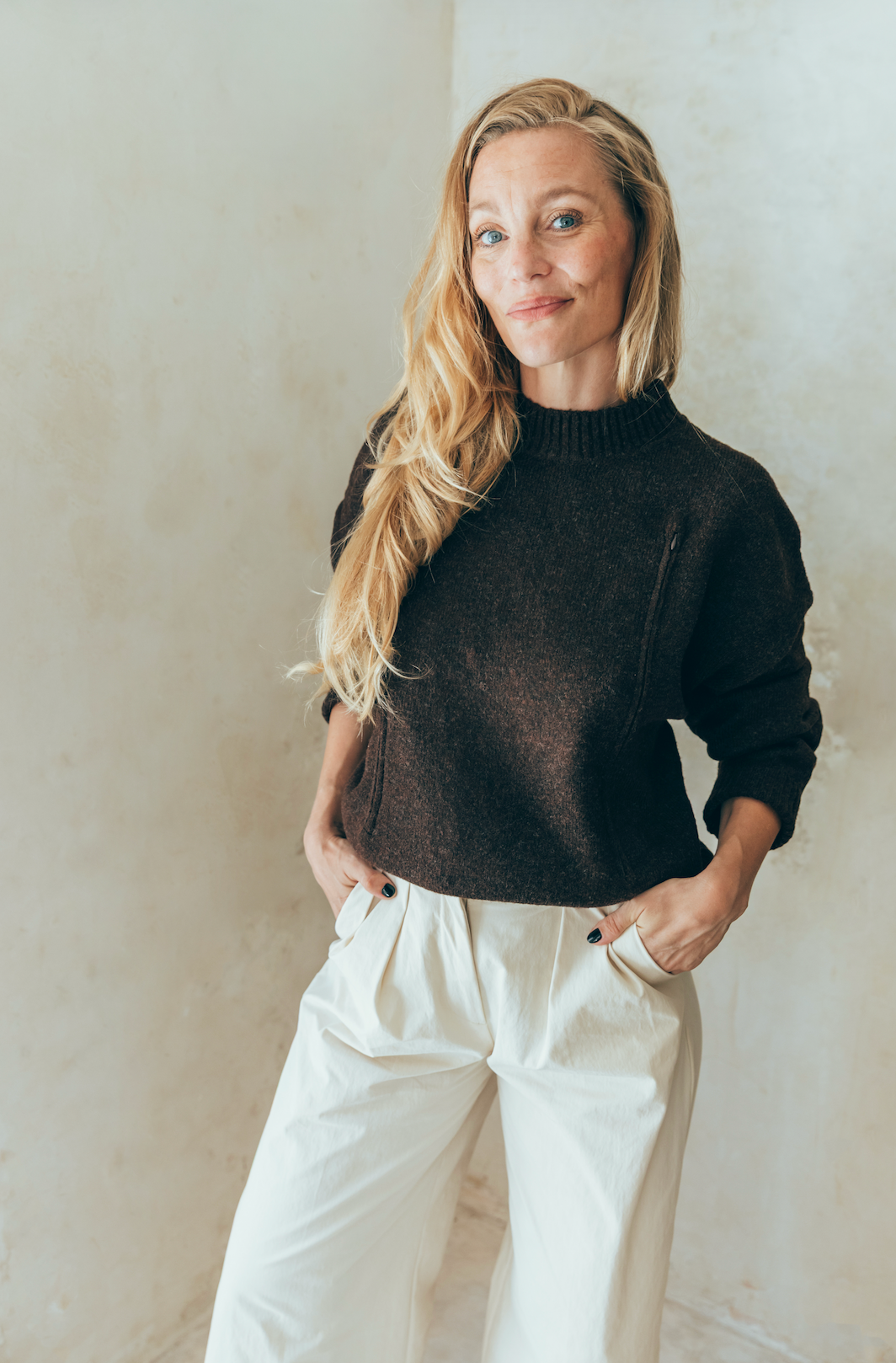
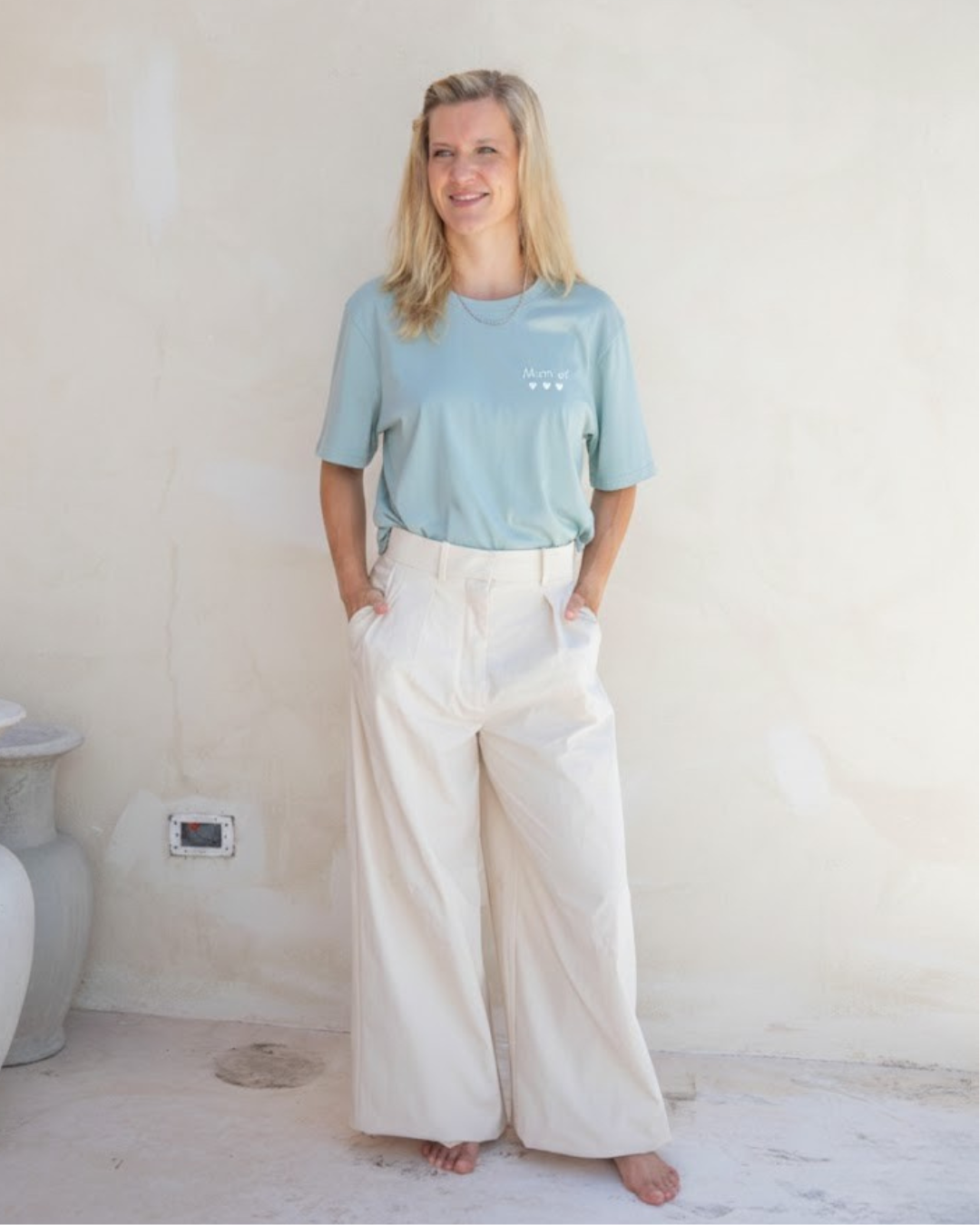
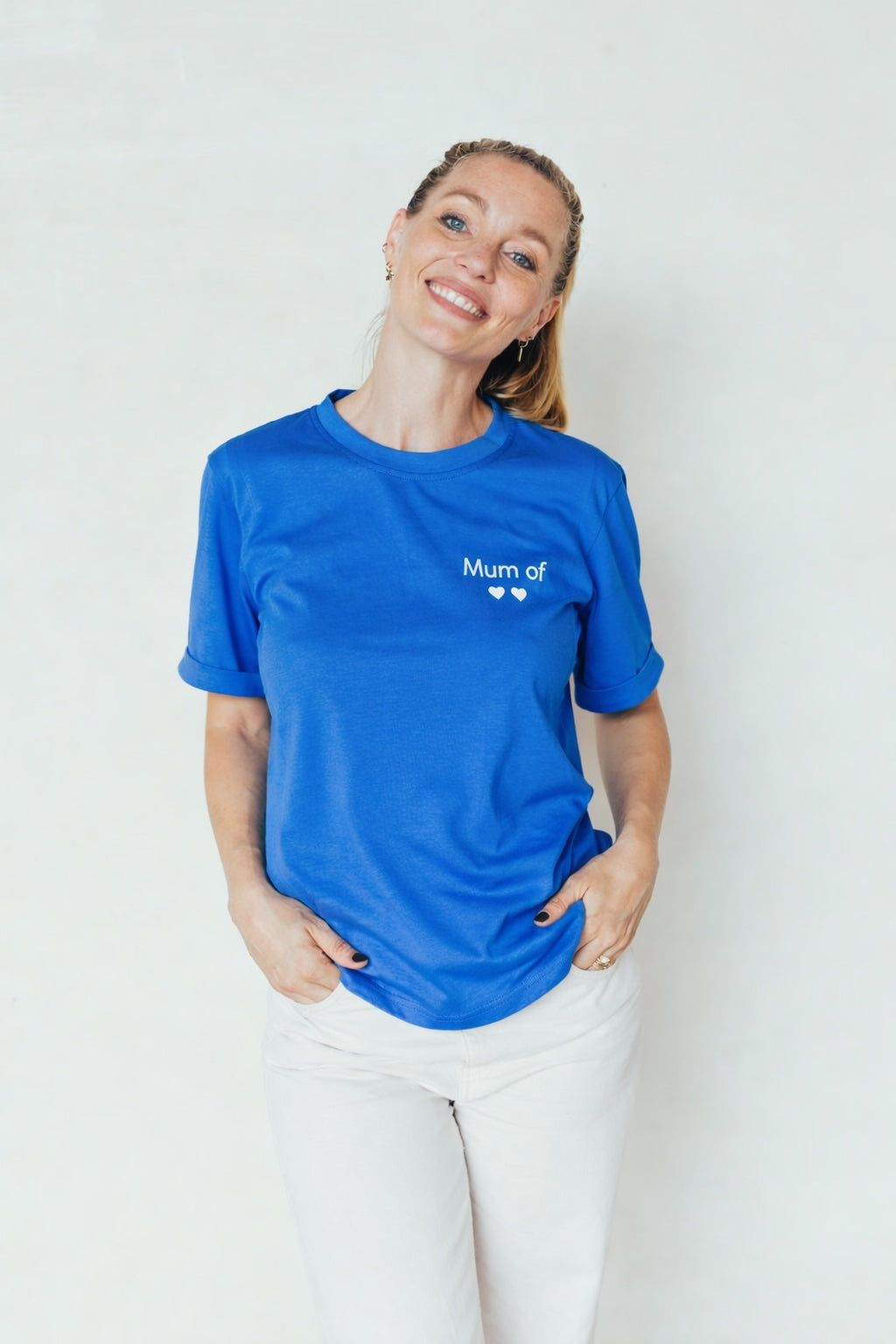
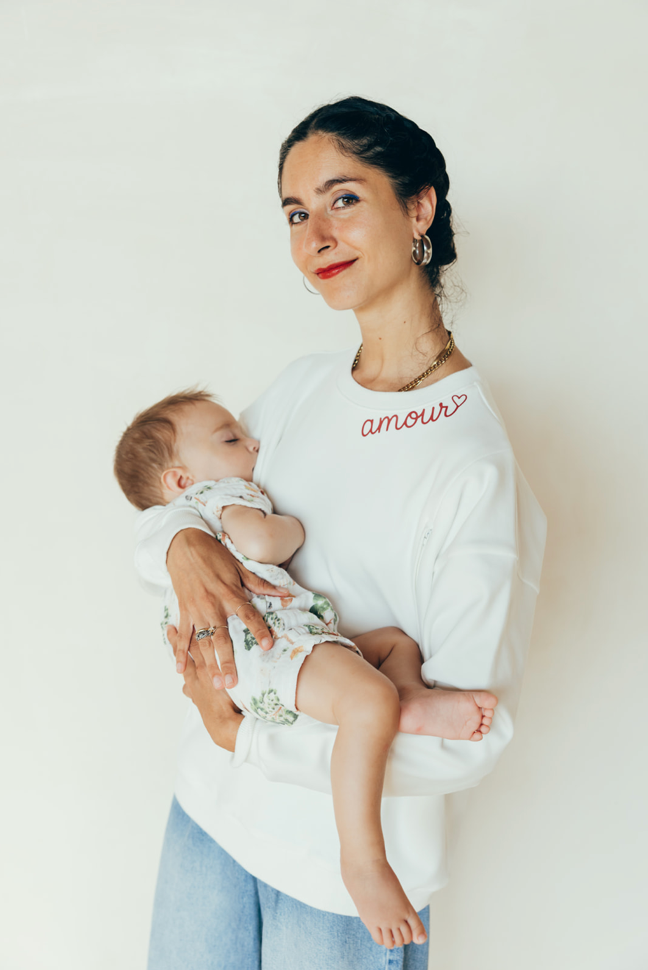
For a simple and comfortable first set of nightwear, the white nursing pajamas for €24 get the job done without any frills. For a piece with character that can also be worn in the late afternoon at home, the leopard-print nursing pajamas are part of the leopard collection. Moms who love to give or receive a personalized piece—with the baby’s first name embroidered on it—turn to the customizable styles, which are often chosen as gifts for new moms.
How many do you need? At least two sets of pajamas—three if you don’t have a dryer—because there will be nights when everything ends up in the wash at 4 a.m. The article “How Many Nursing Outfits Do You Need?” suggests a complete rotation.
The cost of a nursing pajama set
€15–25: mass-market retailers. Fine cotton, basic neckline. One season.
€25–60: specialty brands. Denser cotton, tested for fit, and a cut designed to accommodate a postpartum belly. This is the price range for the " Breastfeeding pyjamas " collection, between €22 and €56.
Over €60: silk, cashmere, or limited editions. More of a treat than a necessity, but a great baby shower gift.
With the "Breastfeeding pyjamas " on sale, you can get a third outfit at a lower price. Under your pajamas, a soft night bra with nursing pads helps prevent a wet sheet from waking up everyone in bed.
Frequently Asked Questions
Do you need special nursing pajamas, or are button-up pajamas enough?
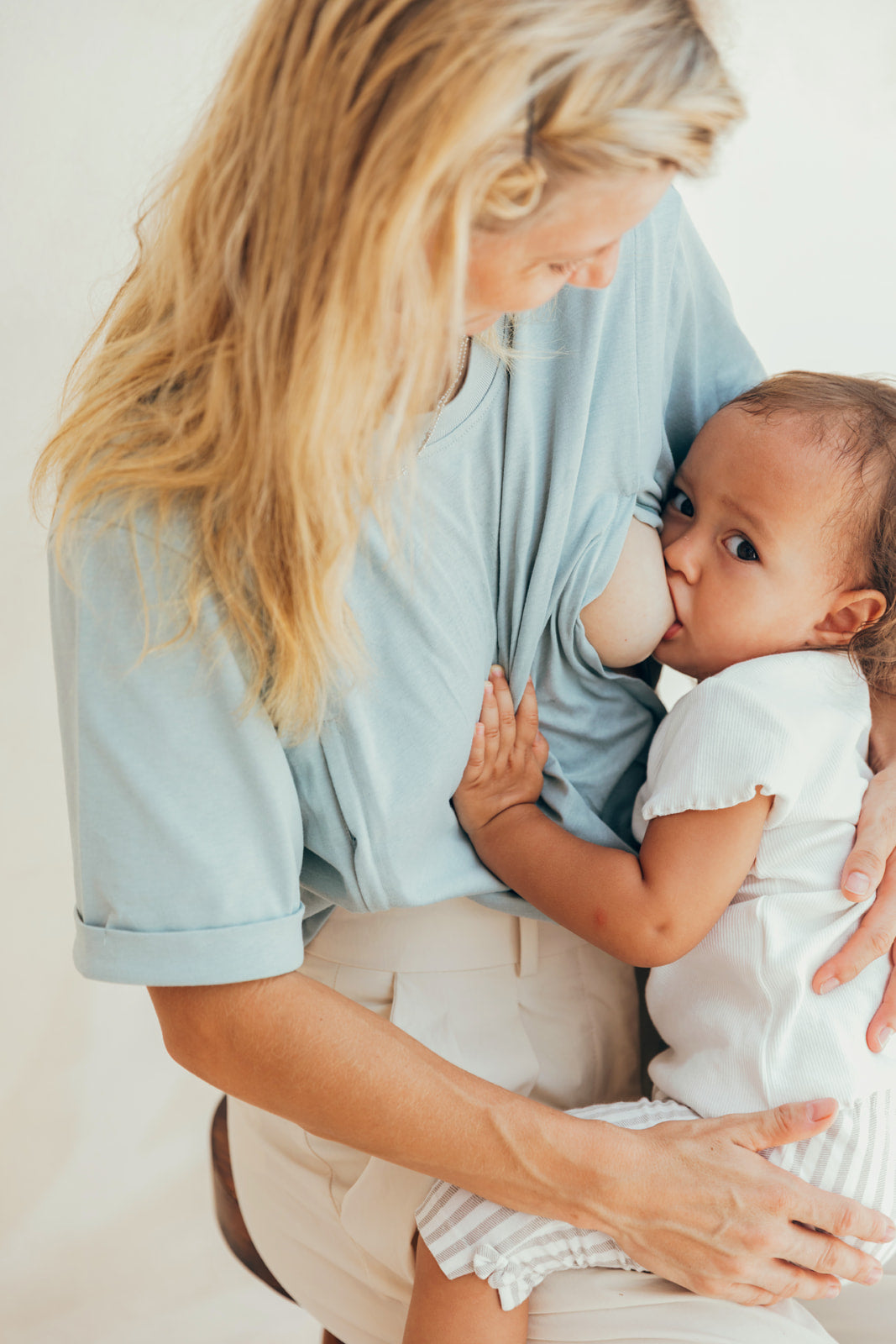
Button-up pajamas work for a few nights, but unbuttoning them while half-asleep wakes you up completely and leaves your chest exposed. An opening designed for breastfeeding can be opened with one hand and closed just as quickly, which makes a real difference in the quality of your sleep over several months.
A nightgown or pajamas for the maternity ward?
A nightgown, without a doubt: no waistband after giving birth, easy to slip on, and convenient for checkups. Two-piece pajamas take over at home starting in the second or third week.
How can I prevent milk leaks at night?
A soft night bra with nursing pads, which are changed upon waking and during the middle-of-the-night feeding. Absorbent cotton pajamas help minimize stains on the sheet. A mattress protector placed under the sheet protects the mattress during the first few weeks.
In summary
Good nursing pajamas can be opened with one hand in the dark, are made of cotton or modal that can be washed frequently, and are suitable for the season: a lightweight, loose-fitting nightgown for the maternity ward and summer, and a two-piece set made of thick cotton for winter. Plan to buy two or three sets in the €25–€60 range, and test how easy they are to open before buying several of the same style.