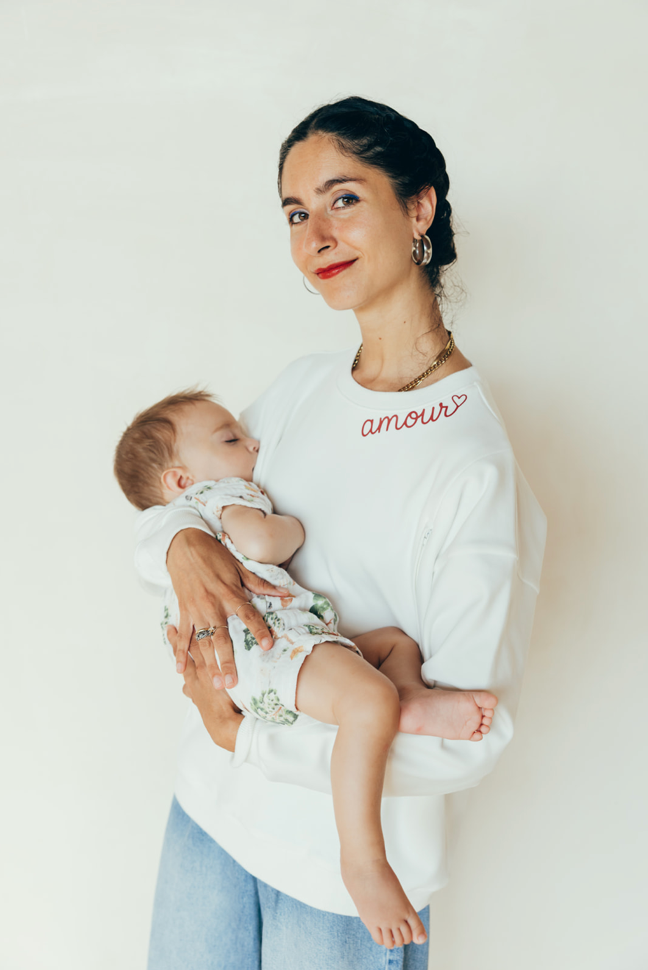
Article: Nursing Clothes: How Much Do They Really Cost, and Why?
Nursing Clothes: How Much Do They Really Cost, and Why?
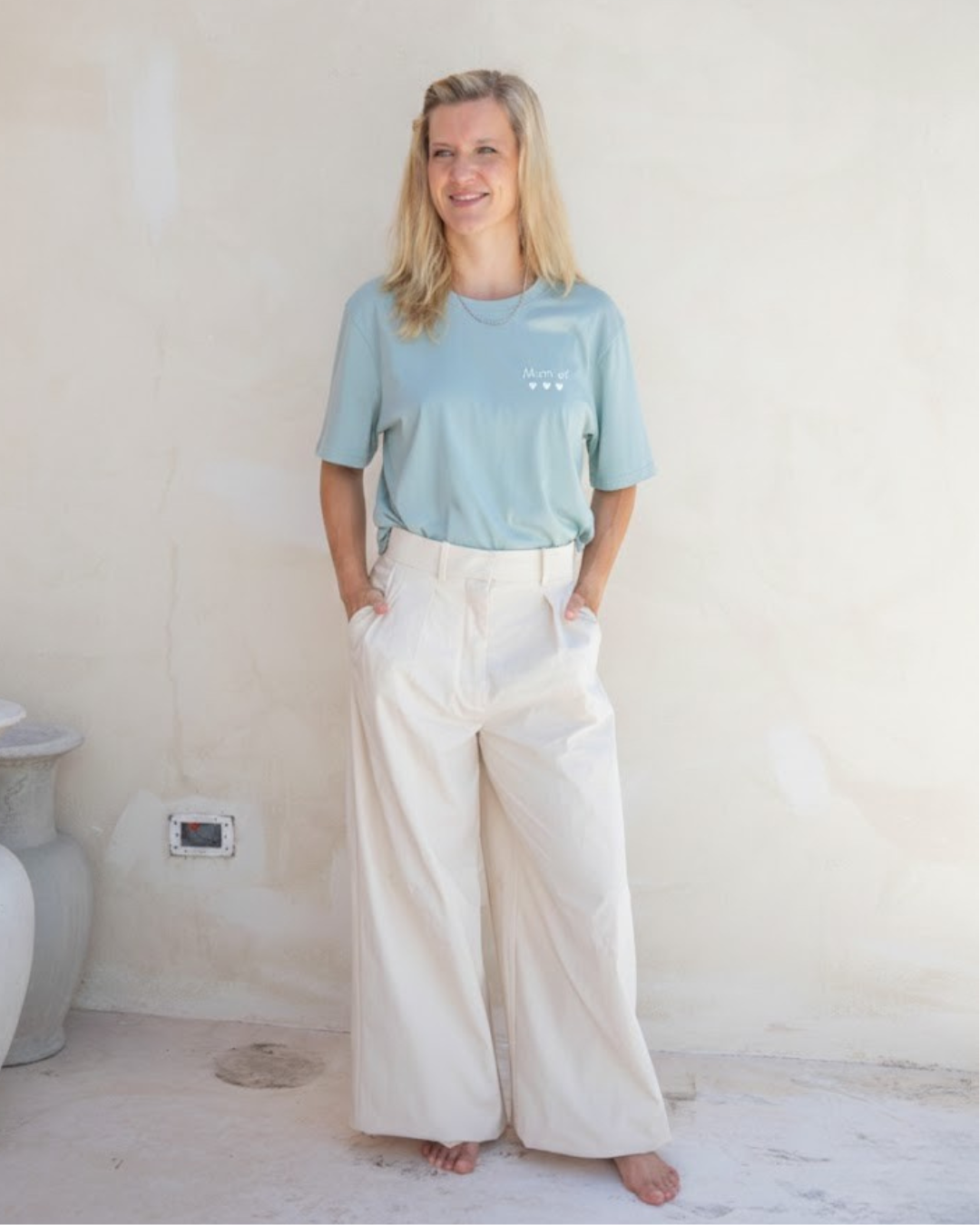
The price of nursing clothes often comes as a surprise when you buy them for the first time: a T-shirt for €33, a sweater for €70, a dress for €80—when the same item without nursing features costs half as much at a major retailer. The question isn’t whether it’s expensive, but what you’re paying for and how many times you’ll wear the item. This article explains what the price covers, compares the three price tiers on the market, and provides a simple method for calculating the true cost of a nursing garment.
What the price covers
The opening system
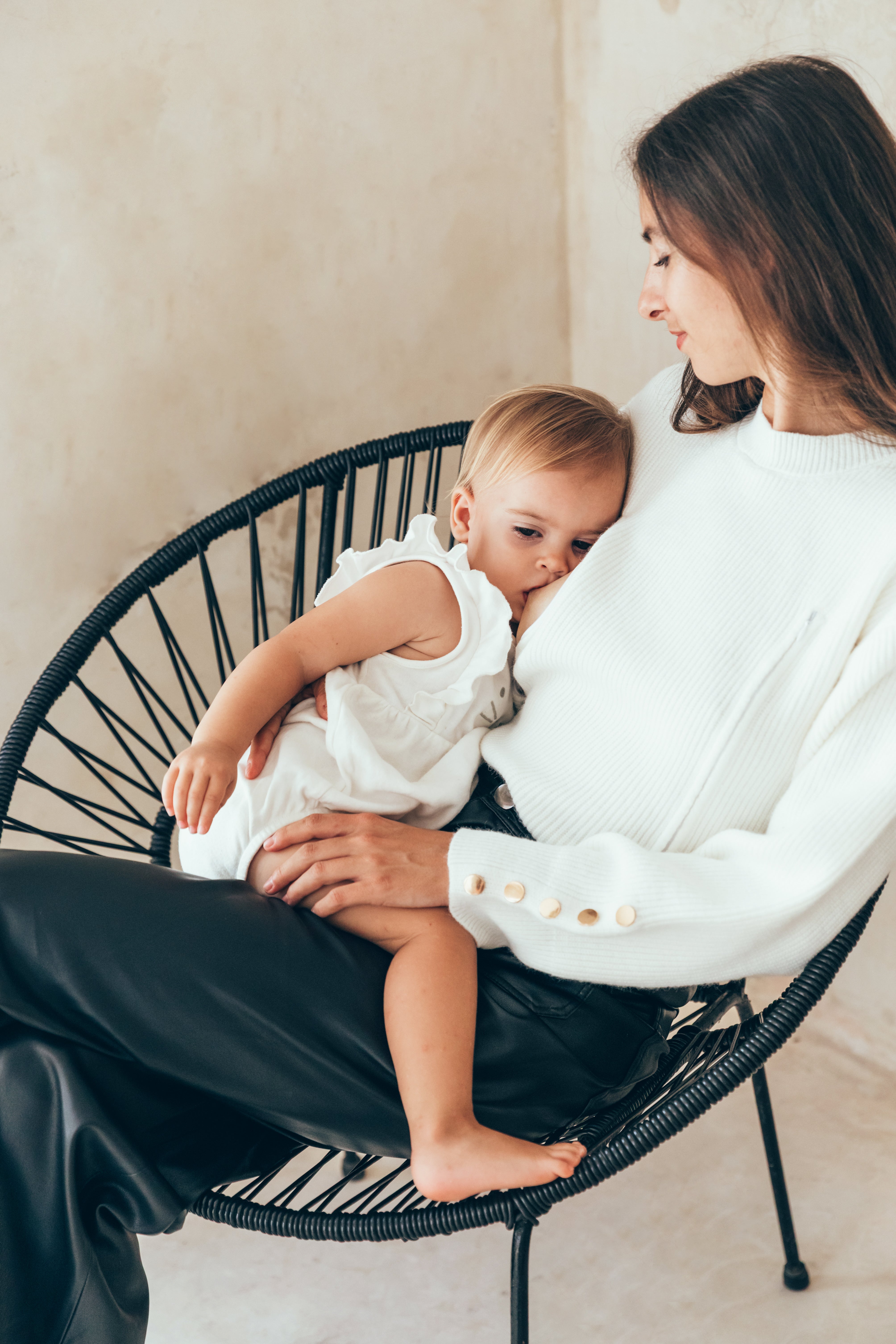
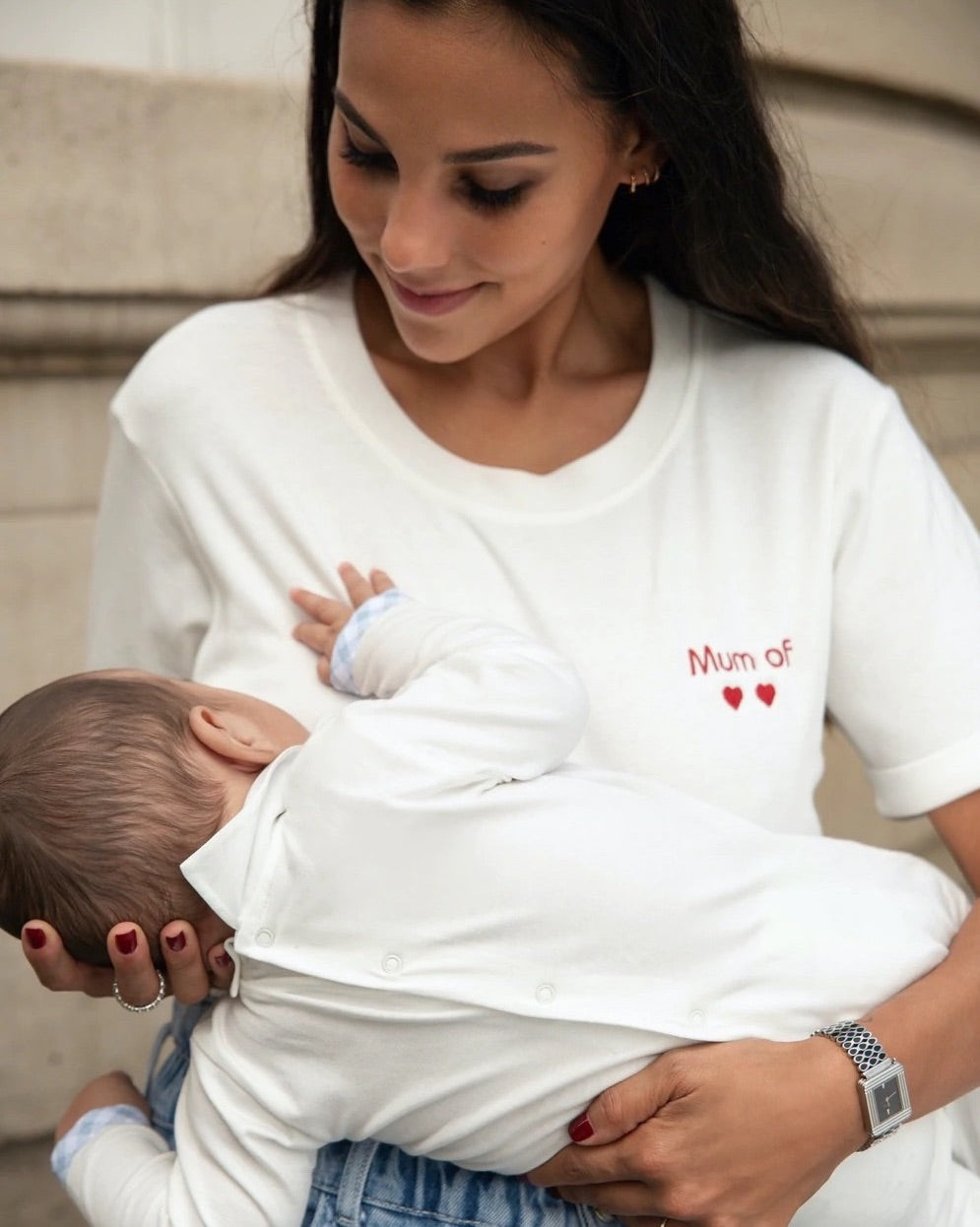
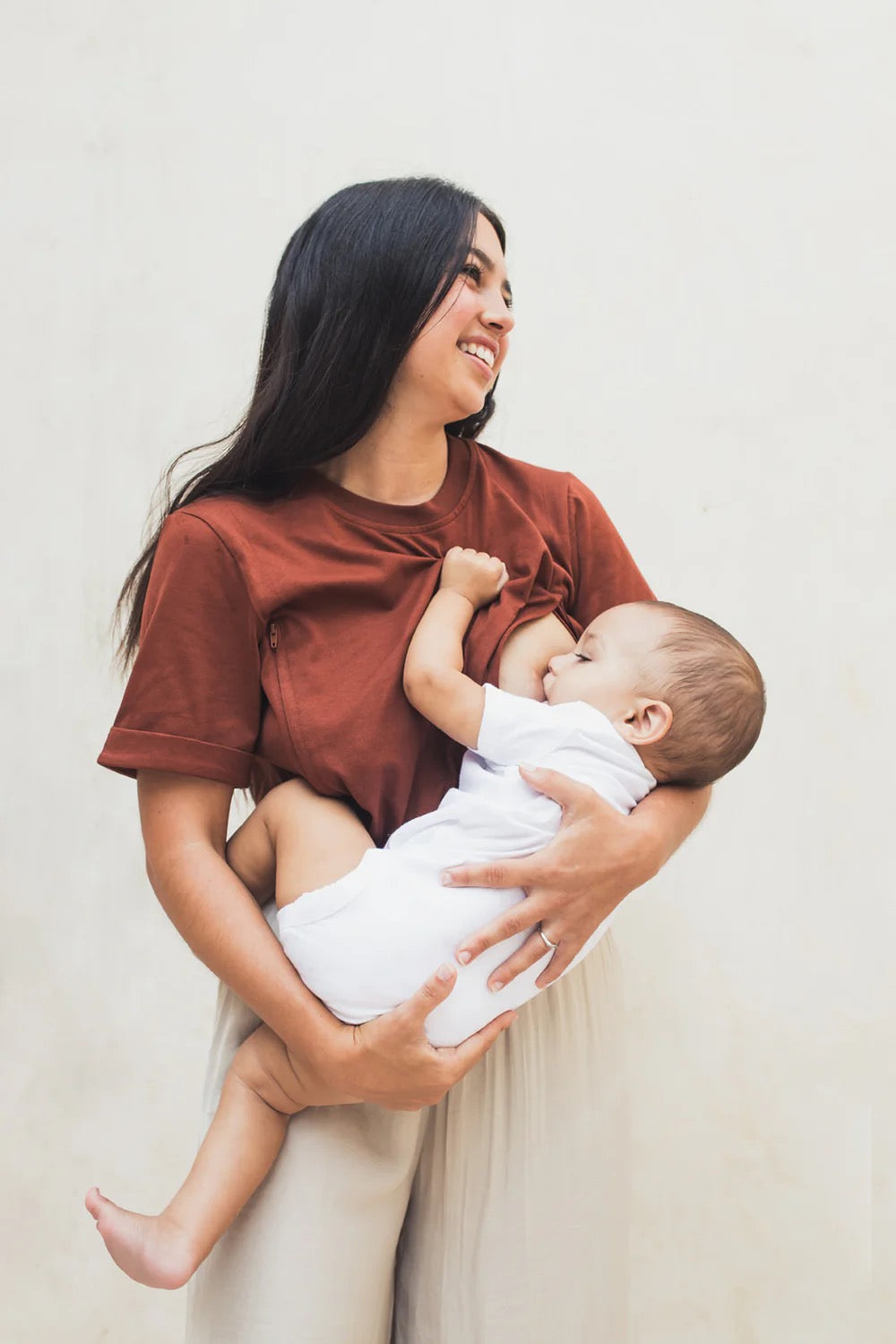
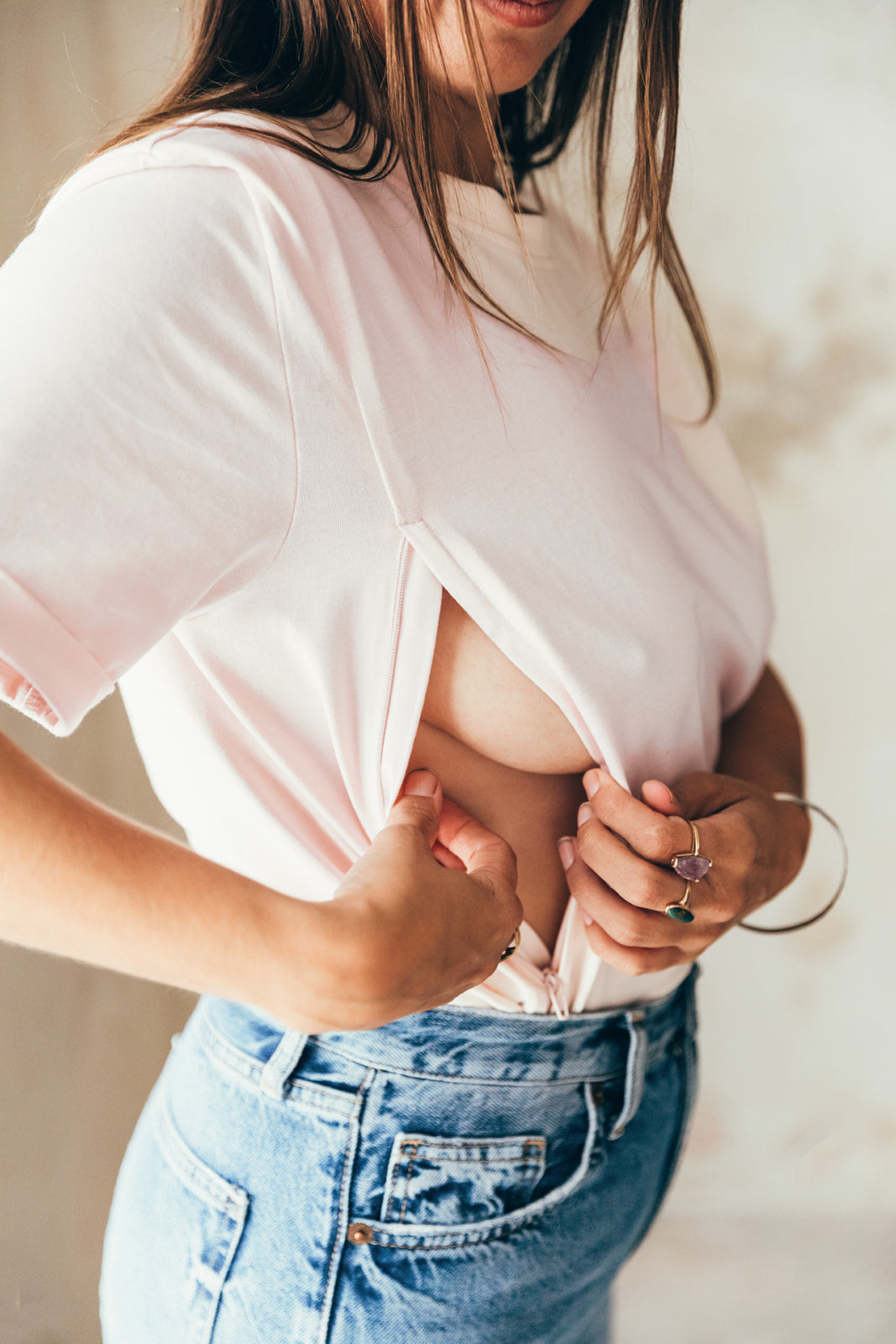
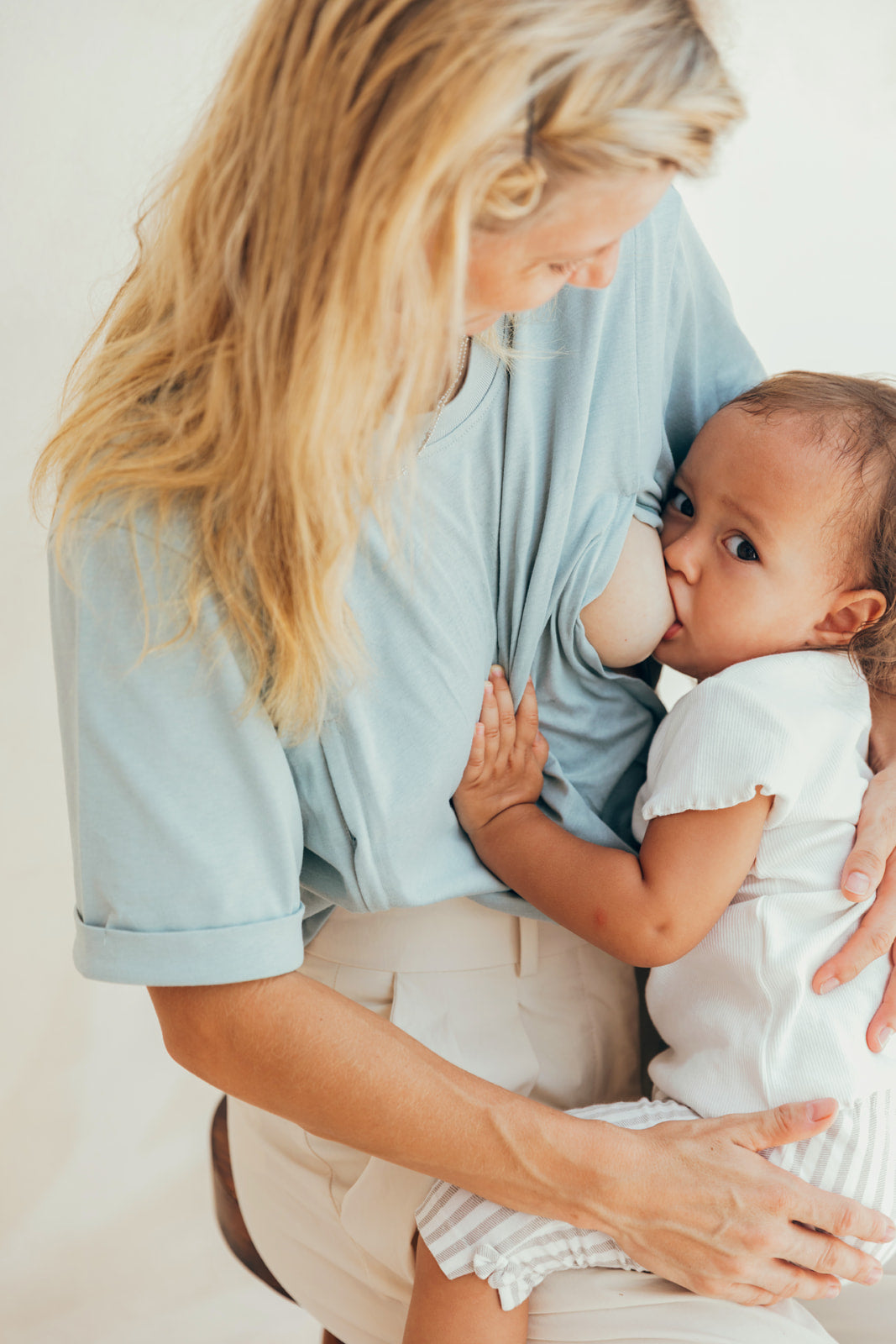
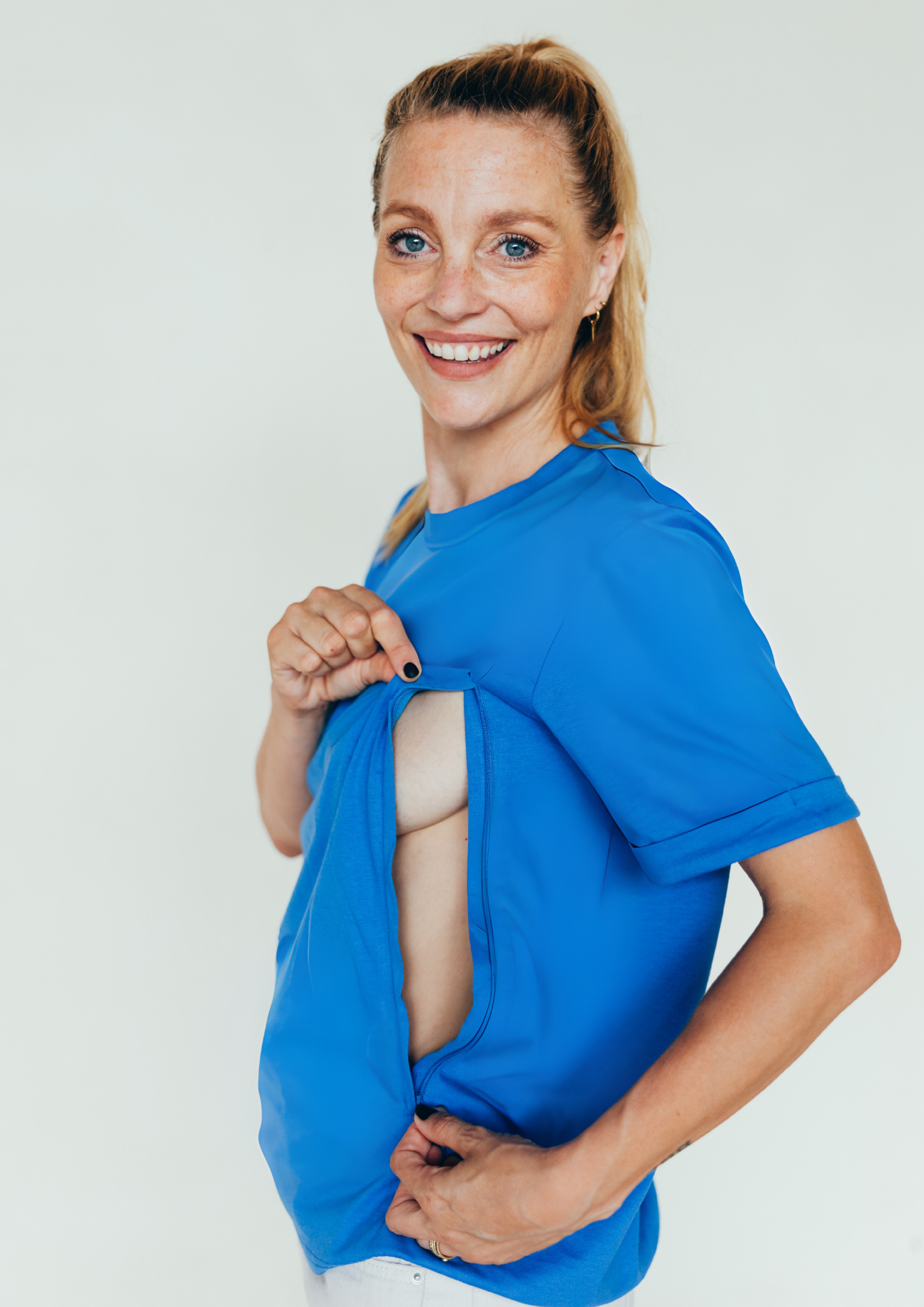
A double-layered stand-up collar, a lined side slit, or a zipper require extra fabric, additional assembly steps, and durability testing. On a standard T-shirt, the chest panel is a single rectangle of jersey fabric; on a Breastfeeding t-shirt, it consists of three pieces sewn together with an elastic band that must withstand fifty washes. This single difference accounts for a significant portion of the cost difference compared to a standard T-shirt.
The material
A nursing garment is washed two to three times more often than a regular garment. Reputable brands choose heavier cottons, knits that retain their shape, and dyes that won’t run onto the baby. High-quality cotton nursing garments cost more in raw materials than fine jersey.
The Cut
A postpartum style accounts for a fuller bust, a belly that’s still there, and shoulders that are carrying a baby. This requires a specific pattern—tested on real moms—rather than simply going up a size. The size guide from a specialty brand reflects this approach.
Manufacturing and the Series
Specialty brands produce in small batches, in workshops that can handle complex pieces. The “Behind the Scenes” page of our creations shows how 23 Mai Paris pieces are designed. A small batch costs more per unit than a container load of identical T-shirts, but it allows for fit adjustments that mass production never does.
The Three Price Levels in the Market
ItemEntry-levelSpecialty brandsPremiumT-Shirt10 to 20 €30 to 45 €50 € and upTank top8 to 15 €24 to 40 €45 € and upSweater or sweatshirt20 to 35 €45 to 80 €90 € and upDress20 to 35 €30 to 90 €100 € and upPajamas or nightgown15 to 25 €25 to 60 €70 € and up
The middle column corresponds to the " 23 Mai Paris " line: T-shirts range from 20 to 44 €, Breastfeeding sweaters from €34 to €81, dresses from €31 to €86, and pajamas from €22 to €56.
Why the entry-level model costs more than it seems
A €12 T-shirt with a gaping neckline after ten washes will need to be replaced after three months. Over a twelve-month breastfeeding period, that’s four T-shirts—or €48—for mediocre comfort. A €33 T-shirt that lasts the entire year costs €33. The apparent price difference reverses once you factor in durability. The article “Nursing Clothes on Sale vs. Fast Fashion” explains this reasoning in detail, and “How to Choose Nursing Clothes” lists the key factors to check before buying.
Calculate the cost per port
The method can be summed up in one line: purchase price divided by the number of times the item will be worn. Here are three realistic examples based on a 12-month breastfeeding period.
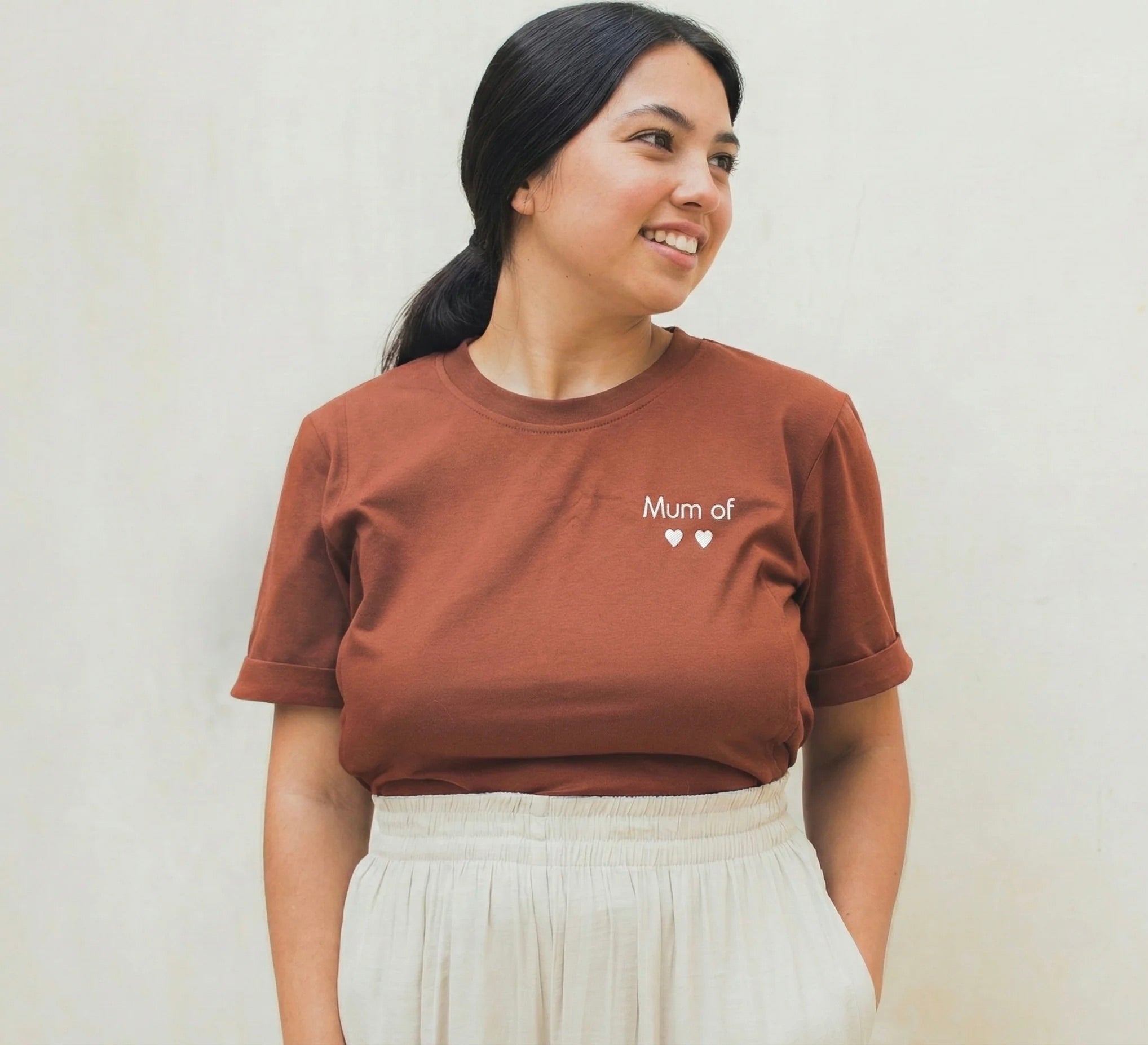
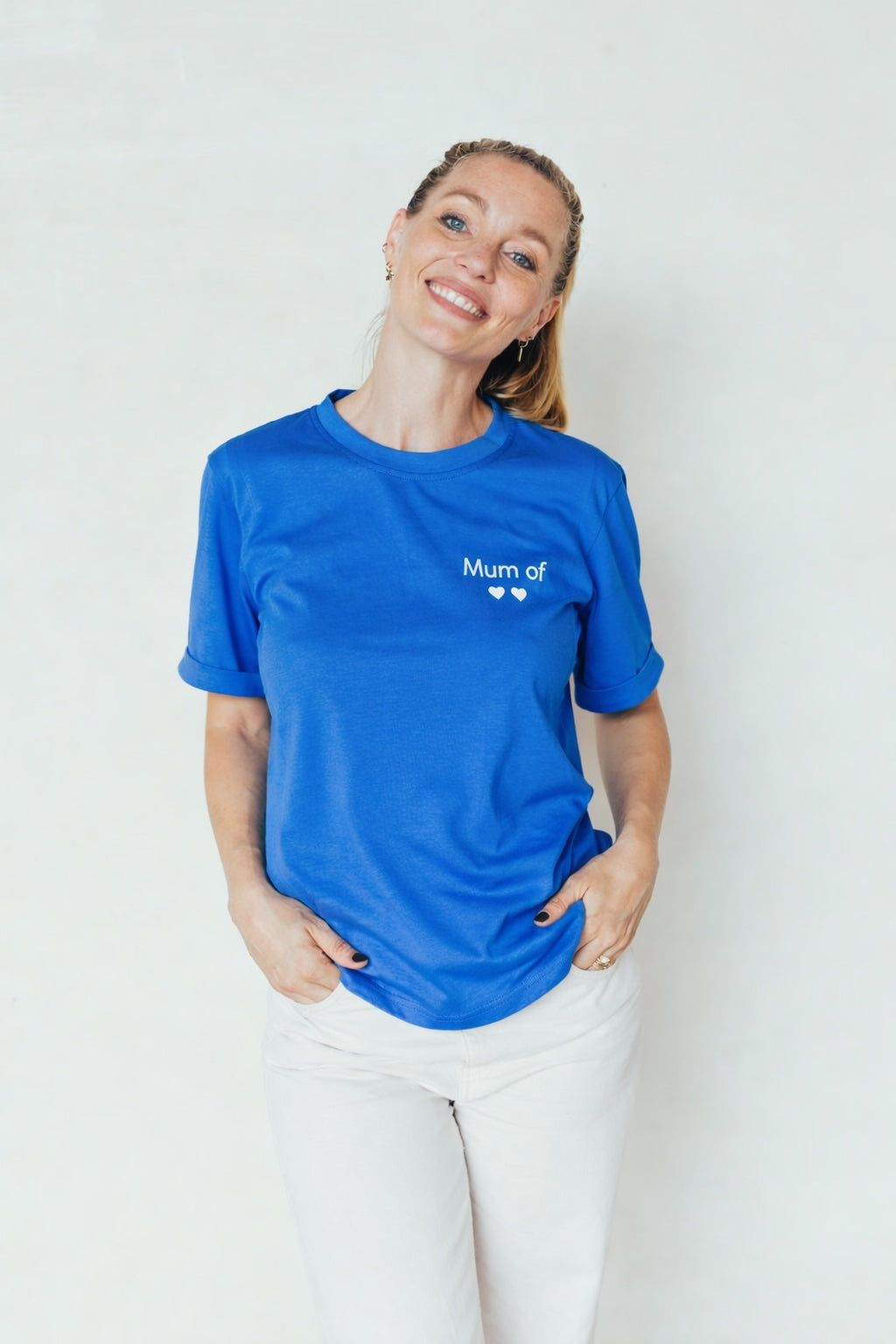
A solid-color "Breastfeeding t-shirt " for €33, worn twice a week for twelve months: about 100 wears, or €0.33 per wear.
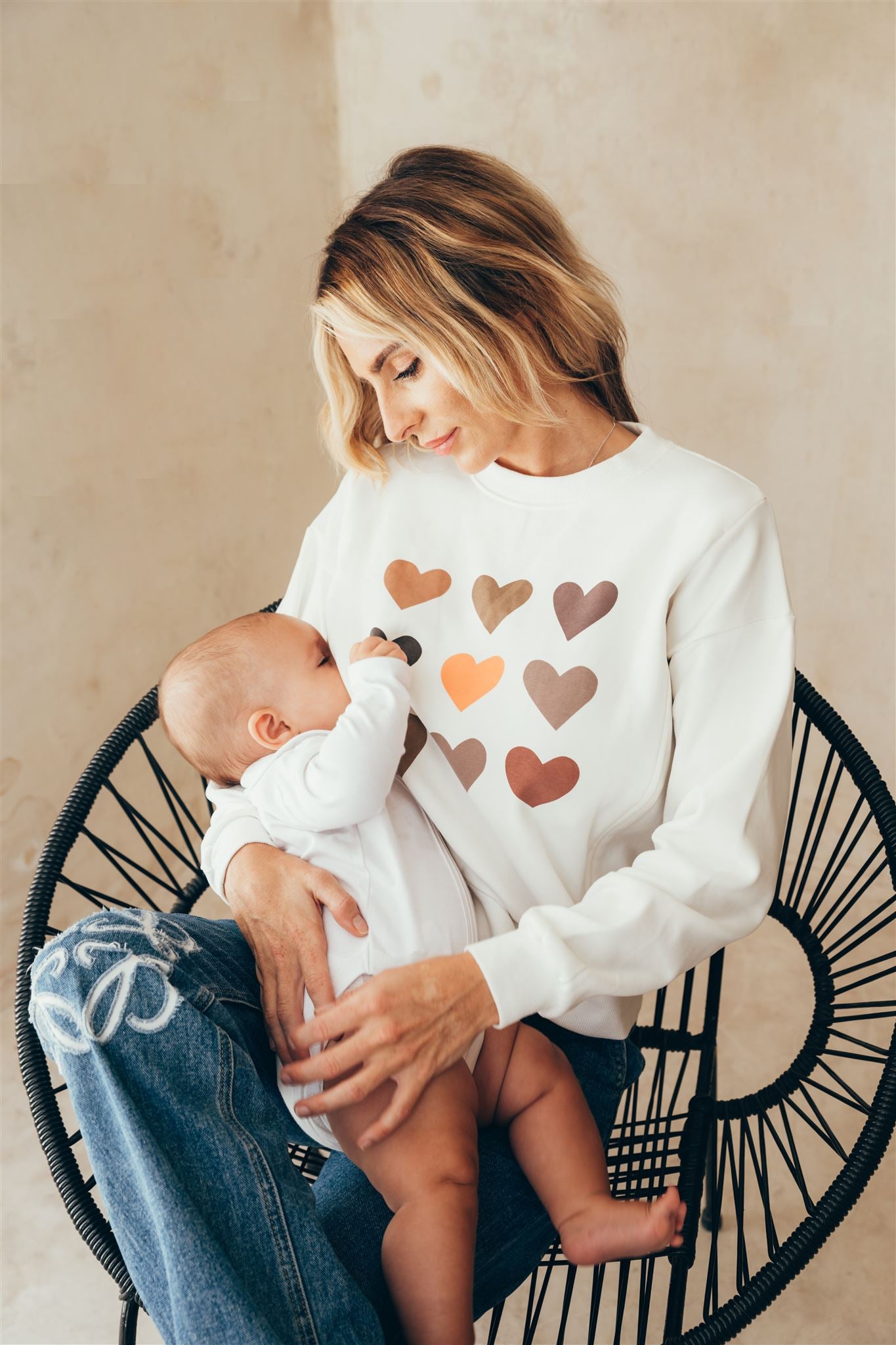
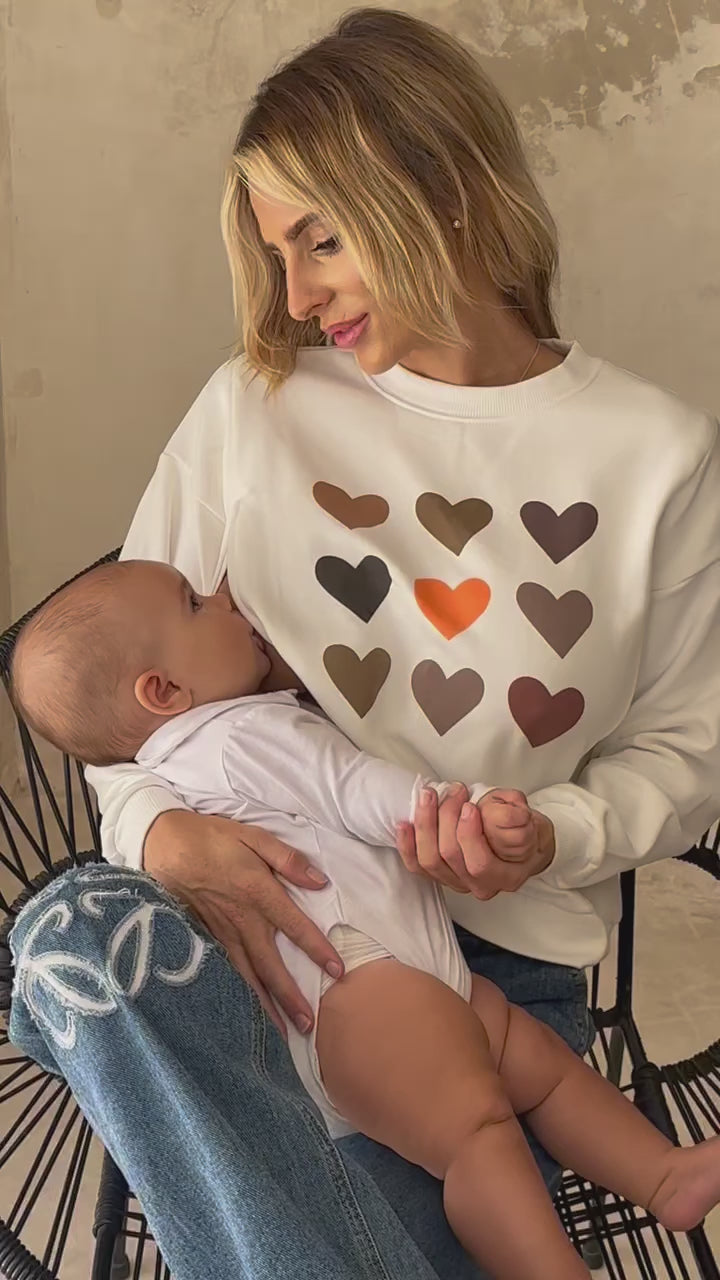
A nursing sweatshirt for €45, worn once a week during the six coldest months: 25 wears, or €1.80 per wear.
A dress from knit for €64, worn once a week for eight months: 35 deliveries, or €1.85 per delivery.
By way of comparison, a classic formal dress costing €90 that’s worn twice works out to €45 per wear. Nursing wear, even at a higher price per item, is one of the most cost-effective purchases in a wardrobe. Items that can also be worn during pregnancy, such as maternity and nursing clothes, further extend the time they can be used. The article “Investing in an Evolving Wardrobe” applies this calculation to the entire duration of breastfeeding.
Where to Invest Your Money, and Where to Save It
Invest
The items worn most often include two or three T-shirts, a winter sweater, and an everyday dress. These are the items that get washed the most and whose openings tend to wear out. For these items, the quality of the slit or panel is crucial. The guide to nursing tops: five quality criteria helps you choose the right ones.
Save
When it comes to secondhand items: a wedding dress worn just once, a Christmas sweater, or a piece with a bold print that you’ve grown tired of. For these, the sale collection,the outlet, or secondhand shops are good options. Current promotions and the promo code page also let you snag a key piece at the right time, twice a year.
Avoid
Don't buy your entire wardrobe before the baby is born. Your body changes, and so do your tastes. Get one or two T-shirts and a nightgown for the hospital, then buy the rest after three weeks, once you know which type of fastening you prefer.
How much should I budget in total?
For a six- to eight-piece nursing setBreastfeeding dress from a specialty brand, expect to pay €250 to €400, spread out over the first three months. Based on twelve months of and daily wear, that works out to about €1 per day. The article “How Many Nursing Clothes Do You Need?” provides a detailed list, and “Gift Ideas for New Moms” suggests items to ask for as gifts rather than buying yourself. A gift card is the easiest way to let friends and family help fund part of your wardrobe.
Frequently Asked Questions
Why does a Breastfeeding t-shirt cost more than a regular T-shirt?
The technical opening adds fabric and assembly steps; the material must withstand much more frequent washings; and the cut is designed for breastfeeding. These three factors account for the price difference.
Is it worth it to buy nursing clothes if I'm going to breastfeed for three months?
If you plan to breastfeed for only a short time, stick to two T-shirts, a nightgown, and perhaps a sweater, depending on the season. The cost per wear remains reasonable once you’ve worn them about ten times, and these items sell well on the secondhand market.
When should you shop to save money?
Winter and summer sales, private sales, and outlet stores for end-of-line items. Plan ahead by one season: buy your winter sweater in January for the following year if you already know your favorite button-up style.
In summary
The price of nursing clothes reflects three things: technical innovation, a fabric that withstands frequent washing, and a cut designed for the postpartum body. The real question isn’t the listed price but the cost per wear, which drops below €0.50 for a high-quality T-shirt worn year-round. Invest in the three or four pieces you’ll wear each week, save money on secondhand items, and wait three weeks after giving birth to buy the rest.